-
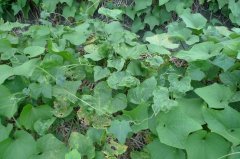
How to prevent and control gummy stem blight and viral diseases spreading in farmland due to temperature and continuous rainfall?
Recently, temperatures have gradually risen, and combined with continuous rainfall, the weather has been unstable. The Hualien District Agricultural Research and Extension Station has found that "gummy stem blight" and "viral diseases" are gradually spreading in the chayote shoot fields of the Ji'an area in Hualien County. Farmers are advised to take preventive measures as early as possible to avoid affecting
-

Taiwan's agriculture hit by endless natural disasters, fertilizer ex-factory price cut by 500 yuan per metric ton
From the beginning of this year to now, natural disasters have occurred frequently. President Tsai Ing-wen mentioned this matter on the 3rd when she went to the Yunlin Story House to meet with farmers, and said that out of consideration for the farmers' hard work, Taiwan Fertilizer would immediately lower the ex-factory price of commonly used chemical fertilizers by 500 yuan per metric ton, equivalent to a reduction of about
-

How to treat continuous cropping diseases in vegetables? These control methods are very practical
The development of greenhouse production has brought obvious economic benefits to farmers, but after greenhouses have been used for many years, various diseases, especially soil-borne diseases, have become increasingly serious, and this has become a problem that must be taken seriously in greenhouse vegetable production. The best way to solve continuous cropping disease is to adopt comprehensive measures.
-
Key Points of Artificial Cultivation Techniques for Wheat-Scutellaria baicalensis Continuous Cropping
The medicinal plant Scutellaria baicalensis (Baikal skullcap) is a perennial herb of the Lamiaceae family. Its root is used as medicine and has functions such as clearing heat and drying dampness, detoxifying, and promoting bile flow. In artificial cultivation of Scutellaria baicalensis, adopting a wheat-Scutellaria baicalensis continuous cropping method not only reasonably arranges the crop rotation but also improves economic returns, making it particularly worth planting in mountainous and hilly
-
A Detailed Guide to Soilless Cultivation Methods and Techniques for Vegetables
As planting techniques continue to improve, many regions now use soilless cultivation to grow vegetables; it is not only clean and environmentally friendly, but also saves a lot of cost. So what is soilless vegetable cultivation? I. What is soilless vegetable cultivation? Soilless vegetable cultivation
-
Detailed Explanation of the Methods and Key Technical Points for Two-Crop Continuous Tilapia Farming
Two-crop continuous tilapia farming model: large-size tilapia fry are graded and pre-grown, and in the grow-out pond a certain number of filter-feeding silver carp and bighead carp, as well as herbivorous grass carp and carnivorous black carp, are stocked together and cultured with pure feed. After the tilapia reach market size, they are caught and sold,
-
Detailed Explanation of Key Technical Points for Continuous Cropping of Cilantro
Cilantro has a unique pungent aroma and is mostly used as an ingredient in cooking and hot pot, and can also be eaten as a main dish, but many problems can also arise during the cultivation of cilantro, so what is the technique for continuous cropping of cilantro? 1. What does continuous cropping of cilantro mean? Cilantro continuous
-
A Detailed Guide to the Planting Methods and Key Technical Points for Wild Garlic
Wild garlic should not be grown in continuous cropping; it is suitable for intercropping and relay intercropping with other crops. Before sowing, the land needs to be plowed and base fertilizer applied, then leveled and formed into beds, using raised beds or semi-raised beds, with furrows opened at a row spacing of about 24 cm. With a hole spacing of 15 cm, place 2-3 bulbs per hole, and water after sowing. Wild garlic planting
-
Detailed Explanation of Key Technical Points for Continuous Cropping of Watermelon
First, select a plot with few diseases, deep plow and freeze the soil clods before winter, and after spring begins, apply base fertilizer as required and backfill the melon trenches; second, combine garden cleaning with staggered-row sowing, and adopt chemical prevention, focusing on root drenching, supplemented by foliar spraying. Third, do not use the method of burying vines under soil
-
Why Gray Mold Is Hard to Control and How to Prevent and Treat It
Frequent continuous rainfall and relatively low temperatures inside greenhouses create favorable conditions for the occurrence and spread of gray mold. Grape gray mold, cucumber gray mold, tomato gray mold, strawberry gray mold, eggplant gray mold, Chinese chive gray mold, and so on - no matter which one, all
条件筛选