-

North China's groundwater overexploitation areas launch a battle for agricultural water conservation
In recent years, the groundwater overexploitation situation in North China's groundwater depression cone areas has become increasingly severe. It is necessary to make good use of rainwater and focus on water conservation, working on planting structure, drought-resistant varieties and water-saving technologies, to realize the transformation of agriculture from confrontational agriculture to adaptive agriculture, and from passive drought relief to proactive disaster avoidance
-
China's annual post-harvest grain loss exceeds 100 billion jin, and conservation brooks no delay
The Anhui Modern Grain Logistics Center has not only built tall flat warehouses, squat silos and other new types of storage facilities, but also adopted mechanical ventilation grain storage technology, pressed-cover airtight grain storage technology, circulation fumigation technology, grain cooling technology, computer-based grain condition monitoring technology and grain
-
Overseas Experience in Environment-conserving Agriculture Is Worth Learning From
After the end of World War II, along with Japan's rapid economic development and the extensive development of its land, and with the pursuit of high agricultural output and high productivity as the goal, Japan's rural resources and environment also became very severe. On June 10, 1992, the Japanese government, in the "New Directions for Food, Agri
-
Strengthen farmland protection and ecological conservation to safeguard national food security
To safeguard national food security, we must do a good job in ecological conservation, farmland protection and protection of core agricultural areas. The state has set a red line of 1.8 billion mu of farmland to ensure that the farmland area does not decrease. Delineating the ecological conservation red line is an urgent need to curb the severe trend of ecological and environmental degradation
-
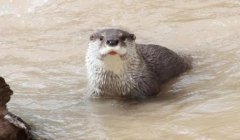
Eurasian Otter on the Brink of Extinction: Current Population and Conservation Status at a Glance
With big eyes and a slender body that nimbly twists and turns in the water, the Eurasian otter from Kinmen is a star animal at Taipei Zoo. Streams in mountainous areas below 1500 m across the whole of Taiwan, China were once Eurasian otter habitat; however, now only the Kinmen area
-
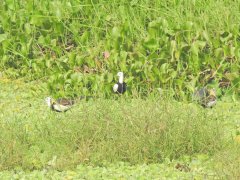
The habitat of the pheasant-tailed jacana reflects the current state of agricultural conservation, and the crisis of population aging is severe
In March this year, media reports pointed out that a green energy company was lobbying farmers in the Guantian area to lease their farmland as sites for installing solar photovoltaic panels, offering an annual rent of 40,000 yuan (higher than the going rate of 6,000 yuan per fen) on 20-year leases to attract farmer landowners to join; some
-
Are Whales Protected Animals? A Guide to Whale Conservation Knowledge
Whales, in people's impression, are symbols of mystery and beauty. Whether it is the blue whale, the killer whale, or other cetaceans, they are all very popular with people because of their size, strength and mystery. So are cetaceans protected animals? Current status
-
Are Lions Protected Animals? An Interpretation of the Lion's Conservation Status
Lions are a large species of cat, and lions can often be seen in zoos and on television, so are lions protected animals? 1. Are lions protected animals? Lions are protected animals; all African subspecies are listed in the International Union for Conservation of Nature
-
How to Choose and Use Water-Soluble Fertilizer in Integrated Water and Fertilizer Conservation Technology
Integrated water and fertilizer management is a highly efficient agricultural water conservation technology in which fertilizer is dissolved in water and applied through a piped irrigation system, so that irrigation and fertilization are carried out simultaneously, precisely meeting the crop's water and nutrient needs at the right time and in the right amount, with water and fertilizer managed in sync. Water-soluble fertilizer refers to a multi-element compound fertilizer that can completely
-
Is the osprey a protected animal? A detailed look at the osprey's conservation status
The scientific name of the osprey is the cormorant, but many people call it the osprey because of its key characteristic of eating fish. So is the osprey a protected animal? Let's take a look together! 1. Is the osprey a protected animal The osprey is a protected animal. The osprey is currently an endangered
条件筛选