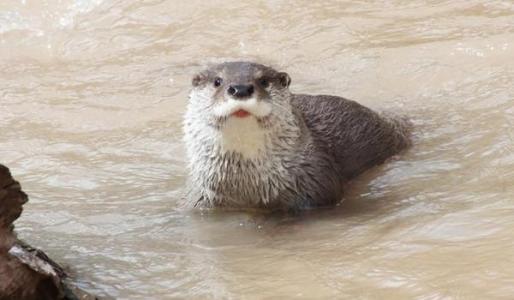
Eurasian Otter on the Brink of Extinction: Current Population and Conservation Status at a Glance
With big eyes and a slender body that nimbly twists and turns in the water, the Eurasian otter from Kinmen is a star animal at Taipei Zoo. Streams in mountainous areas below 1500 m across the whole of Taiwan, China were once Eurasian otter habitat; however, now only the Kinmen area
With big eyes and a slender body that nimbly twists and turns in the water, the Eurasian otter from Kinmen is a star animal at Taipei Zoo. Streams in mountainous areas below 1500 m across the whole of Taiwan, China were once Eurasian otter habitat; however, now only the Kinmen area has a small-scale wild population, numbering no more than 200 individuals. It is a “Critically Endangered” species on the “Red List of Terrestrial Mammals” compiled by the Forestry Bureau in 2017. It is listed as a National Class II Key Protected Animal.
However, this year at Taipei Zoo, with cooperation from the Kinmen County Government, the Army Kinmen Defense Command and other units, the baseline survey data on otters is expected to take a big step forward; at the same time, the Kinmen County Government has already installed otter stairs, road warning systems and other devices along some waterways, hoping to reduce the roadkill crisis for otters and promote the breeding and living of otter populations.
Stable breeding of otter populations, reducing roadkill and adding otter-friendly infrastructure are the only ways to let them live happily. Otter habitat must include both aquatic and terrestrial environments for survival, so if the water environment is destroyed and roads cut through the habitat, it will affect the otters' movement routes and lead to “roadkill” incidents. Zhong Liwei explained that the county government has already begun work such as dredging waterways and removing water hyacinth, and this year will also activate warning systems on some roads, using reflectors to refract vehicle headlight beams and remind otters not to cross the road.
Zhong Liwei said that in recent years, through the efforts of the Kinmen County Government, the Forestry Bureau, Taipei Zoo, Taiwan University, the Kinmen National Park Headquarters and other teams, traces of mother and cub otters have been discovered one after another on long-term monitoring infrared cameras, showing that the otter population is still breeding steadily, and signs of otter use have also been seen at the ecological stairs set up for them. However, Zhong Liwei also said cautiously that many basic infrastructure works are still not friendly enough for otters, and there is still much room for effort.
Zhong Liwei hopes that the “2019 Wu Island City God Cultural Tourism Season and Otter Conservation Activity” co-organized with Taipei Zoo this year can break the “echo chamber” effect of conservation issues, raise the visibility of otter conservation issues, and let the public reflect that although some works are convenient for people, they may also destroy otter habitat and affect the lives of otters.