-

Detailed Explanation of the Hook-Shaped Cleft Grafting Method for Jujube Trees, Step-by-Step Guide
1. Tools used: pruning shears, grafting knife (straight sharp knife), plastic strips. 2. Collection of scions: Collect well-developed, pest- and disease-free 1-year-old jujube head branches or current-year lignified branches, remove secondary branches (leave 2 cm long) and leaves, and use them immediately after collection. If
-
Detailed Explanation of the Cleft Grafting Method and Top Grafting (Topworking) Technique for Plum Trees
1. Preparation before grafting: Generally in February, cut healthy, pest-free 1-year-old branches as scions. It is best to use fully mature, plump-leaf-budded, well-developed branches from the upper outer canopy of trees that have already fruited. Cut them into 15-20 cm segments (with 3-5 buds).
-
Plum Blossom Planting Methods and Precautions Explained
Cleft grafting: cut off the upper part of the rootstock 3 cm above the ground; cut the scion to a length of 5-6 cm; on the outer side of the lower bud, make downward slanted cuts on both sides to form a duck-bill shape; open a 3 cm slit on one side of the rootstock, and insert the scion into the slit of the rootstock. Bud grafting: make a horizontal cut 1 cm above the scion bud,
-
How to propagate hibiscus? A detailed guide to the high-position multi-branch cleft graft method
Hibiscus is a flowering plant that many flower lovers greatly appreciate. Because hibiscus comes in such rich colors, grafting can bring hibiscus varieties of different colors together on a single plant, making it a propagation method many flower lovers choose. What I want to introduce to you is the high-position multi-branch cleft graft method for hibiscus
-
Seedling raising method for the Chinese medicinal herb Schisandra chinensis: hardwood cleft grafting propagation
Seedling raising method for the Chinese medicinal herb Schisandra chinensis - hardwood cleft grafting propagation
-
How is the watermelon cleft grafting method done? A detailed explanation of the key grafting techniques
Key technical points of the watermelon cleft grafting method
-
Detailed Explanation of the Top-Bud Cleft Grafting Technique for Korean Pine
Korean pine (Pinus koraiensis Sieb. et Zucc.) is a tall tree of the genus Pinus in the family Pinaceae, with a full and straight trunk. In natural Korean pine forests, the average tree height can reach 25-30 m, the diameter at breast height can reach 40-80 cm, and the lifespan can reach 300-400 years. In places with suitable growing conditions, the tree height can reach 40 m, the diameter at breast height can reach 200 cm, and the lifespan can reach about 500 years; its timber is excellent, with straight grain, strong compressive strength, rich in resin, strong decay resistance, and high craft value.
-
Hardwood cleft grafting method for asexual propagation and seedling raising of Schisandra chinensis
After leaf fall and before bud break, collect 1-year-old branches as scions; before the ground freezes, lift 1- to 2-year-old seedling stock as rootstock, and store them at low temperature for cleft grafting during the next year's bud break period (or graft in place without lifting the seedlings). Before grafting, soak the scions and rootstocks in clean water for 12 hours. Cut off the bud-bearing portion at the hypocotyl of the rootstock. For scions, choose fully mature branches with a diameter greater than 0.4 cm, cut them to a length of 4-5 cm, keep 1 bud eye, leave 1.5 cm above the bud, and keep about 3 cm below the bud; use a grafting knife to cut down on both sides of the scion bud eye
-
Schisandra chinensis asexual propagation and seedling raising: Rootstock method for green-branch cleft grafting
For the cultivation of rootstocks for green-branch cleft grafting, refer to open-field direct seeding for seedling raising. If the rootstocks are not dug out before winter arrives, pruning must be carried out before the ground freezes. Leave 3 to 4 buds on each rootstock and cut at about 5 cm, then water thoroughly with winter-protection water to prevent freeze damage and drying out. If the rootstock seedlings are to be planted out the following year, the seedlings can be dug out and stored in cellars or trenches, which is more beneficial for rootstock seedling management. When planting out the following year, they also need to be cut back to 3 to 4 buds to establish the trunk. Rootstock seedlings that overwinter in place should be irrigated promptly after the ground thaws the following year and given a topdressing of quick-acting nitrogen fertilizer to promote new shoot growth. Keep 1 to
-
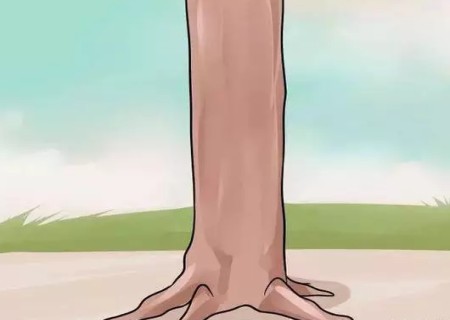
Illustrated guide to the cleft grafting technique for bonsai, with detailed steps that are easy to understand at a glance
Grafting is the artificial joining of tissues such as a branch or bud from one plant onto a suitable part of another plant, such as a branch, trunk or root, so that they heal and grow together to form a new plant. This branch or bud is called the scion, and the plant that receives the scion is called the rootstock. Grafting flowers and trees places great emphasis on technique
条件筛选