-

What Are the Main Producing Areas of Goji Berries? A Detailed Guide to Variety Classification
As people's living standards gradually improve, the trend of health cultivation has become increasingly popular, and goji berries are one of the hottest health food varieties. Goji berries, also known as wolfberries, are used both as medicine and food; they are small in size yet have multiple health benefits, and many people like to use them to make tea
-
How is feed classified, and what are the main categories?
Feed is the general term for all food for raising animals; generally, feed mainly refers to the food of animals raised in agriculture or animal husbandry. It includes more than ten varieties of feed ingredients such as soybeans, soybean meal, corn, fish meal, amino acids, miscellaneous meals, whey powder, oils and fats, meat and bone meal, grains, and feed additives.
-
A Complete Guide to Goldfish Variety Classification and Keeping Requirements
Goldfish are a type of ornamental fish kept in many modern households, and the Chinese goldfish, praised as the "queen of the water," is known for its simple, unadorned natural beauty and is called one of the world's two most famous ornamental fish. So how exactly are goldfish varieties classified?
-
What types of chemical fertilizers are there? Understanding common fertilizer classifications in one article
When it comes to chemical fertilizers, everyone must be familiar with them by now. They are fertilizers made through chemical and artificial processes that contain one or several nutrient elements needed for crop growth. Among them, nitrogen, phosphorus and potassium fertilizers are the most basic fertilizers for crop growth. Their compositions are relatively simple,
-
What classifications of jujube are there? Recommended fresh-eating jujube varieties for everyone
Now the fruit stalls on the market have already stocked quite a few winter jujube varieties. Friends who like eating jujubes definitely won't miss out. So which kind of jujube do you like best? Is it processed dried jujube? Or fresh-eating jujube? Below, let's look at the main types of several fresh-eating jujubes.
-
What Pig Breeds Are There? A Detailed Explanation of Common Type Classifications
China's geographical conditions and ecological environment are diverse and complex, and coupled with a long history of pig farming, many excellent local breeds have been formed under the careful cultivation of the working people, numbering more than 100. In the 1980s, appropriate consolidation was carried out, determining China's local breeds
-
What Categories Can Walnut Varieties Be Divided Into? Understanding Walnut Classification in One Article
The selection of walnut varieties is the foundation for developing the walnut industry. However, in practical application, walnuts can be classified into the following many categories according to their different characteristics. 1. Varieties classified by walnut origin: Xinjiang walnuts, North China mountain walnuts, Qinba mountain walnuts, Tibet highland walnuts.
-
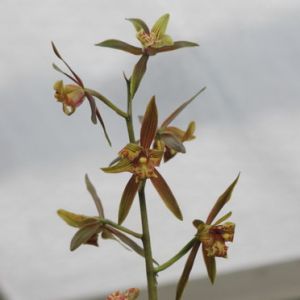
A Complete Guide to Cymbidium faberi Classification and Appreciation
When faced with a rare flower like Cuixiang (Jade Fragrance), one cannot help but marvel at nature's craftsmanship. In order to preserve the plant's strength so that it might soon produce a robust shoot, the flower stalk was cut off. Although we can no longer continue to admire her loveliness, the nine blooms already open are enough for you to appreciate and experience the wonder of "Cuixiang."
-
A Detailed Guide to the Classification Methods and Variety Characteristics of Chinese Cymbidiums
Terrestrial Orchids Terrestrial orchids are suited to growing in the loose soil layer on the ground surface. The terrestrial orchids native to our country are also called "Chinese cymbidiums," and they have high ornamental value and economic value. This article focuses on Chinese cymbidiums. Terrestrial orchids have poor seed propagation ability, and tissue culture is difficult; there are currently no successful reports. Therefore, although there are many types of terrestrial orchids...
-
Orchid Petal Type Analysis: Detailed Explanation of Common Petal Type Classifications and Characteristics
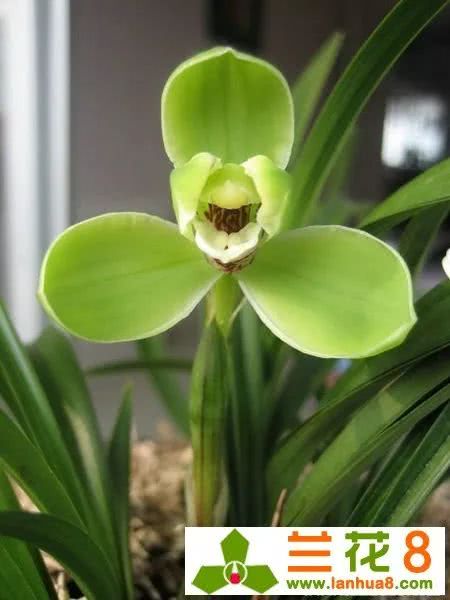
Promote Chinese orchid culture, spread orchid knowledge. I. Plum Petal. Plum petal: the three outer petals have tight edges and rounded tips, the central column is strongly masculinized with a cupped shape and white tip; if the lip is relaxed and not curled, it is a plum petal. When the plum petal is about to bloom, due to masculinization, the three outer petals have white edges and the petals have white tips. The entire flower shape looks quite like a plum blossom in snow; the ancients' metaphor is indeed apt and vivid. Plum petals are further divided according to the degree of masculinization into hard-cupped plum petals and soft-cupped plum petals. Among hard-cupped ones, there are extremely hard-cupped and hard-cupped plum petals. Extremely hard-cupped plum petals, due to extremely strong masculinization, often have the petals adhering to the column, with a very small hard lip or with cheek-like structures and no lip; such flowers' outer petals are mostly flared and upturned, and the flower shape is extremely inelegant! We know that the strength of masculinization is greatly related to flower quality. The stronger the masculinization, the tighter and harder the central column, and the worse the flower quality! If such a flower shape has tender color and broad outer petals, it also has ornamental value, but most outer petals are flared and upturned, and have traditionally not been valued by orchid growers! The masculinization of hard-cupped plum petals is slightly weaker than that of extremely hard-cupped ones, mostly split-head closed-back or joined-shoulder closed-back hard silkworm-moth petals, and the lip is mostly a dragon-swallowing lip, small round lip, etc.; some flowers have slightly flared outer petals! The masculinization of soft-cupped plum petals is relatively moderate, mostly five-petal separated soft silkworm-moth petals, with the three outer petals rounded and tight, and the lip mostly able to spread broadly, mostly a Liu Hai lip or Ruyi lip; the central column is rounded and neat, making it a fine among plum petals! The overall form of a superior plum petal should closely resemble a plum blossom, and reaching such a standard is very rare! The leaves of plum petals feel relatively thick and hard, with strong uprightness or bow-like form, looking rather vigorous; the basal leaves are slightly spreading, the sheath is hard and extends obliquely at about 15 degrees, feeling prickly to the touch; when the sheath is not yet withered, one can see a white pointed tip at the sheath tip, about the size of a millet grain, crystal clear, greatly different from the leaf tip of ordinary flowers. When selecting wild-collected orchids, if you encounter sheath color bright and smooth, veins fine and sparse reaching the top, heavy sand and dense halo, color lighter below and darker above, with a green tip at the apex, large empty head, lower part of the flower bud tightly contracted, and the middle round and bulging like a peanut or soybean, it is mostly a plum petal! This requires everyone to observe more usually in order to judge quickly and accurately!
条件筛选