-

Detailed Classification of Wheat Seedlings: Targeted Management Is Key
After wheat seedlings emerge, various types of weak seedlings often form due to the influence of natural conditions and cultivation practices. To prevent weak seedlings and manage them according to their specific symptoms, the details are introduced below: Weak seedlings caused by soil drought mostly occur in wheat fields with insufficient subsoil moisture or where moisture escapes through cracks. Their characteristics are: slow tillering, grayish-green leaf color, short and small heart leaves, slow or stagnant growth (known among farmers as "shrinking-heart seedlings"), gradual yellowing and drying of the middle and lower leaves, and few and thin roots. Key management points: combined with irrigation, apply 15 kg of ammonium bicarbonate per mu.
-
What are the classification methods for rice bran? A detailed explanation of common types
Rice is one of humanity's main food grains, and it is rarely used to feed livestock. What is used as feed is mainly the by-product of processing rice into milled rice - rice bran - and its nutritional value varies greatly depending on the processing method. Depending on the rice processing method, rice bran can be divided into rice hulls, rice bran and rice mill by-product. Rice hulls are the hulls removed when processing rice into brown rice.
-
Classification Methods and Common Types of Rice Bran
Rice is one of humanity's main food grains, and rice is rarely used to feed livestock. What serves as feed is mainly the by-product of processing rice into milled rice - rice bran, whose nutritional value varies greatly depending on the processing method. Due to differences in rice processing methods, rice bran can be divided into rice hulls, rice bran, and rice mill by-product. Rice hulls are the husk (glume) powder removed when rice is processed into brown rice, amounting to about 20% of the rice's mass
-
Chlorsulfuron plus dicamba (Banvel) belongs to the sulfonylurea herbicide class.
Weed control characteristics: Chlorsulfuron can be absorbed by the roots, stems and leaves of weeds, and is used to control many annual broadleaf weeds and some grass weeds, with a long residual life in the soil. Dicamba can be absorbed by the stems and leaves of weeds and can control many broadleaf weeds. Chlorsulfuron and dicamba have different mechanisms of action and their weed control spectra are highly complementary; when mixed, they can broaden the weed control spectrum and improve the weed control effect. Formulation and ratio: chlorsulfuron + dicamba 0.6 g/mu + 2-3 g/mu (active ingredient). Suitable for
-
Yellowing of winter wheat seedlings: classified control is key
When wheat seedlings turn yellow because the sowing soil moisture is poor, soil water is insufficient, emergence is uneven, and growth and development are poor, irrigation should be suited to the soil and applied rationally. When seedlings turn yellow due to a lack of fertilizer nutrients, nitrogen, phosphorus, and potassium fertilizers must be applied promptly; apply 15 kg of urea per mu mixed with dilute manure water, and at the same time use 0.5 kg of monopotassium phosphate per mu, diluted with water and sprayed on the leaves 1 to 2 times, to prompt the wheat seedlings to regain color in time. For wheat seedlings turning yellow due to heavy, compacted saline-alkali land, use 20 to 30 kg of superphosphate per mu
-
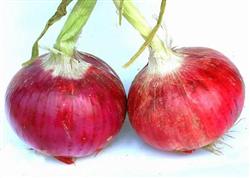
Detailed Introduction to Onion Varieties and Classification
1 Main Types The types of onion can be classified morphologically as: ① Common onion (Allium epa L.), each plant usually forms only one bulb. Propagated by seed; a few varieties form aerial bulbs on the inflorescence under special environmental conditions. Common onions can generally be divided by bulb shape into flat-globular...
条件筛选