-

How to control the copper-green chafer? Practical methods shared
(1) Manual control: During the peak emergence period of adults, in the evening, kill the adults by combining artificial tree shaking with light traps outside the orchard. (2) Chemical control: In the early emergence period of adults, spray 2.5% trichlorfon powder on the tree disks of orchards with high insect density, then shallow hoe and mix it in, which can kill the adults that have emerged from the soil; during the peak period, before dark, spray the trees with 80% dichlorvos emulsifiable concentrate at 1000-1500 times dilution, adding 20% fenvalerate emulsifiable concentrate at 2000 times dilution, and spray again after 7-10 days (avoiding the flowering period), which can control the damage. Other chafer species can be controlled by
-
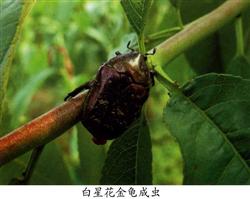
How to control white-spotted flower chafer pests on nectarines
[Morphology and damage symptoms] Adults are 20-24 mm long, purple-copper in color, with more than 10 irregular white spots on the pronotum and elytra. Adults gnaw ripe fruit, making it lose its commercial value. [Occurrence pattern] The white-spotted flower chafer has 1 generation per year, overwintering as larvae in soil and organic fertilizer; it readily breeds in chicken manure. Adults emerge from June to September and fly to orchards, where they like to gather and damage ripe fruit. Adults are attracted to sugar-vinegar liquid, and in July adults look for suitable places to lay eggs.
-
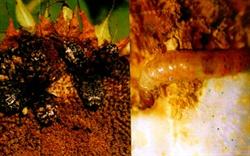
Sunflowers damaged by the white-spotted flower chafer: how to control them effectively?
Damage characteristics: Adults feed on the flowers of sunflowers, corn, vegetables, and fruit trees. When damaging corn, adults feed on the silks; when damaging sunflowers, they feed on the flower heads, causing the heads to rot. Morphological characteristics: Adults are 17-24 mm long and 9-12 mm wide. Oval-shaped, with a bronze or copper-green luster, and the body surface is scattered with numerous irregular white felt spots. The clypeus...
-
Harm and Control Methods of the White-Spotted Flower Chafer on Sunflowers
Damage characteristics: The 1st-2nd instar larvae feed on the tubular flowers; after the 3rd instar they bore along the gaps between the sunflower seeds and feed on the seeds, eating part or all of the seed kernel, resulting in empty shells or bored seed heads. They bore many tunnels in the flower head and spin silk webs on the seeds of the head, binding together insect droppings and debris, forming a felt-like mass. The damaged flower heads mostly rot and become moldy, ...
条件筛选