-

Can Venus flytraps really catch insects, and are they suitable for growing indoors?
Speaking of the Venus flytrap, plenty of people are probably like me - the first time you see one, it feels novel: this thing looks like a little pair of tongs, can it really catch insects? And is it reliable to keep one indoors? When a Venus flytrap catches insects, that is no bluff - it genuinely has this ability. Look at its leaves: the two lobes at the tip join together, and the edges carry a ring of small spines, just like a mini bear trap. On the inside of this trap there are several thin
-

How do pitcher plants catch insects? Are they harmful to humans, and how to grow them at home
Pitcher plant, also known as water-pitcher plant, monkey water bottle, monkey urn, piglet cage, and forget-sorrow grass, is an annual herb with no bulb, flowering and fruiting throughout the year. So how does the pitcher plant eat insects? Is it harmful to humans? Can it be kept at home? How to grow it? According to data from the Droseraceae family,
-
How to Grow Pitcher Plants? These Plants Can Catch Insects Too
The pitcher plant gets its name from having an organ resembling a pig cage (the pitcher). Its body is divided into the petiole, the leaf blade and the tendril; the tendril can curl back to form a pitcher shape, which it uses to catch insects. Some people find this interesting and want to grow one. So, how do you grow a pitcher plant
-
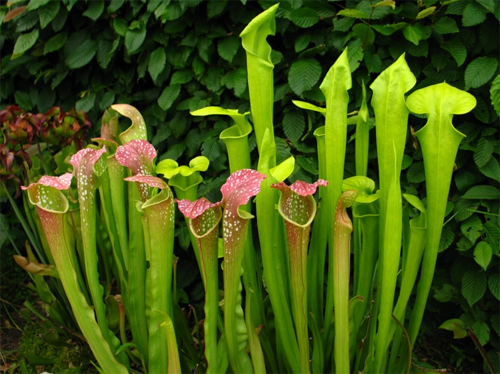
How to grow pitcher plants? Over-catching insects can cause the plant to die
Pitcher plants look just like a pitcher, complete with a lid, and this remarkable pitcher can even catch insects. If you have one at home, it is a natural insecticide, pollution-free. How do you grow pitcher plants? How to grow pitcher plants: they can tolerate high temperatures of 40°C and low temperatures of -10°C, while northern subspecies are even more cold-tolerant
-
How Carnivorous Plants Catch Mosquitoes and Insects: Methods and Principles Explained
Carnivorous plants have 5 basic insect-catching mechanisms. (1) Pitfall or pitcher traps containing digestive enzymes or bacterial digestive fluid. (2) Sticky traps covered all over with viscous droplets. (3) Snap traps that close rapidly. (4) Bladder traps that generate a vacuum to suck in prey
-
条件筛选