-

How to prevent and treat head-turning disease, two-foot jumping and head-tossing disease in captive hwamei
Head-turning disease, two-foot jumping and head-tossing disease in the hwamei all belong to the same type of illness. Therefore they are discussed together. (1) Causes of head-turning disease, two-foot jumping and head-tossing disease in the hwamei: 1) The hwamei living in nature originally does not toss its head; it is because after being kept in a cage, its living environment has fundamentally changed, and especially because of man-made fright, the hwamei repeatedly makes the motion of starting to run and fly in the cage, and over time it develops the strange habit of head-tossing or head-turning. 2) After a wild bird enters the cage, it is fed too much food, and the cage cover cloth is sealed too tightly, so the bird does just one thing all day long, namely jumping about looking for a way out, and after a long time it develops this kind of illness. 3) When people take birds out for a walk, they often hang them in relatively high places, and below them people or animals often walk about, which makes the bird feel afraid and leaves it with this kind of strange habit.
-
Prevention and Control Methods and Technical Key Points for Feather-Pecking Disorder in Captive Hwamei Birds
The so-called hwamei feather-pecking disorder refers to a small number of hwamei birds during ordinary keeping that, due to various causes, bite off their own tail feathers, wing feathers, back feathers and so on, one by one (sometimes called self-biting disease), so that the tail feathers are sometimes pulled until they are bare and sparse, curled
-
What are the methods for keeping hedgehogs in captivity?
Although the hedgehog is a wild animal, it is easy to raise and keep in captivity, with low costs and high returns. Hedgehog meat is delicious, and its skin is a valuable medicinal material. Therefore, farming hedgehogs is also a good way to make a fortune. The techniques for efficient captive breeding of hedgehogs are introduced below: 1,
-
-
-

Pangolins are so valuable, has captive breeding really never succeeded?
Pangolins can be bred in China; they are a rare medicinal animal with high medicinal value, covered in an outer layer like armor, pangolins...
-
Breakthrough in captive breeding of Qinling lenok at Shaanxi Provincial Fisheries Research Institute
Breakthrough in captive breeding of Qinling lenok at Shaanxi Provincial Fisheries Research Institute
-
-
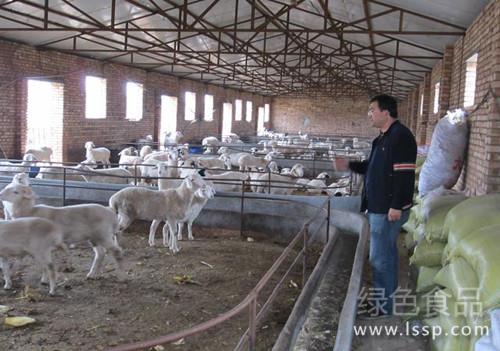
Captive sheep have high nutritional needs in winter, how can they safely overwinter?
Sheep need more nutrients in the cold winter, how can captive sheep safely overwinter
-
Strengthen epidemic prevention measures in captive porcupine farming
Epidemic prevention measures should be strengthened in captive-bred porcupines
条件筛选