-

Can Phalaenopsis seedlings take sun and rain? Care essentials
Phalaenopsis orchids are elegant and beautiful, and many flower lovers often struggle with whether their new seedlings can take sun and rain. Only by mastering the right care methods can the seedlings grow strong and healthy. We all know plants need photosynthesis, but Phalaenopsis seedlings are truly "little princesses in a greenhouse" and cannot stand harsh sun! Their original home is the tropical rainforest,
-

Can Phalaenopsis Orchids Take Sun? A Detailed Guide to the Correct Sunlight Method
Phalaenopsis orchids are deeply loved by many flower enthusiasts. However, the question of whether Phalaenopsis orchids can take sun has left quite a few enthusiasts puzzled. Below, this question is answered in detail, along with an introduction to the correct way to give Phalaenopsis orchids sunlight. The sunlight needs of Phalaenopsis orchids: Phalaenopsis orchids are not unable to take sun; rather, they must not be "scorched
-

Can Phalaenopsis Take Direct Sun? Get the Duration of Indirect Light Right
In busy city life, why do people favor the Phalaenopsis orchid? Not only because its elegant form and rich colors bring a touch of natural freshness to urban life, but also because of the beautiful symbolism and vibrant vitality it embodies. In a forest built of steel and concrete, the Phalaenopsis orchid seems
-

Can a Money Tree Take Direct Sunlight? The Answer Explained in One Article
The money tree (Pachira aquatica) is an evergreen small tree of the Malvaceae family, native to Costa Rica in Latin America, Australia and some small islands in the Pacific; it is also found in the tropical regions of southern China, and has always been a popular potted plant among gardening enthusiasts, who like to keep one both at the office and at home.
-
Can Lucky Bamboo Take Sunlight? Light Care Points Explained in One Article
Lucky Bamboo is a potted plant everyone is all too familiar with. In Chinese plant culture it is a symbol of good fortune and auspiciousness, carrying beautiful meanings, but growing Lucky Bamboo well is no simple task. Without solid potting skills, problems such as yellow leaves, root rot, and slow plant growth may appear.
-
Can Asparagus Fern Take Direct Sun? Latest Care Answers
Although the Asparagus Fern (Asparagus setaceus) is not a true bamboo, its leaves are soft and delicate, remaining emerald green year-round, and its stems have nodes that make it resemble bamboo. Yet compared with upright bamboo, it shows an elegant and unrestrained posture, making it a highly ornamental plant that can be placed in the living room or study, purifying the air while adding
-
Can Pothos Take Direct Sunlight? A Full Guide to Care Tips
Pothos is an excellent foliage plant, with strong twining ability, well-developed aerial roots, colorful leaves, evergreen all year round, and long trailing branches. It can be allowed to climb on a cylinder made of palm fiber or on tree trunks for greening, placed in entrance halls and hotels, or grown as a hanging plant in studies, on windowsills,
-
How to Grow the Firecracker Succulent in Summer, Whether It Can Take Sun, and Why the Leaves Stay Green Plus Solutions
The firecracker succulent (Crassula capitella 'Campfire') is a very beautiful succulent plant, especially its brilliant red color, which looks like a cluster of blazing flames and is extremely eye-catching. But some growers find their firecracker succulent is not red at all, but green, with only a tiny bit of pink along the leaf edges. Why is this ⟦4 <p>The firecracker succulent (Crassula capitella 'Campfire') is a very beautiful succulent plant, especially its brilliant red color, which looks like a cluster of blazing flames and is extremely eye-catching. But some growers find their firecracker succulent is not red at all, but green, with only a tiny bit of pink along the leaf edges. Why is this?</p><p></p><p><strong>How to grow the firecracker succulent in summer (can it take sun?)</strong></p><p>That's right, the firecracker succulent is a summer-growing type, so it does not go dormant in summer, which means giving it plenty of sun is a good thing. However, in high-rise apartments or enclosed balconies, or in environments with sustained high temperatures, you should pay attention to ventilation and provide appropriate shade at midday in summer to avoid excessive exposure.</p><p></p><p><strong>Why the leaves of the firecracker succulent stay green and how to fix it</strong></p><p>Cause:</p><p>The firecracker succulent is mostly red-green during its growing period; only when watering is stopped or during dormancy does its color turn red or pink. That is, only in late autumn to early spring, when the day-night temperature difference is large, the conditions are dry and cold, and it gets full sun, do the leaves easily turn red. So in autumn, when the day-night temperature difference is small, light is insufficient and watering is excessive, the firecracker succulent will not turn red.</p><p></p><p>Solutions:</p><p>First you need to understand that the firecracker succulent only turns very red under the combined effect of dryness + low temperature + strong sun, and young seedlings are very hard to turn red. During the growing season it turns green again and will grow rampantly; you can cut stems and keep taking cuttings, and within half a year you will have a big batch.</p><p>Grow a good root system: only with a good root system can the firecracker succulent grow vigorously. Once it has stored plenty of water inside, gradually reduce watering, giving a little less each time, until you finally stop watering altogether, then expose it to strong sun, and the firecracker succulent will turn red.</p><p>Fertilizing: the firecracker succulent is a horticultural variety that likes a warm, dry environment with plenty of sunlight. In partial shade or shaded spots the plant can still grow, but the leaf color will not turn red. Normally do not give too much water or fertilizer, and especially do not use too much nitrogen fertilizer, otherwise the plant will grow leggy and the leaf color will not turn red. Wait until the potting soil is completely dry before watering, and apply a dilute fertilizer mainly of phosphorus and potassium once a month.</p><p></p><p><strong>Propagation methods for the firecracker succulent</strong></p><p>Propagation of the firecracker succulent generally includes three methods: cuttings, division and sowing, with cuttings being the main one. Cuttings are further divided into stem cuttings and leaf cuttings. For stem cuttings, use a stem of the firecracker succulent and bury about 2 cm of the lower part in the soil, keeping the soil moderately moist; roots will form within a week. For leaf cuttings, remove a leaf with the petiole as intact as possible, lay it flat on the surface of loose potting soil, and keep the soil moderately moist; within one to two weeks roots will form from the petiole, then new buds will grow and gradually develop into a new plant. The advantage of stem cuttings is that they grow into new plants faster, while the advantage of leaf cuttings is a high propagation rate, since every single leaf can produce a new plant.</p><p></p><p><strong>How to water the firecracker succulent</strong></p><p>1. If you want to know how to water the firecracker succulent, you first need to understand its characteristics and whether it actually needs water. This plant cannot be given too much water, just like most succulents, so when growing it you need soil with good permeability and a very airy growing environment. As for water, do not water too much. The usual way to judge is to observe whether the soil is dry and whether the leaves are shrinking. As long as the leaves are firm and not soft and the soil still holds moisture, do not water it; wait until it is dry before watering.</p><p>2. Generally, the firecracker succulent does not need much water in any season. In summer, basically do not water it; simply spraying with a spray bottle is enough. In winter, give less water, so that its leaves will be as red and dazzling as fire.</p><p>3. This plant can be watered by the conventional method, which is to pour water directly into the pot or lightly sprinkle it with a watering can. Today I suggest a relatively safe and simple method: prepare a washbasin and fill it with water, not too deep, then place the firecracker succulent that needs water, pot and plant together, into the washbasin, and slowly wait for the water to seep upward. After about two quarter-hours, check whether the upper part of the soil is moist; once it is moist, take it out and put it back in its original growing spot to sit. This method can effectively prevent accidentally overwatering, and the slow water uptake will not suddenly soak the roots, making it very convenient to carry out.</p><p></p><p>In summary, the reason the firecracker succulent is not red is mainly related to temperature and humidity. Generally, only under strong sunlight does the firecracker succulent turn a brilliant red; at other times it will still be green. So this is a normal phenomenon, as the colors of many succulents change with different temperatures.</p>
-
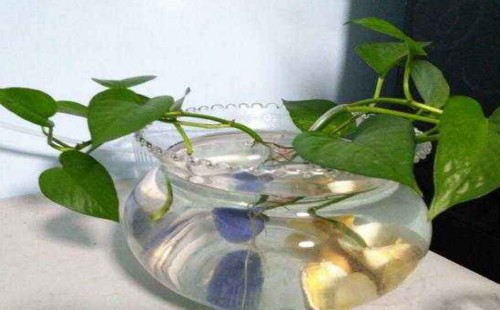
Can Hydroponic Pothos Take Sunlight? Here's the Right Way to Care for It
Pothos is an evergreen plant with large, emerald-green leaves. It has strong vitality, is very easy to keep alive, and also has a powerful air-purifying ability, so it is very suitable as a household potted plant placed indoors, and it is a foliage plant very well suited to indoor care. Not only that
-
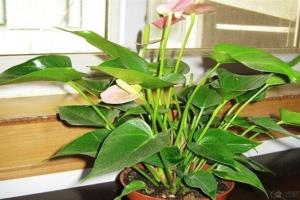
Can Anthurium Take Direct Sunlight? Care Should Avoid Direct Sunlight
Can Anthurium Take Sunlight? Anthurium Cannot Take Direct Sunlight
条件筛选