-

How can pests and diseases of edible fungi be effectively controlled?
How can pests and diseases of edible fungi be effectively controlled?
-
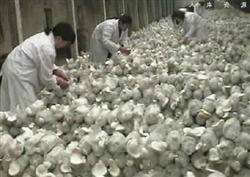
What causes irregular pinning in white lingzhi mushrooms (Pleurotus nebrodensis), and how can it be prevented and controlled?
What is irregular pinning in white lingzhi mushrooms (Pleurotus nebrodensis), and how should it be prevented and controlled? Please provide an introduction and control methods. Irregular pinning in white lingzhi mushrooms means that mushroom primordia do not form normally at the two ends of the mushroom bag, but instead appear in the middle of the bag, which has a major impact on yield. The following four points can effectively prevent irregular pinning in white lingzhi mushrooms: First, the mushroom bag filling must be standardized. Try to fill the bags evenly and tightly...
-

What to do when oyster mushrooms grow contaminant fungi? Covering with mud and sand can prevent and control it
Contaminant fungal infections often occur during oyster mushroom cultivation, and are especially severe in hot seasons, causing reduced yields in mild cases and total crop loss in severe cases. Most of these contaminant fungi are aerobic and tolerant of high temperatures and high humidity. Covering with mud and sand can prevent and control them. The specific techniques are introduced below: 1. Prevention and control of contaminant fungi in bed-cultivated oyster mushrooms. When contaminant fungal contamination appears in large-bed oyster mushroom cultivation, the cause of contamination should first be identified. Common causes include sudden high temperatures, water entering the substrate, unclean surrounding environment, insect pests, etc. Based on the specific situation, remove the source of contamination, then treat the contaminated oyster mushrooms as follows: if contaminant fungi appear sporadically on the substrate surface, smear or cover the affected area with thick lime slurry. When a large amount of contaminant fungi appears, dig up mud and sand from more than 30 cm below the ground surface, crush it, add 2% lime powder and mix thoroughly, remove the plastic film, and cover the contaminated part of the substrate surface with the lime-mixed mud and sand to a thickness of 2-3 cm. The covered area should be slightly larger than the contaminated area, and the mud and sand should be patted slightly firm. When the substrate surface is severely contaminated, the entire bed surface should be covered with mud and sand, then covered with a plastic film that has been washed clean with disinfectant solution, and routine management should be resumed. After a few days, the mycelium will resume growth.
条件筛选