-

How to Grow and Care for String of Buttons (Crassula perforata) and Notes, Plus Propagation and Pruning Methods
"How to Grow and Care for String of Buttons" The String of Buttons plant gets its name because the plant resembles strings of ancient coins, and it is one of the popular small succulents...
-
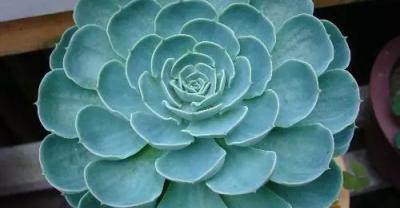
How to Grow and Care for the Succulent Sedeveria 'Harry Butterfield' and Things to Watch Out For
Sedeveria 'Harry Butterfield' is a succulent in the Crassulaceae family that loves a sunny, cool and dry environment, is drought-tolerant, needs appropriate shading in summer, and should be placed in a ventilated environment, with more...
-

Why do pigs love biting other pigs' butts?
It may be pica. This disease is one of the problems commonly encountered in pig farming, and it occurs frequently, especially in winter and spring when light duration is insufficient and temperatures are low. Improper feeding management, an unsuitable environment, unbalanced feed nutrient supply, disease and metabolic disorders are triggers of this disease. Because of long-term pica, pigs often suffer stunted growth, weight loss and loss of appetite, causing unnecessary economic losses for pig farmers. 1. Clinical symptoms Pigs with pica show tail biting, ear biting, rib biting, navel sucking, especially
-
The development prospects for Butterfly Bush are extremely broad
Butterfly Bush is the most popular landscaping tree species in Europe and America, and is highly suitable for promotion in North China, Central China, East China, and parts of Northeast and Northwest China. In terms of landscaping effects, this tree species has many advantages. It is a perennial, fast-growing, semi-evergreen shrub with grayish-green leaves that are large and opposite, about 25 cm long. From summer to late autumn, it continuously blooms with lush panicles, the inflorescences about 40 cm long, in diverse colors including purple, blue, pink, white, and yellow. The flowering period lasts up to 6 months, which can compensate for the scarcity of blooming plants in summer. The flowers have a strong fragrance, attracting many
-
What are the precautions for keeping butterflyfish?
1 Avoid keeping butterflyfish of the same species and the same size together. Butterflyfish of different species and genera do not have this concern. Butterflyfish that have been kept in the aquarium for a longer time do not like new fish moving in, and they will ram and attack each other. In such cases, attention must be paid to isolation. Places for the fish to hide must be set up in the aquarium. 2 Beginners and people who are busy with work are not suitable for keeping butterflyfish of a size that is too large or too small. Because small butterflyfish have small mouths and eat slowly, their food is often snatched away by larger fish or fish that eat quickly. For small butterflyfish under 3cm, they must be fed fine food several times a day.
-
What is Golden Butterfly Shrimp? A detailed guide in one article
Wash the shrimp, peel and split them open, leaving the last segment of the tail shell intact. Prepare flour, breadcrumbs, and beaten eggs for coating. Coat the shrimp in order: egg, then flour, then breadcrumbs. Heat oil in a pan to 60% hot (about 160°C/320°F), deep-fry until cooked, and it's done. It really looks great!
-
Detailed processing method introduction for butterfly pig head
The butterfly pig head has a cured yellow color, a delicious and mellow aroma, a purplish-red tint, and is fatty but not greasy, and is deeply loved by consumers. (1) Material selection: choose healthy, disease-free pig heads with no injuries or disabilities, a full head, moderate size, and intact ears, nose, and mouth. (2) Ingredients: for every 50 kg of fresh pig head meat, use 4 kg of refined salt, 50 g each of Sichuan pepper, ginger, and star anise, 150 g of baijiu, 25 g of saltpeter, and an appropriate amount of spices. (3) Preparation: debone the pig head, pluck clean the fine hairs, remaining hairs, and hair roots on the scalp, and rinse clean with 40°C warm water. (4) Curing: evenly coat the washed and drained pig head with the ingredients
-
Butter Crab
The butter crab is a rare and prized crab species that has emerged in recent years as a delicacy in Guangdong, Hong Kong, China, and Macao, China, and is renowned throughout southern China, earning it the laudatory title "king of crabs." Its price tops that of all domestic crabs; in Hong Kong, China restaurants it is priced by the tael, with every 50 grams selling for as much as several dozen Hong Kong dollars. So the butter crab can be said to be a uniquely precious seafood delicacy of the Guangdong-Hong Kong-Macao region. The "in-season" marketing period has arrived once again, making this the perfect time to savor it. Butter crabs grow in areas where saltwater and freshwater meet, so their places of origin are somewhat limited; they are found mostly in Lau Fau Shan in Hong Kong, China, and the Pearl River basin, especially at Humen Taiping (Benwan) in Dongguan City.
-

Butterfly Farming Techniques Explained: Environmental Management and Rearing Methods
Butterfly Farming Techniques
条件筛选