-
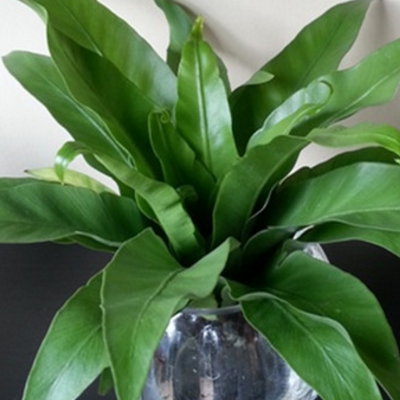
Can Bird's Nest Fern Be Grown in Water? Solutions for Brown, Crispy Leaf Edges
Bird's nest fern, many people know it and it can be grown at home. Let's see whether bird's nest fern can be grown in water and what to do about brown, crispy leaf edges: Can bird's nest fern be grown in water: Yes, it can be grown in water, and the method is as follows: Temperature, the suitable growing temperature for bird's nest fern is 16°C-27°C, and when the temperature drops below 10°C
-

Symptoms and Control Methods of Cherry Brown Spot Disease
Cherry brown spot disease, also known as cherry brown spot shot hole disease, is an important disease of cherry leaves. It was reported early in Japan and other countries. It occurs commonly on cherry trees in various regions of China, including Nanjing, Taiyuan, Tianjin, Shanghai, Chengdu, Xi'an, Suzhou, Jinan, Changsha, Lianyungang, Wuhan, and Taiwan, China, among other provinces and cities, with severe outbreaks in Wuhan, Chengdu, and Tianjin. Infected cherry leaves develop shot holes, which not only affects their ornamental value but also causes premature defoliation, affecting the plant's growth and development. The disease also attacks cherry, Japanese apricot, peach, and other stone fruit ornamental trees. Symptoms
-
How to prevent and control brown spot and shot hole disease in cherry blossoms
[Distribution] Cherry blossom brown spot and shot hole disease is an important disease of cherry blossom leaves and occurs in cherry blossom growing areas throughout China. [Symptoms] It mainly affects mature leaves and also affects young twigs. Infected leaves first show pinhead-sized purplish-brown dots, which soon enlarge into circular to nearly circular spots, 1-4 mm, brown in the center, slightly with concentric rings, with purple or reddish-brown edges, and grayish-brown fuzzy dots appear on the lesions; later, an abscission layer forms around the lesions, brown mold-like growth appears on both sides of the diseased leaves, and the center of the lesion dries up and falls off, forming round small holes and producing shot hole spots,
-
Occurrence Patterns and Control Methods of Cherry Brown Spot Shot Hole Disease
Symptoms: Small brown, grayish-brown, or purplish-brown spots initially appear on the leaves, gradually forming circular lesions that are non-water-soaked and opaque, with no yellow-green halo around the lesions, 2-4 in diameter, with clear boundaries and a purplish-brown outer margin. In the later stage, the center turns white or brown, slightly zonate, and the lesions die and fall off, forming irregular shot holes. 2. Occurrence patterns: The pathogen overwinters on fallen leaves and spreads by wind and rain in the following spring. The disease begins in June, with the peak period from August to September. Heavy rainfall promotes disease occurrence and epidemic, and weakened tree vigor leads to severe disease. 3. Control methods:
-
What are the symptoms of cherry brown spot shot hole disease?
Symptoms of cherry brown spot shot hole disease: This disease occurs on leaves, new shoots and fruit. But it mainly damages leaves, producing circular or nearly circular spots on both sides of the leaves, about 1 to 4 mm in diameter, with clear edges and slight concentric rings; the outer ring is sometimes purple or reddish brown, and the center is grayish white or brown with faint concentric rings. In the later stage, grayish brown mold-like material, namely the conidiomata, occasionally appears on both sides of the spots, more abundantly on the underside of the leaves. The spots often dry up and fall off, forming shot holes, and the holes at the edges of these spots are neat. Leaves with many shot holes drop early, and the spots on new shoots are purplish brown, with grayish brown mold-like material also produced on the spots.
-
How to Effectively Prevent and Control Cherry Blossom Brown Spot Shot Hole Disease
I. Symptoms: Shot hole disease can be divided into fungal and bacterial types. Cherry blossom brown spot shot hole disease is caused by fungi. It mainly damages leaves and also infects new shoots. It usually starts from the lower part of the canopy and gradually spreads upward. In the early stage of the disease, needle-tip-sized purplish-brown small spots are scattered on the upper side of the leaves, later expanding into round or nearly round lesions 3-5 mm in diameter. The edges of the brown spots are purplish-brown, and grayish-brown mold spots appear on the lesions in the later stage. An abscission layer forms at the edge of the spot, and the lesion dries up and falls off, forming shot holes. II. Disease Pattern: The pathogen of cherry blossom brown spot shot hole disease overwinters in diseased leaves or shoot parts
-
How to prevent and control bacterial shot hole disease and brown spot shot hole disease on cherry blossom leaves?
How to prevent and control bacterial shot hole disease and brown spot shot hole disease on cherry blossom leaves? Small shot holes often appear on cherry blossom leaves, and in severe cases they cause the leaves to turn yellow or even drop. This is caused by bacterial shot hole disease and brown spot shot hole disease of cherry blossoms. (1) Bacterial shot hole disease of cherry blossoms: It mainly harms cherry blossom leaves. In the early stage of the diseased leaves, light brown water-soaked small spots appear, which gradually form nearly round brown or purplish-brown lesions surrounded by light yellow halos. In the later stage, the lesions dry up and fall off, forming shot holes. The pathogen of bacterial shot hole disease of cherry blossoms is a species of bacterium in the genus Xanthomonas.
-
What are the control methods for geranium brown spot disease?
Control of geranium brown spot disease: 1. Collecting and burning diseased and dead plant tissue is the key to controlling this disease. For potted plants or field beds, waterlogging and damp, shady conditions should be avoided. 2. Before and after the onset of the disease, spray a 50% carbendazim 800 to 1000 times dilution or a potassium permanganate 1500 times dilution, once every 10 days, for 2 to 3 consecutive sprays.
-
What are the control methods for rice brown spot?
Symptoms Also known as rice sesame leaf blight. It occurs in all rice-growing regions nationwide. Disease can occur from the seedling stage to the harvest stage, and all aboveground parts of the rice plant can be affected, with leaves being the most common. When seeds are affected at the germination stage, the coleoptile turns brown, the sprout fails to emerge, and the cotyledon dies. Leaf and leaf sheath disease at the seedling stage mostly appears as elliptical lesions, the size of sesame seeds, dark brown; sometimes the lesions enlarge and merge into strips, and when there are many lesions the seedlings die. On leaves of adult plants, infection begins as small brown spots, gradually enlarging into elliptical spots the size of sesame seeds, with the center of the lesion brown to grayish white, the margin brown, and around it yellow halos of varying
-
Symptom Identification and Control Methods for Mushroom Brown Blotch Disease
Mushroom brown blotch disease, also known as dry bubble disease, is fairly widespread and occurs frequently on mushroom beds, causing great damage. Symptoms: When the disease occurs, brown spots usually form on the stipe, cap, and gills, and become sunken; the mushrooms often lose their firmness and become deformed. In severe cases, the mushrooms rot. Diseased young mushrooms are mostly deformed, with the edge of the cap appearing serrated, or the stipe bending; some look like garlic bulbs, with the stipe thicker than the cap. When large mushrooms are affected, localized brown spots usually appear; the diseased mushrooms later dry out and become leathery, and a gray mold layer forms on the diseased parts. Unlike white rot disease, the diseased mushrooms rot
条件筛选