-

Wheat prices are still bottoming out, and traders are eager to unload their inventories
Affected by sluggish demand for food wheat, the disappearance of feed demand, large-scale auction sales of state-reserved wheat, and the rotation and release of local reserves of wheat from warehouses, domestic wheat futures and spot prices have continued to decline since October. Traders are eager to unload their wheat inventories, and in some regions there are phenomena of competing price cuts to sell
-
Rice prices emerge from the doldrums, corn prices bottom out and rebound
Data released by the Anhui Survey Office of the National Bureau of Statistics shows that in the third quarter of 2014, grain production prices in the province rose 4.3% year on year. Among them, rice prices rose 6.3% year on year, wheat prices rose 2.4%, and corn prices rose 3.9%. Because this year's total autumn grain output
-
Rural reform must have a legal basis and firmly hold the bottom line
Rural reform involves a wide range of areas, has a large impact and is highly policy-oriented; the key is to have a legal basis and hold the bottom line. Chongqing is a pilot city for comprehensive coordinated urban-rural reform designated by the state. Faced with new situations, new circumstances and new requirements in agricultural and rural development, it is not acceptable to fail to deepen reform
-
Sea Cucumber Prices Hit Bottom and Rebound Sharply, Aquaculture Enters a Boom Cycle
Last week, the average price of sea cucumber at the Weihai aquatic products market in Shandong was 120 yuan per kg, up 9% week-on-week and up 20% since May. Industry insiders analyze that due to restricted high-end consumption over the past 3 years and high inventories, sea cucumber prices fell sharply and have recently dropped back to a 5-year low.
-
How can rural financial risk prevention hold the bottom line?
Recently, illegal fundraising and P2P bosses absconding with funds have been reported by the media from time to time. The spirit of the Central Economic Work Conference made clear that financial service innovation and financial risk prevention must hold the "bottom line" of safety. In recent years, as rural financial workers, what we have felt particularly strongly
-
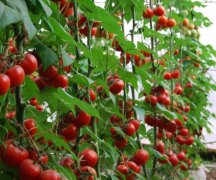
Tomato Growing Methods and Tips: Why the Bottom Turns Black and Planting Precautions
How should tomatoes be grown? Why does the bottom of a tomato turn black? What are the planting precautions and tips? Want to find out? Then let's take a look together! Tomato Growing Methods The tomato, which is both a vegetable and a fruit, is a produce many people love, and it has an extremely large number of varieties, so here is a brief
-
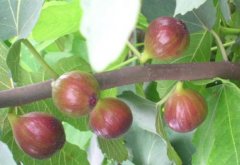
Fresh figs are rarely seen: can you eat the split bottom and the skin?
In the legends of Mediterranean coastal countries, figs are called the "sacred fruit" and are one of the offerings used in sacrifices. They have high nutritional value and are deeply loved by modern people, and the price of figs is also rather expensive. But when you are selecting and eating them, do you
-
Causes of Black Bottom in Persimmons and Control Methods
Persimmon is a berry-type fruit of the Ebenaceae family. The ripening season is around October. The fruits come in many shapes, such as spherical, oblate, nearly conical, and square, etc. Different cultivars range in color from light orange-yellow to deep orange-red, in size from 2 cm to 10 cm, and in weight from 100 g
-
Detailed Explanation of Freshwater Shrimp Farming Techniques and Management Methods
Summary Pond selection: The pond bottom should be flat, the water quality fresh, drainage and irrigation convenient, and water retention good, etc. Pond clearing: 20-30 days before stocking shrimp fry, drain the pond water and promptly remove excess silt, then disinfect with quicklime or bleaching powder. Aquatic plants: Plant alligator weed, tape grass and other plants on the pond slopes around the pond. Stocking: Release shrimp fry when the water temperature is stable above 20°C. Feed: Artificial feed combined with small trash fish and other fresh live feed. Water quality: Ensure sufficient dissolved oxygen. Management: Patrol the pond morning and evening, and actively prevent and control diseases.
-
What are the key technical points for polyculture of yellow catfish?
The yellow catfish (Pelteobagrus fulvidraco) is a bottom-dwelling omnivorous fish, with delicate flesh, rich nutrition and extremely high economic value, making it a farming species with great market potential. The yellow catfish has strong adaptability and a slower growth rate than cyprinid fish, but grows relatively fast for its own species; fry bred in the same year can reach market size in that same year, and the population yield is relatively high. Because artificial breeding technology is not yet mature, large-scale artificial farming faces certain difficulties, so carrying out polyculture has become imperative. Polyculturing yellow catfish in fish ponds has the following advantages: First, it can feed on low-value small miscellaneous fish and shrimp, residual feed of fish, organic debris, zooplankton, etc. in the pond, increasing the net yield of the pond. Second, the yellow catfish feeds on parasites such as Lernaea in the water, which can reduce the occurrence of fish diseases. Third, without affecting the yield of the main cultured species, adding 5 kg to 20 kg of yellow catfish per mu can increase the benefit by more than 100 yuan per mu. The polyculture techniques are introduced as follows:</p><p></p><p>I. Polyculture in adult fish ponds</p><p>Polyculturing yellow catfish in adult fish ponds places no strict requirements on the main fish species cultured in the pond. Ponds culturing the four major Chinese carps and ponds mainly culturing feeding fish (such as carp and crucian carp, tilapia, freshwater pomfret) can all be used for polyculturing yellow catfish. The pond area is 20 mu to 30 mu, the water depth is 2 m to 2.5 m, with sufficient water source, good water quality and convenient water injection and drainage. Generally, 40 to 50 yellow catfish are stocked per mu, with a size of 3 cm per fish to 4 cm per fish, which can increase the yellow catfish yield by 5 kg to 8 kg per mu.</p><p>II. Polyculture in broodstock ponds</p><p>Polyculture in broodstock ponds can not only make full use of the water space of the broodstock pond and improve the utilization rate of the broodstock pond, but the yellow catfish can also feed on some small wild fish in the broodstock pond that compete with the broodstock for food and consume oxygen. After the artificial breeding of broodstock is completed, stock 40 to 60 yellow catfish per mu, with a size of 2 cm per fish to 3 cm per fish, which can increase the yellow catfish yield by 6 kg to 10 kg per mu.</p><p>III. Polyculture in adult crab ponds</p><p>Polyculturing yellow catfish in crab ponds can make full use of the natural bait organism resources in the crab pond. Generally, the crab pond area is 30 mu to 50 mu, with a aquatic plant coverage rate of about 50%; after the crab seed is stocked, stock 30 to 50 yellow catfish per mu, with a size of 3 cm per fish to 5 cm per fish, which can increase the yellow catfish yield by 5 kg to 10 kg per mu.</p><p>IV. Polyculture in rivers and ditches</p><p>There are many low-value wild miscellaneous fish in rivers and ditches, and polyculturing yellow catfish can save artificial bait. Generally, stock 40 to 60 yellow catfish per mu, with a size of 2 cm per fish to 4 cm per fish, which can increase the yellow catfish yield by 6 kg to 12 kg per mu.</p><p>V. Polyculture in large water bodies</p><p>Polyculturing yellow catfish in large water bodies gives a high population yield, neither affecting the yield of the main cultured species nor requiring additional bait. Generally, stock 40 to 60 yellow catfish per mu, with a size of 3 cm per fish to 4 cm per fish, which can increase the yellow catfish yield by 8 kg to 15 kg per mu.</p><p>No matter which polyculture method is adopted, the following matters must be noted in farming management:</p><p>I. Maintain a relatively high dissolved oxygen level in the water body. The yellow catfish has relatively high requirements for dissolved oxygen in pond water, so polyculture requires fresh water quality and sufficient dissolved oxygen; during the growing season, new water should be added in a timely manner, and during the high-temperature season, water should be changed frequently; maintaining a slight water flow is even better.</p><p>II. Maintain a reasonable stocking density and stocking size. According to the bait organism biomass in the water body, scientifically and reasonably determine the polyculture ratio and stocking size; generally, 30 to 60 fish per mu is appropriate, with a stocking size of 3 cm per fish to 4 cm per fish. If the density is too high and the size too small, the market size cannot be reached by the end of the year.</p><p>III. After polyculturing yellow catfish in a fish pond, it is no longer suitable to polyculture other carnivorous fish, and yellow catfish should not be polycultured in ponds for farming freshwater prawns or freshwater crayfish.</p><p>IV. During the farming process, if the yellow catfish are found to be too small, it indicates that the natural bait organism biomass in the fish pond is insufficient; small miscellaneous fish and shrimp, summer fry of domestic fish may be appropriately added, or specially formulated artificial yellow catfish bait may be fed. When feeding artificial bait, the main cultured species should be fed first (put into the shallow water area), and then the yellow catfish (put into the deep water area). The yellow catfish has the living habit of hiding by day and coming out at night, so feeding should mainly be done at night.</p><p>V. When polyculturing yellow catfish in crab ponds, because the river crab and yellow catfish occupy the same water layer position ecologically, it is easy to cause competition for ecological position between the two. Therefore, sufficient natural bait organisms must be maintained in the crab pond, otherwise the yellow catfish rearing effect will be affected. In advance, 300 kg to 400 kg of spiral shells per mu can be put into the crab pond, along with some egg-bearing crucian carp and egg-bearing freshwater shrimp, allowing them to reproduce naturally for the river crab and yellow catfish to feed on freely.</p>
条件筛选