-
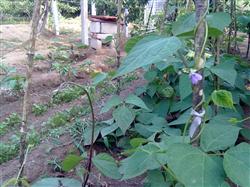
When is the best time to apply boron fertilizer to kidney beans? Analysis of planting and fertilizing timing
When is the best time to apply boron fertilizer to kidney beans? Please give guidance. Generally, to increase the flowering and pod-setting rate of kidney beans and reduce flower and pod drop, vegetable growers often supplement boron fertilizer during the flowering period. Over time, habit becomes second nature, and supplementing boron fertilizer during the flowering period has become a routine technical measure for vegetable growers to prevent flower and pod drop in kidney beans. However, in kidney...
-
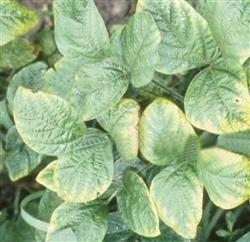
What symptoms appear when soybeans are deficient in boron and molybdenum?
What happens when soybeans are deficient in boron and molybdenum? Here is an introduction. Soybean boron deficiency: it causes leaves to become dark green and thickened, internodes to shorten, stunting, and clustered leaves to form. Flower buds turn white or light brown, and tissues become necrotic. In severe cases, scorch-like necrotic spots form along the leaf veins. Soybean molybdenum deficiency: the leaf color between the veins becomes paler and turns yellow, ...
-
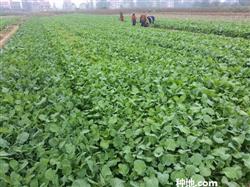
What should be noted when applying boron to rapeseed? Master the correct application method
How to fertilize rapeseed scientifically? Please advise. In rapeseed production in the Yangtze River Basin, the application rates of nitrogen, phosphorus and potassium fertilizers are generally low, the nutrient ratios are unbalanced, organic fertilizer application is insufficient, the straw return rate is low, and deficiencies of trace elements such as boron occur from time to time. Fertilization principles: increase organic fertilizer application and advocate straw return; supplement according to the soil...
-

Techniques for Achieving High-Quality, High and Stable Yields in Rapeseed through Heavy Application of Boron Fertilizer
Rapeseed is a boron-demanding crop, and especially high-yield, high-quality cabbage-type "double-low" hybrid rapeseed is particularly sensitive to boron deficiency. Boron deficiency at the seedling stage causes slow rooting, dark green and wrinkled leaves, and stunted growth; boron deficiency at the bud-bolting stage causes swelling of the root crown, leaves turning purple to blue-purple, and abnormal flower bud development; boron deficiency at the flowering stage causes plant dwarfing and abnormal pollen...
-
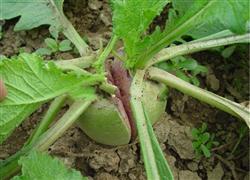
What to do when radishes are pithy? Timely boron fertilizer supplementation is key
The main cause of split roots in radishes is uneven water supply. It tends to occur in the mid-to-late growth stage, mostly splitting lengthwise along the fleshy root, with deep cracks of varying lengths. Cracked fleshy roots are prone to soft rot and do not store well. In the early growth stage, if high temperature and drought occur and soil moisture supply is insufficient, the skin of the fleshy root can...
-

What to do about hollow radish? Scientific boron supplementation effectively prevents it
Hollow radish affects its edible value and quality. Many vegetable growers cannot find the cause of hollow radish. In fact, hollow radish is caused by boron deficiency in the soil. The following method can be used to apply boron fertilizer to prevent hollow radish: when sowing as base fertilizer, use 300 grams of 17% boric acid or 500 grams of 11% borax per mu, mix into 5-10...
-

What to Do About Boron Deficiency in Rapeseed? Symptom Identification and Control Methods
Boron Deficiency Symptoms in Rapeseed and Control Methods
-

What to Do About Boron Deficiency in Cucumbers? Detailed Explanation of Causes and Control Methods
What to Do About Boron Deficiency in Cucumbers
-

What to Do About Boron Deficiency in Cauliflower? Symptom Identification and Control Methods
Cauliflower Boron Deficiency Symptoms and Control Measures
条件筛选