-

High-yield cultivation method of cutting oyster mushroom blocks into pieces, standing them upright and covering with soil
Mushroom farmers in Dongkan Town, Binhai County, Jiangsu Province, through years of oyster mushroom cultivation practice, worked out the six-character high-yield formula for oyster mushrooms of "cutting into blocks, standing upright, covering with soil", which increased the oyster mushroom yield per mu by more than 2000 jin compared with the past, with an increase rate of about 30%, and at the same time, production costs dropped greatly. Their high-yield experience mainly consists of three steps: "cutting into blocks, standing upright, covering with soil". The so-called "cutting into blocks" means that at the end of harvesting the second flush of mushrooms in furrow-bed cultivation, the dead mushrooms, stipes and the like remaining on the bed surface are cleaned up, and a sharp knife is used to cut the cultivation substrate into multiple pieces of about 50 cm
-
How to treat piglet yellow and white scour? Acupoint blocking treatment at the Shenzhong point
Acupoint location: the front end is adjacent to the last rib, and the rear end is about 0.5-1.3 cm from the lumbar angle (hip joint). It is 1.2-1.8 cm from the dorsal midline, which is the Shenzhong point. Use a No. 9 1-2 needle, with an injection depth of 0.3-0.5 cm; the needle insertion point must be accurate. According to the severity of the condition, inject 1-4 ml of 0.5%-1% procaine hydrochloride. Perform blocking injection 1-2 times daily, alternating between the left and right Shenzhong points. In observations of 168 cases of piglet yellow scour treated, 155 cases were cured, with a cure rate of 92.3%; treatment of
-
Application of Euonymus japonicus 'Aureo-marginatus' in garden color blocks
Garden construction cannot do without the use of color. At present, red, yellow and green shrubs are commonly used in garden construction to form color blocks, so as to enrich the color composition of the garden. Because plants in red and yellow are relatively few, currently red small shrubs are mostly Loropetalum chinense var. rubrum, yellow small shrubs are mostly Ligustrum vicaryi, while green small shrubs have relatively rich varieties, including Euonymus japonicus 'Microphyllus' and Ilex crenata 'Convexa'. The commonly used Ligustrum vicaryi among yellow small shrubs has its obvious shortcomings: Ligustrum vicaryi is a deciduous shrub of the genus Ligustrum in the family Oleaceae, light-loving, slightly shade-tolerant, not tolerant of drought
-
How to cultivate the growing blocks in shiitake mushroom block cultivation (Part 1)
A well-cultivated growing block does not grow mold, its mycelium grows vigorously, and its color quickly changes from pale yellow to white, then from white to reddish-brown with a glossy sheen. This is the foundation for a high shiitake yield. 1. Mycelial healing stage: Because the mycelium is damaged to some extent when the bottles are dug out and pressed into blocks, there must be a process of recovery and healing. The key management points at this stage are: maintain a suitable temperature (around 24°C), humidity and fresh air, and prevent mold from occurring. The key is to control the timing and frequency of ventilation according to changes in air temperature. Ventilation includes two
-
Management Techniques for the Color-Turning Stage of Block-Cultivated Shiitake Mushrooms
Semi-cooked shiitake block cultivation; whether the color turning of the mushroom blocks is good or poor directly affects yield and quality. The color-turned layer of shiitake plays a role similar to tree bark. After color turning, it can be divided into 4 types, namely brownish-red, dark brown, light brown and grayish-white. Brownish-red is the most ideal; it represents mushroom blocks with appropriately sparse and dense fruiting, uniformity and consistency, high yield and good quality. Dark brown indicates that the mushroom skin is relatively thick, fruiting is late, individual mushrooms are larger, and yield is low. Light brown indicates that the mushroom skin is relatively thin, fruiting is earlier and concentrated, deformed mushrooms are numerous, mushrooms are small, caps open easily, and yield is low. Grayish-white mushroom blocks can produce
-
Key Technical Points and Detailed Methods for Block Cultivation of Nameko Mushroom
Nameko mushroom, also known as Pholiota nameko, is a low-temperature wood-rotting edible fungus. It contains nutrients such as protein, fat, carbohydrates, and amino acids. When eaten fresh, its flesh is tender and its flavor is delicious. At the same time, nameko polysaccharides have a certain inhibitory effect on tumors. Therefore, nameko is a fungus with both edible and medicinal value. The key technical points for nameko cultivation are briefly described as follows. 1 Growth and development conditions 1.1 Temperature The optimum temperature for the mycelial stage is 20-24°C. During the fruiting stage, different temperature-type varieties have different fruiting temperature requirements. Early
-
-
-

What to do when a solid wall partition blocks too much light? These 6 methods are translucent, bright and more beautiful
Renovating a house is a troublesome matter, and it is really too difficult to get everything just right. But Huahua knows a flower friend, Mr. Wang, whose home renovation is truly simple and elegant yet well organized, especially the way he did...
-
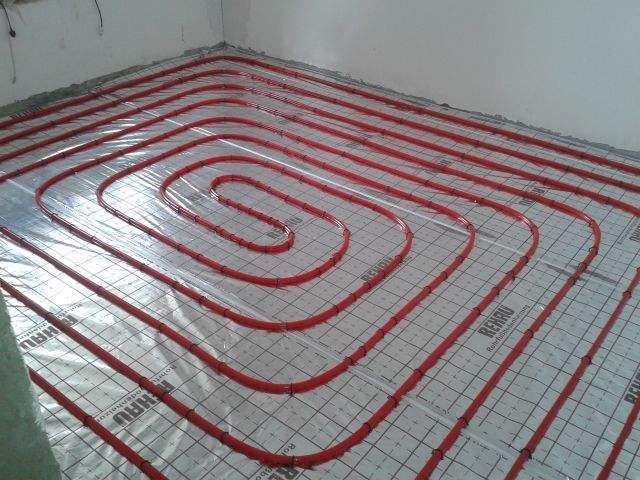
What should you do if the floor heating is not warm in winter? The repair technician says it is most likely blocked here
Autumn seems to have passed away before we even had time to welcome it, at the age of two weeks. Recently the temperature has begun to gradually drop. Friends in the north have probably already felt the precursor of winter, but friends in the south may...
条件筛选