-

Are triploid large-leaf black locust and large-leaf fast-growing locust the same variety?
1. The tetraploid large-leaf black locust is an excellent variety selected through years of dedicated research and experimental comparison from among several superior polyploid black locust clones introduced from abroad. The tetraploid large-leaf black locust is an artificially induced tetraploid plant, with the characteristics of fast growth, large leaves and high biomass. Its leaf width is more than 2 times that of the common black locust, and its compound leaf dry weight, single leaf dry weight and total leaf dry weight are each 1.5 times or more than those of the common black locust. Compared with the common black locust, the tetraploid large-leaf black locust has a denser crown, thicker branches and a stronger photosynthetic capacity.
-
What causes blackened leaf tips and root rot in Chinese orchids (Cymbidium)?
1. Excessive temperature and direct sunlight easily scorch the leaf tips. 2. The potting medium is too rich and stays wet without drying out; in mild cases this causes poor root development and blocked nutrient uptake, making the leaf tips prone to blackening, and in severe cases it causes root rot and death of the orchid plant. 3. Pests. There is a pest similar to aphids that congregates in the potting soil and lives on the orchid roots; it is very small and usually hard to spot, and although its direct damage is not great, it easily infects the orchid roots with disease, causing root rot.
-
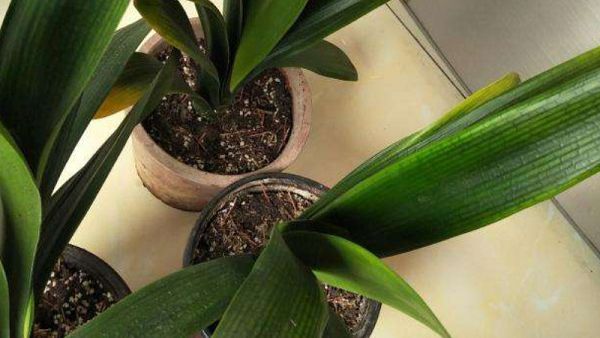
Reasons for Blackening of Clivia Leaf Centers and Treatment Methods
How to Treat Clivia with Blackened Leaf Centers
条件筛选