-

Decoding the production and sales pain points behind the heartwarming potatoes
The production and sales pain points hidden behind the "heartwarming potatoes"
-
Garlic prices hard to predict? Garlic farmers and traders on the calculations behind garlic speculation
Garlic hard to predict? Speculating on garlic plays people! A garlic farmer and a garlic trader talk about "garlic calculations"
-
How can the difficulty of migrant workers' wage claims be solved? Confronting the crux behind wage arrears
Confronting the "difficulty of wage claims" for migrant workers
-
The new left-behind phenomenon in rural populations deserves attention
We should pay attention to the new left-behind phenomenon in rural populations
-
Behind a Crisp Mandarin There Is a Story: Father and Son Once Clashed Over Cutting Down a Tree
Father and Son Once Clashed Over Cutting Down a Tree, and Behind a Crisp Mandarin There Are Actually These Stories Too...
-
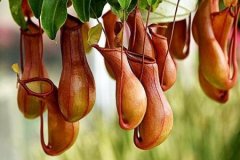
Where Is the Pitcher Plant Native To? Propagation Methods and the Digestion Principle Behind Its Insect-Eating
The main habitat of the pitcher plant is the tropical regions of Asia. Do you know about pitcher plants? Would you like to learn about them? Let's take a look together. How do pitcher plants propagate? Pitcher plants mainly propagate by "cuttings." Taking cuttings of pitcher plants is very easy, and
-
The culprit behind potato zebra chip disease is the potato psyllid
The potato psyllid is the culprit behind potato "zebra chip" disease. October 26 news: research by the U.S. Agricultural Research Service has found that the cicada-like insect, the potato psyllid, is the culprit behind potato "zebra chip (ZC)" disease. Zebra chip (ZC) refers to a type of black streaking that appears on potato tubers. This zebra chip disease broke out in Mexico in 2004-2006 and caused millions of dollars in losses for growers in the U.S. state of Texas. Researchers are currently preventing zebra chip disease by monitoring potato psyllids and spraying insecticides. In
-
Pigs rooting at the pen and gnawing at soil are not just mischief; the reasons behind it need to be understood
Pigs rooting at the pen and gnawing at wood and soil are not just playing around; it is an abnormal phenomenon that affects the pigs' normal growth and development. The main causes are: first, growing-finishing piglets lack the mineral feed needed for growth; lactating sows and pregnant sows use their own mineral elements for the normal growth of suckling piglets and fetuses, and the minerals in the feed are hard to meet the demand. Second, the feeding is unreasonable: too little feed is given, the pigs do not eat their fill, and no water is provided with the feed. Third, sick pigs also show pen-rooting and gnawing at wood and soil. Prevention methods: first, pay attention to the feed mixing ratio and add mineral
-
Understanding a Dog's Tail Language: Decoding the Meaning Behind Tail Movements
A dog's tail conveys certain meanings through movement, reflecting its level of intelligence, social status and inner feelings. Tail wagging can appear in dogs as early as 20 days of age. Information is generally conveyed through three channels: posture, movement and shape. Because a dog's eyes are more sensitive to movement than to colour or shape, it uses tail wagging to communicate. 1. Stiff and extended straight out: this generally carries an aggressive meaning, a way of issuing a challenge when facing strangers and intruders. It can also be used when two dogs that do not know each other meet for the first time, as a rather cautious greeting.
-
What is the story behind "ground bud mushrooms," also known as "soil-topping mushrooms"?
Symptoms: They mainly appear at the early fruiting stage. The fruiting bodies are attached at a low position, usually inside the compost, on the surface of the compost, or in the lower part of the coarse soil layer, and after growing they break through the soil and push up through the mud. Causes: 1. Soil is mixed into the compost, or the casing layer is unevenly dry and wet. When the temperature, humidity, and air conditions inside the compost are suitable for fruiting body growth, the mycelium twists around the soil, thickens, and forms primordia. After the primordia differentiate, they grow upward and push up through the mud. If upward conditions are unsuitable, they will even turn around and grow downward under the bed, forming bottom-of-bed mushrooms. 2. If the coarse soil is watered over too long a period, and after watering the mushroom house is ventilated too much and the temperature in the mushroom house drops, mycelial growth into the coarse soil is inhibited and fruiting is promoted too early. If the fine soil is applied too late or too thickly, if watering is not timely, if watering is too fast or too urgent, or if ventilation lasts too long after watering, the soil layer lacks sufficient moisture and the mycelium does not climb onto the fine soil for a long time, all of which lower the fruiting position. 3. If water is sprayed too early or too urgently at the fruiting stage, or if the amount of water sprayed is too large, upward growth of the mycelium in the soil layer is inhibited, forcing the mycelium to twist together among the coarse soil particles, thereby lowering the fruiting position, causing sparse fruiting and abnormal fruiting positions, and increasing the number of ground bud mushrooms.
条件筛选