-
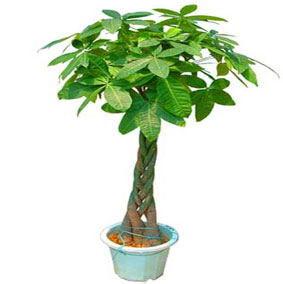
A detailed guide to sowing a money tree (Pachira aquatica) - even beginners can learn it easily
The money tree, also known as Malabar chestnut, Guiana chestnut, and goose-foot money, is an evergreen small tree of the Malvaceae family. It is native to Costa Rica in Latin America, Australia, and some small islands in the Pacific, and is also distributed in the tropical regions of southern China. The money tree is a very common potted plant, and most flower enthusiasts do not know that the money tree can be grown from seed.
-
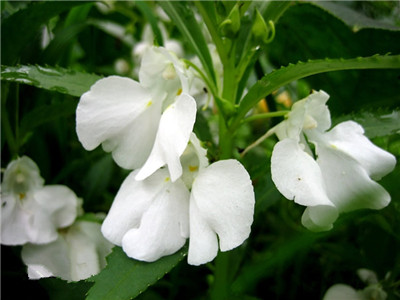
A detailed guide to growing Impatiens - beginners can learn it too
Propagation and cultivation Impatiens is propagated by seed. Sow from 3 to 9, with sowing in April being the most suitable, so that flowers will appear in early to mid-June and the flowering period can last more than two months. 1. Site selection and land preparation: A sunny site with moist, fertile, loose and well-drained soil is suitable. Apply base fertilizer and prepare the land into beds.
-
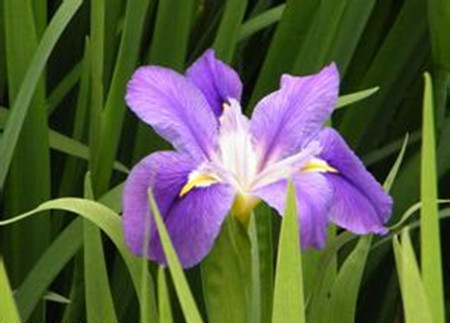
A complete guide to iris planting methods, easy for beginners to get started
Iris is a bulbous plant, and autumn is the season for planting irises every year. Many gardening enthusiasts like to grow irises, but they are not familiar with the planting methods for irises. How to grow irises well is a problem many enthusiasts encounter
-

Construction begins on the Hakka Village Cacao Promotion Center in Pingtung County, boosting the development of emerging Hakka industries
"Pingtung Cacao" has become an emerging agricultural brand in Taiwan, China. To accelerate the development of the Hakka village cacao industry, the Pingtung County Government has used a total of 31 million yuan in subsidies from the Hakka Affairs Council and self-raised funds to build the "Pingtung County Hakka Village Cacao Industry Cross-Domain Promotion Center," ...
-

Notes for Beginners on Raising Chickens and Key Points of Daily Feeding Management
Notes for Beginners on Raising Chickens
-

What are the key points of adult fish farming management after the beginning of autumn
After the beginning of autumn, the water temperature begins to drop, and the fish gradually feed vigorously again. This is also a golden period for fish production and growth, so management should be strengthened. The following key points should be grasped in particular: First, strengthen bait feeding. At this time, feeding should focus on concentrated feed, with emphasis on fattening the bottom-feeding fish. At the same time, attention should be paid to the combination of varieties in concentrated, coarse and roughage feeds to ensure that the fish feed is fully and comprehensively nutritious. Grass carp should be properly fed green grass, black carp should be fed snail feed, and silver carp and bighead carp should also be properly fertilized. After the beginning of autumn, fertilizer should be applied in small amounts and frequently, mainly inorganic fertilizer, and it should also be specifically controlled according to the condition of the fish, the fertility of the water, the weather, and so on.
-
Three Taboos Beginners in Bonsai Making Must Avoid
1. Never seek out raw material blindly. Many people always want to own a great many bonsai so that they can enjoy them at any time and relieve their "hunger" and "thirst." But when they first begin learning the craft, their appreciation skills are not yet sufficient, so when collecting tree stumps in the wild they grab every stump they see and carry out "carpet-style" digging, which both wastes resources and damages the ecology. When buying at markets they likewise pay no attention to good or bad, superior or inferior, and buy in bulk. The result is mostly crude, substandard pieces that waste time, effort and money. Therefore, although a beginner's eagerness for stumps is understandable, one must have guidance from someone experienced, so as to avoid getting half the result with twice the effort. 2. Growing the stump
-
A Beginner's Guide to Bonsai Appreciation: Learn to Appreciate the Beauty of Bonsai from Scratch
1. Root spread The primary requirement of an excellent bonsai is the root spread. The root spread can be said to be essential and very important in creating the natural tree form of the entire bonsai. Whether the root spread is beautiful or not has a decisive influence on the artistic value and appreciation value of the work. The beautiful root spread referred to in bonsai is the ground-level roots below the trunk base, extending in all directions, sometimes curving, sometimes hidden in the soil, clinging tightly to the ground surface, so as to keep the potted tree from wobbling in any way. The commonly mentioned "four-sided root spread" is precisely the most beautiful root spread. 2. Trunk base Under normal
-
Northeast "Strange Rice" succeeds in trial planting in Heilongjiang and begins to be promoted to farmers within the province
Sitting on a pile of plump rice sacks with a beaming smile, Jin Yushi, a farmer from Xiangfang District, Harbin, is very gratified by the bumper harvest of the 8 mu of "Northeast Strange Rice" he planted this year. This year, low temperatures and scant sunshine caused reduced yields in some rice-producing areas of Heilongjiang Province. However, some rice growers who applied new technologies and new varieties still steadily achieved high yields. Among them, rice farmers Jin Yushi, Zhang Zibin and others obtained a good harvest by accepting the suggestions and guidance of scientific and technical personnel, introducing "Northeast Strange Rice" and applying biological technologies such as "three agents and two fertilizers",
-
Detailed Guide to Azalea Cultivation: Beginners Can Easily Learn It Too
Azaleas are one of the representative acid-loving plants. They prefer a cool, humid, well-ventilated environment. The suitable growing temperature is 13°C to 25°C. During the growing period, the relative air humidity should be maintained at 60% to 70%, and as flowering approaches, the relative humidity can reach around 80%. Azaleas love light but cannot tolerate direct strong sunlight. In spring and autumn, shading should be appropriately increased, and in midsummer, shading should reach around 70%, with frequent spraying of water on the leaf surface to increase humidity and lower temperature. In summer, azaleas should be placed outdoors for care to facilitate ventilation. During the growing period, azaleas should be given light but frequent fertilizer, preferably farmyard manure
条件筛选