-

Differences Between Madeira Vine, Tian Sanqi and New Vine Vegetable
Aliases: Tian Sanqi, tofu vegetable, new vine vegetable. Family and genus: Basellaceae, perennial herbaceous plant. Distribution: Cultivated in Yunnan, Sichuan, Hubei, Taiwan, China and other provinces, with bulbils and leaves used as food. Morphological characteristics: Madeira vine is a perennial succulent small vine of the Basellaceae family, with a well-developed root system; half a year after planting, tubers can form underground. The stem is round, the young stem is green, and the mature stem turns brown; adventitious roots easily form at the nodes. The leaves are alternate, heart-shaped, 8-15 cm long, 9-16 cm wide,
-
Why Schisandra chinensis seedlings should be soaked in water before planting and the suitable soaking time
Schisandra chinensis seedlings naturally have indistinct main and lateral roots and many fine fibrous roots. After the seedlings leave the nursery, they go through several stages such as transport, storage and transplanting, and water loss occurs in both the root and crown areas. Using such seedlings results in a low survival rate, so before planting they should be soaked in water for 24 hours.
-
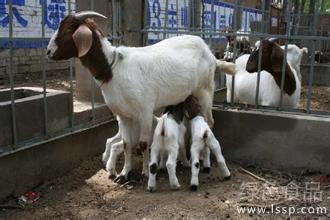
How should ewes in late pregnancy be fed to be reasonable?
Reasonable feeding methods for ewes in late pregnancy
-
What temperature requirements does soybean growth have? Detailed explanation of the suitable temperature range
Soybean is a warm-season crop and has different temperature requirements at each growth and development stage. First, seed germination is very sensitive to temperature: the minimum germination temperature is 6°C, emergence is 8-10°C, and seedlings suffer slight frost damage at a low temperature of -4°C. Throughout the growth period, the optimum growth temperature for soybean is a daily average temperature of 20-25°C, among which the optimum growth temperature for seedlings is 20-21°C, the flower bud differentiation stage is 21-23°C, the flowering stage is 22-25°C, the pod-setting and seed-filling stage is 21-23°C, and the maturation stage is 19-
-
How to make candied hollow jujubes with pullable sugar strands, sweet and stretchy and even more tempting
[Cuisine]Shandong cuisine[Characteristics]The flesh is soft and dense, the jujubes are sweet with a soft and fragrant interior, and the sugar pulls into strands both inside and out, stretching continuously with a distinctive elegance.[Ingredients]200 g golden silk jujubes. 50 g rendered fat, 25 g white sugar, 50 g starch, 100 g peanut oil.[Preparation]Chop the rendered fat into a fine paste, add white sugar and mix into a crystal filling. Soak the jujubes in boiling water, remove the stones, spread the crystal filling into the hollow centers, roll them in dry starch so the jujubes are evenly coated with a layer of starch. Heat a wok with peanut
-
The Mopan jujube is an ornamental tree suitable for courtyard planting
Aliases: Mozi jujube, Hulu jujube (Hebei), Yaohulu jujube (Gansu). It is fairly widely distributed; it is cultivated in places such as Dali in Shaanxi; Qingyang in Gansu; Jiaohe, Qingxian, Xianxian, Quyang, Daming and Weixian in Hebei; and Leling, Wudi and Xiajin in Shandong, but the quantity is very small, mostly planted scattered around the four sides [of homes and fields]. It has a long history of cultivation. The tree is vigorous, relatively large, with medium-strong trunk dominance; the crown is a natural semicircle and the tree posture is open. A 23-year-old tree: trunk height 1.1 m, trunk circumference 60 cm, tree height 7.35 m, crown diameter about 7 m. The main trunk is grayish brown, with deep bark cracks
-
How should the row orientation for jujube tree planting be determined to be reasonable?
The row orientation for jujube tree planting not only directly affects the growth and development of the jujube trees themselves, but also affects the growth conditions of intercropped plants. Jujube trees planted in north-south rows have a greater amount of accumulated light under their canopy than those planted in east-west rows. At the same time, jujube trees planted in north-south rows show little difference in light exposure time between the north and south sides, while jujube trees planted in east-west rows show a large difference in light exposure time between the north and south sides. Different row orientations not only affect light exposure time, but also cause differences in the amount of light received. From the perspective of the planting needs of the jujube trees themselves, north-south row orientation is the best. In addition, jujube
-
Reasonable flower and fruit thinning of bayberry (Chinese bayberry, Myrica rubra) promotes stable and high yields
Bayberry (Chinese bayberry, Myrica rubra) bears fruit mainly on short and medium fruit branches. Because on these two types of bearing branches only the terminal bud is a leaf bud, while the rest mostly differentiate into flower buds, if they are allowed to set fruit naturally, they often bear excessively, the fruits are small and of poor quality, and it easily causes alternate bearing. To achieve stable and high yields, fruit thinning should be carried out. (1) The thinning period is generally in mid-to-late April, after fruit set is determined and before the fruits rapidly swell. (2) Thinning method: out of every 6 bearing branches, keep 3 to bear fruit and thin out 3, and each fruit-bearing branch keeps 2 fruits. (3) Thinning principle: keep fewer on the upper part of the canopy and more on the lower
-
What is the box tree pyralid, an insect found beside vegetable fields?
As spring warms and flowers bloom, insects begin to become active. During a recent science-and-technology outreach activity in the countryside, it was found that a pest called the box tree pyralid had begun to occur and cause damage on boxwood along the roadsides of the park. The box tree pyralid is one of the common pests on plants such as boxwood, small-leaved box, large-leaved box, littleleaf box, Chinese box, spoonleaf box, Korean box, and holly, and it occurs in Shanghai and other provinces and cities. In Shanghai it has 3 to 4 generations per year, with severe overlapping of generations. It usually becomes active in March in spring, begins pupating in mid-April, begins emerging in late April, and the first-generation lar
-
Detailed processing technology of goji berry vegetable rolls
The tender branches and leaves of goji berry can nourish the liver and improve eyesight, tonify the kidney and enhance essence, increase the activity of superoxide dismutase in organs such as the liver and brain, and have antioxidant and anti-aging effects. In addition, goji berry is rich in germanium and also has anti-cancer effects. We made it into a casual snack food. 1. Materials. The tender branches and leaves of goji berry were harvested in spring from the greenhouse of the Department of Horticulture, Beijing Nongxueyuan. Potatoes and carrots were purchased from the market. 2. Experimental methods 1. Vegetable roll process flow. Raw material selection and processing -> blanching
条件筛选