-

Premium Agriculture in Turpan City Makes Fruits and Vegetables Fragrant in the Desert Basin
**Premium Agriculture in Turpan City: Fragrant Fruits and Vegetables of the Desert Basin
-
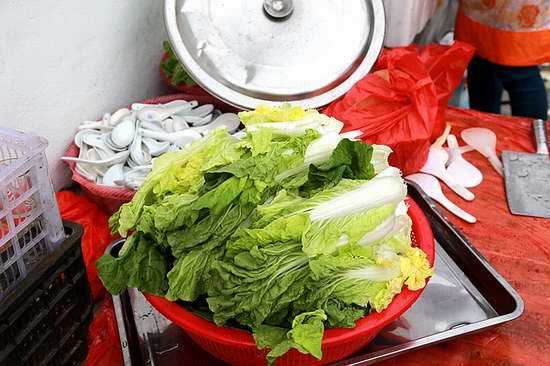
The first time I went to a rural banquet, I only realized how much people can eat when the dishes were served in basins.
The first time I went to a rural banquet, the dishes were actually served in basins. That is how much people can eat.
-
Plastic Mulch Cultivation Techniques for Winter-Planted Potatoes, A Planting Guide for the Nanyang Basin
Potato is a crop used both as food and as a vegetable, and winter-planted potato is currently one of the more ideal winter crops. Spring potato production in the Nanyang Basin suffers few disasters and can guarantee supply during the early-summer vegetable off-season, with relatively high economic returns. In recent years the cultivated area has grown larger and larger, and in some places potato has become the main cash crop for local farmers. The winter-planted potato cultivation techniques for the Nanyang Basin are described below. 1. Choose good varieties. After full emergence, the effective growth period of winter-planted plastic-mulched potato in the Nanyang Basin is about 90 days, so seed potatoes should be selected that are suitable for local
-
The hard-fleshed peach variety Qinwang is suitable for cultivation in the Yangtze River Basin.
Originally from Shaanxi, the average single fruit weight is 210g, the maximum fruit weight is 350g, and the fruits are relatively uniform. The base color of the skin is yellow-red; at maturity, 80%-100% of the fruit surface is bright red, the appearance is showy, and there is little fuzz on the fruit surface. The fruit is round, the suture line is centered, and the fruit shape is relatively symmetrical. The flesh is red and white, with 75% red blush. The flesh is especially hard, the texture is fine, and the resistance to browning is strong. The soluble solids content is 13.7%, the taste is sweet with slight acidity, there is a slight aroma, and the quality is excellent. In the Chongqing area, buds sprout in mid-February, full bloom occurs in early March, the fruit ripens in early July, and leaves fall in early December.
-
How to control cotton aphids? Detailed control measures for the Yellow River basin
Aphids, also called greasy bugs or honey bugs, are one of the main pests on cotton in our country. The cotton aphids that damage cotton fields are divided into seedling aphids and summer aphids. Seedling aphids occur from emergence to before squaring, prefer lower temperatures, and when the temperature exceeds 27°C their reproduction is inhibited and the population drops rapidly; the aphids that commonly occur from early July to mid-August are called "summer aphids." When the 3-day average temperature is 24-28°C and the relative humidity is 55%-85%, it favors the multiplication of "summer aphids"; weather that alternates between sunny and rainy is most suitable for "summer aphids" to reproduce; continuous rainy
-
Which hard-flesh peach varieties are good? Five recommendations suitable for the Yangtze River Basin
1. Qinwang. Average single fruit weight 210 grams, maximum fruit weight 350 grams, fruit size relatively uniform. The base color of the peel is yellow-red; at maturity, 80%-100% of the fruit surface turns bright red, the appearance is colorful, and the fruit surface has little fuzz. The fruit is round, the suture line is medium, the fruit shape is relatively symmetrical, the fruit apex is concave, and the stem cavity is medium-deep. The flesh is red-white, with 75% red blush. The flesh is especially hard and does not crack, the texture is fine, and the resistance to browning is strong. Soluble solids 13.7%, tastes sweet with slight acidity, slight aroma, excellent quality. Semi-clingstone, small stone, no stone cracking, edible rate 9
-
Piqiu Tao is a firm-fleshed peach variety suitable for cultivation in the Yangtze River Basin.
Originating in Chengdu, Sichuan, the average single fruit weight is 320g, with the largest fruit reaching 700g. Round in shape with uniform fruit form, the fruit surface takes on 60% bright red coloration when ripe. The fruit surface has abundant fuzz; the flesh is white with a red blush, firm and crisp, with soluble solids at 15.6%, a rich sweet flavor, no acidity, and excellent quality; the stone is small, and the edible rate is 93%. In the Chongqing area, buds break in mid-February, full bloom occurs in mid-March, and the fruit ripens in early July. It is tolerant of storage and transport and extremely high-yielding; in a high-density orchard (222 trees/667 sq m), the third-year yield reaches
-
Hybrid late japonica rice restorer lines successfully bred in the Yangtze River Basin
Through the efforts of experts from the Shanghai Academy of Agricultural Sciences, the "Yangtze River Basin hybrid late japonica rice restorer lines - Shenhui 254 and Shenhui No. 1" were successfully bred and utilized. This project was awarded first prize for scientific and technological progress by the Shanghai Municipal Government this year. The key to applying hybrid late japonica rice in production in the Yangtze River Basin is to breed excellent late japonica-type restorer lines. This project used intermediate materials between indica and japonica subspecies as bridge parents, introduced indica restorer genes into late japonica rice varieties, adopted convergent crossing and systematic selection, and gathered the excellent base
-
What peaches are suitable for planting in the Yangtze River Basin? 5 hard-fleshed peach varieties recommended
1. Qinwang is native to Shaanxi, with an average single fruit weight of 210g, a maximum fruit weight of 350g, and relatively uniform fruit. The base color of the peel is yellow-red; at maturity, 80%-100% of the fruit surface turns bright red, the appearance is colorful, and there is little fuzz on the fruit surface. The fruit is round, the suture line is centered, and the fruit shape is relatively symmetrical. The flesh is red-white, with 75% red blush. The flesh is especially hard, the texture is fine, and the resistance to browning is strong. Soluble solids are 13.7%, the taste is sweet with slight acidity, there is a slight aroma, and the quality is excellent. In the Chongqing area, buds break in mid-February,
-
The hard-fleshed peach variety Chaoshahong is suitable for cultivation in the Yangtze River Basin
Originally from Shaanxi, average single fruit weight 260g, maximum fruit weight 420g, fruit uniformity good, at maturity 80%-100% of the fruit surface turns bright red. The fruit surface has abundant fuzz, the fruit is round and relatively symmetrical. The flesh is white with 25% red blush, the flesh is firm, the texture is fine, soluble solids 15.2%, the taste is richly sweet with no sourness, aromatic, good quality. Clingstone, no pit splitting, edible rate 92.3%. In the Chongqing area, buds break in early February, full bloom in early March, and the fruit ripens in early June. Does not crack, tolerant of storage and transport, extremely productive.
条件筛选