-

Win the basic tough battle of deepening rural reform
Win the basic "tough battle" of deepening rural reform
-
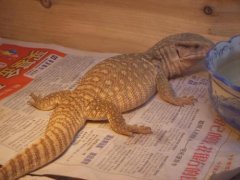
How to Keep a Savannah Monitor? Basic Care Tutorial
Do you like savannah monitors? Do you know how to keep them? Below is an introduction to keeping savannah monitors. Environment: Savannah monitors come from the African savanna. They like to climb and swim less. But they still need a large swimming pool. When young, they like
-
What are the basic principles of fish health management
The concept of fish health management is that fish raised under such conditions will achieve optimal growth rate, feed conversion rate, reproduction rate and survival rate. Maintaining a high-quality aquatic environment and feeding nutritionally balanced feed are very important for maintaining fish health and preventing fish from becoming diseased. Proper fish health management should aim at environmental, nutritional, economic and other factors to prevent fish diseases rather than focusing on treating fish diseases. The following are some basic principles of fish health management. 1. Pay attention to the environment
-
How much do you know about the basic facts of carnations?
Carnation, also known as Carnation (transliteration of the English word Caxnation) and musk carnation. It is a perennial herbaceous plant of the genus Dianthus in the family Caryophyllaceae, but it is usually cultivated as a biennial. The plant height is 60-100 cm, the stem is upright, the leaves are linear-lanceolate and opposite, the stems and leaves are elegant, and the flowers are beautiful with delicate colors. There are many flower colors, commonly including red, yellow, pink, white, purple, orange and various bicolor types. Because the flowers are beautiful and the colors are rich, their uses are extremely wide. The yield is high and the price is relatively cheap. The single-flower period is long, and it is cultivated in many countries around the world, along with roses, chrysanthemums, and gladioli
-
What are the basic methods for diagnosing raccoon dog diseases?
Key points for attention in practical application. Reasonable combination of different protein feeds. Because different protein feeds differ in quality, mainly in essential amino acid content, when formulating dairy cow feed, the reasonable combination of protein feeds must be considered to ensure that dairy cows take in sufficient and appropriate protein nutrients. In actual production, when the feeds we use more of are corn meal, corn silage and DDGS, since these feeds contain more methionine and are relatively deficient in lysine, lysine becomes
-
Basic Methods and Procedures for Diagnosing Chicken Diseases: Laboratory Pathological Diagnosis
Take the typical tissues and organs of a dead chicken, cut them into pieces 1.5-3mm x 5mm in size, soak the tissues in 10% formalin solution or 95% alcohol for fixation, then section and stain the fixed tissue samples, and examine the pathological changes under a microscope. In poultry disease diagnosis, histopathological examination is used for: Marek's disease of chickens and avian leukosis to examine tumors; infectious laryngotracheitis of chickens, inclusion body hepatitis of chickens, fowl pox, etc. to examine inclusion bodies; avian encephalomyelitis, Marek's disease of chickens, etc. to examine brain and spinal cord lesions. The histopathology of certain infectious diseases in chickens has relatively characteristic changes
-
Basic introduction to the new oyster mushroom variety 2001
"2001" is a new oyster mushroom variety newly bred in 2002. Comparative trials and large-scale production have proven that this variety has 3 outstanding characteristics: high resistance to yellow mushroom disease and rust spot disease, high yield, and high efficiency, and is known as the "three highs" variety. 1. High resistance to yellow mushroom disease and rust spot disease. "2001" is a wide-temperature-type oyster mushroom, with fruiting bodies ranging from pale white to grayish white. It can fruit within a temperature range of 1--33°C. In large-scale production from early autumn planting to the end of spring, in areas where yellow mushroom disease and rust spot disease occur, "2001" can remain safe and sound,
-
What are the basic methods for diagnosing diseases in raccoon dogs?
(1) General examination includes inquiry, visual inspection, palpation, auscultation, percussion, and olfactory examination. (2) Necropsy technique. The necropsy technique is a method that uses knowledge of pathological anatomy to make an on-site diagnosis based on the pathological changes in the carcass. The necropsy should be performed as soon as possible after the raccoon dog dies, to prevent postmortem changes from affecting the diagnosis. The necropsy is best performed in the pathology room of the animal farm. If conditions do not allow it, and the necropsy must be performed outdoors, choose a place with dry terrain, far from water sources, roads, and residences, and properly dispose of the carcass after the necropsy.
-
Basic Introduction to the Artificial Gastrodia elata of Feigu
Gastrodia elata was originally wild and mostly obtained by gathering. Through scientific experiments, the method of sexual reproduction was adopted to cultivate Gastrodia elata successfully. Its cultivation techniques and practical experience now have a mature theoretical basis, and the time is ripe for introduction and cultivation. Accordingly, the Feigu Villagers' Committee of Delu Township, Xuanwei City, in the course of industrial structure adjustment, proceeded from actual conditions and, on the basis of thorough market research, carefully analyzed the local natural conditions such as soil structure, altitude, diurnal temperature difference, and climate environment, and concluded that the conditions for cultivating Gastrodia elata locally were already ripe, and that after trial planting in some villagers' committees, it could be further promoted.
-
Detailed Explanation of the Basic Principles for the Use of Fishery Drugs
The use of fishery drugs is based on the basic principle of not harming human health and not damaging the aquatic ecological environment. In the aquaculture process, the prevention and control of diseases and pests in aquatic animals must adhere to the principle of giving priority to prevention, with treatment as a supplement. The use of fishery drugs should strictly follow the regulations of the state and relevant departments, and it is strictly prohibited to produce, sell and use fishery drugs that have not obtained a production license, approval number, or production standard. Actively encourage the research, development, production and use of fishery drugs that are highly effective, fast-acting, long-lasting, and have low toxicity, few side effects and small dosage, and advocate the use of drugs specifically for aquatic products, biological fishery drugs and fishery biological
条件筛选