-
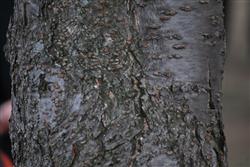
What are the reasons for cherry tree bark splitting?
Why does cherry tree bark split? Please explain that when cherry trees have sufficient fertilizer or water, there are cases of bark splitting due to overly rapid growth. In this regard, the nursery applied urea in spring, which may have had a relatively obvious promoting effect on plant growth, causing its xylem to incre...
-
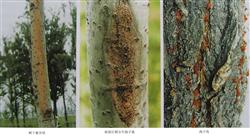
Timely Prevention and Control of Poplar Bacterial Canker and Poplar Bark Rot
Poplar bacterial canker and poplar bark rot are mainly distributed in Northeast China, Northwest China and North China, and are common and frequently occurring diseases of poplar in shelterbelts, timber forests and urban and rural landscaping in northern China. Poplar bacterial canker and poplar bark rot are world-renowned and important poplar trunk and branch diseases, and are also common and frequently occurring diseases. Their transmission...
-

Detailed Explanation of the Key Techniques for Cultivating Red-bark Boxwood
Red-bark boxwood, also known as mountain boxwood, has dense branches and lush leaves. Its leaves grow in whorls of three, and come in large, medium, and small sizes, all long-ovate, leathery, thick, and glossy. Boxwood is an evergreen shrub or tree, belonging to the boxwood family, genus Buxus (which has 6 genera and 30 species). Its wood is hard and fine-grained, and it is produced in parts of the mountainous areas of Jiangsu, Zhejiang, Anhui, and other regions in China's temperate and subtropical zones. In summer, small pale yellow flowers bloom at the tips of boxwood branches. The flowers have no petals and carry a light pink floral fragrance. The flowers mostly cluster at the tips in umbel-like inflorescences, and after flowering they set fruit, with one seed per fruit. Propagation is mostly by seed sowing, and because it is difficult for it to grow large, it is mostly used
-
Detailed Explanation of Key Techniques for Red-barked Spruce Seedling Cultivation
I. Properties and Uses The red-barked spruce is also known as "red-bark stinker." It belongs to the Pinaceae family and is an evergreen tree that can reach a height of 30 m. The branchlets are hairy or hairless, without white powder. The leaves are four-angled, with stomatal lines on all four sides, pointed tips, and a length of 1.2 cm-2.2 cm. The cones are ovate-cylindrical or long ovate-cylindrical, 5 cm-8 cm long; the seed scales are obovate, with rounded or slightly pointed tips, and the exposed parts are smooth without longitudinal stripes. It is a major tree species in the forests from the Changbai Mountains to the Lesser Khingan Mountains in Northeast China. It is also distributed in Korea and eastern Siberia, Russia.
-
Symptoms and Control Methods of Red Pine Bark Rot and Resin Flow Disease
[Distribution and Damage] This disease occurs in red pine (Pinuskoraiensis) plantations throughout the three northeastern provinces. In the Yanbian area of Jilin Province, the cities (counties) of Yanji, Hunchun, Helong, Wangqing, Dunhua, Antu, Longjing and others have relatively severe incidence, with a general incidence rate of 20%-30%, severely affected stands at 50%-60%, and in individual stands at the Mao'ershan Forest Farm in Yanji City, the incidence rate reaches as high as 98.6%. The pathogen attacks the phloem and cambium of the trunk and lateral branches of young red pines, even penetrating deep into the surface xylem of the sapwood, causing the tissue to rot and die with a brown discoloration
-
Symptom Identification and Control Methods of Red Pine Bark Rot
Red pine bark rot, also known as weeping branch disease, soft branch disease, dead branch disease, and shoot blight, is a type of branch and trunk canker disease that mainly affects pine species. Symptoms: The disease affects the bark of branches and trunks of young red pine trees, and in severe cases can also occur at the base of the trunk, causing cankers. Pine needles above the infected area turn yellow-green to gray-green, and gradually turn brown to reddish-brown. The affected branches and trunks shrink and wrinkle due to water loss, and the needle drop scars appear slightly swollen. When the base of a lateral branch is infected, the lateral branch droops downward. When the base of a twig is infected, it
-
Identification and Control Methods of the Spruce Root Bark Beetle
The spruce root bark beetle (Hylastes cunicularius Erichson) belongs to the order Coleoptera, family Scolytidae. In China it is distributed in ** and Sichuan, mainly damaging spruce, and is especially severe on artificially regenerated seedlings. Damage characteristics: it feeds on the roots of spruce seedlings and attacks freshly cut stumps. Morphological characteristics: adult body length about 4.5mm, dark brown, slightly glossy, with sparse bristles. The frons is narrow and long, covered with flat, shallow, dense punctures each bearing 1 hair; the lower half of the frons is low and flat, the upper half protrudes
-
Identification and Control Methods for the Great Spruce Bark Beetle
The great spruce bark beetle [Dendroctonus micans (Kugelann)] belongs to the order Coleoptera, family Scolytidae. It is mainly distributed in Austria, Belgium, Czech Republic, Slovakia, Denmark, Finland, France and other countries. In China, it has been found in the Makehe forest area of Qinghai Province. It mainly damages some species of Picea (spruce), and occasionally some species of Pinus (pine) and Abies (fir), as well as European larch and Douglas fir. Damage characteristics: adults and larvae attack weakened trees and dead standing trees; during outbreaks, they can attack healthy trees, severely disrupting the trees' transport function,
-
The Harm and Control Methods of the Spruce Bark Beetle
The spruce bark beetle (Ips typographus Linnaeus) belongs to the order Coleoptera, family Scolytidae. In China it is distributed in Northeast China, Inner Mongolia, Sichuan, ** and other places, mainly damaging spruce and Korean pine, and is a destructive pest in some spruce forest areas. Damage characteristics: it bores galleries between the phloem and sapwood of pine trees, and the galleries are compound longitudinal galleries. It can also directly attack healthy trees, and often occurs together with other bark beetles, causing trees to die in patches. Morphological characteristics: adult body length 4.0-5.5 mm,
-
Privet leaves, privet bark and tree-of-heaven bark can treat livestock diseases
Privet leaves and bark. Take an appropriate amount of the dried product, decoct it into a paste, and apply it to the affected area; it can treat sores, swellings, burns from fire or scalding by boiling water in livestock. Tree-of-heaven bark. Take 150 g of tree-of-heaven bark (with the coarse outer bark removed), together with 30 g each of costus root and chebula fruit, decoct the juice and administer it by drenching; it can treat chronic diarrhea in livestock; grind tree-of-heaven bark into powder, add flour and feed it; it can treat bloody dysentery in livestock.
条件筛选