-

How to grow water dropwort? Mastering these cultivation key points is crucial
(1) Land preparation: choose a plot with strong water retention capacity and a supplementary water source, apply decomposed organic fertilizer as base fertilizer, rake level and refine the soil for later use. (2) Division propagation: water dropwort prefers cool conditions and fears heat. After April, as temperatures rise, water dropwort grows poorly. At this time, choose a shaded, relatively cool plot as the summer seed plant field. Keep the field water merely moist; you can also build a frame and cover it with a shade net to help lower the temperature. When the weather turns cool in September, pull up the seed plants, divide them into small plantlets with roots, and transplant them into the main field. The plant spacing is 30 cm x 30 cm.
-
Drying Wangtian peppers takes some know-how: master the right method to sun-dry good dried chilies
I. Harvest at the right time. Criteria for harvesting the fruit. The fruit must all turn deep red. In North China, harvesting is generally done from Cold Dew to Frost's Descent. If grown in small arch sheds or with plastic film mulching, harvesting can be done somewhat earlier; if planted late, the harvest period can be slightly postponed, but it must be completed before Frost's Descent arrives. Otherwise, after frost damage, the dried chili products will color unevenly and their quality will be reduced. Wangtian peppers are generally harvested by pulling up the whole plant or cutting the plant. After harvest, lay the pepper plants flat in the field to sun-dry for 3-4 days. During drying, if rain occurs,
-
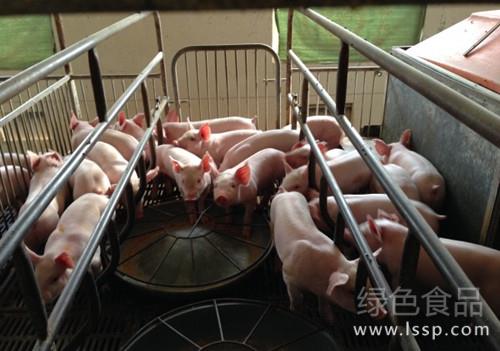
Piglet weaning stress is considerable, and the feeding method after weaning must be mastered
Piglet weaning stress is considerable, and the feeding method after weaning must be mastered
-
How to care for roses? Master these four key points
The rose is a plant that loves sunlight very much; if there is not enough light, it is very difficult to get it to bloom every month. To make roses bloom year-round, you must grasp the following four keys. (1) Sunlight must be sufficient: the place where roses are planted must be both well ventilated and able to receive more than half a day of sunlight; this is the primary condition for them to bloom in profusion. (2) They must be pruned often: even if the sunlight conditions are good, roses will not grow well if they are not pruned for a long time. The pruning method is: after December each year, when the rose leaves fall, prune once; after May, each time a round of flowers finishes blooming, cut away 2/3 or 1/2 of the branch that has bloomed, so there will be more chances for new flower buds to regenerate. The wounds caused by pruning should be sealed promptly with healing and antiseptic membrane to prevent the wounds from drying and cracking and from damage by pests and diseases, and to promote the rapid growth of callus tissue.
-
How to fertilize spider plants? Master these fertilization techniques for more vigorous growth
Spider plant, known as the "air flower," when its pot is placed on a balcony or railing, can beautifully complement other potted flowers above and below. Spider plant is also a natural purifier, able to remove harmful substances from the air. Research shows that spider plant can absorb more than 80% of harmful gases indoors, with an extremely strong ability to absorb formaldehyde. An engineer from the Indoor Environment Monitoring Center of the China Decoration Association believes that spider plant is one of the most suitable plants for placement in living rooms. Spider plant is a foliage plant that is relatively tolerant of fertilizer; if fertilizer and water are insufficient, it easily develops scorched tips and ages, with leaves turning yellow, losing
-
How to Choose a Phalaenopsis Orchid? Master These Selection Tips
How do you choose an ideal pot of Phalaenopsis? Generally speaking, the best ones have glossy leaves with thickness, abundant leaves and neat arrangement. You should also check whether the leaves are firm and pointing upward, because only then can you tell whether its vitality is strong. If possible, it is best to gently pull out the roots and take a look. If the roots are fresh, or if there are new roots sprouting, this kind of orchid's vitality is reassuring. Next, look at the flowers. First look at the number of flowers. Phalaenopsis orchids are graded by flower count, and the more flowers the better. Buds between 8 and 11,
-
Feeding young pigeons requires care; mastering the method is key
Since young pigeons need time to adapt to a new environment, and their body functions have also undergone considerable changes, poor management can easily lead to stunted growth, illness, or death. Therefore, they must be cared for attentively. First, attention should be paid to keeping them warm and preventing chills. The feed troughs and water troughs should not be placed too high, fine granular feed should be provided, and an appropriate amount of multivitamin B aqueous solution should be added to the drinking water. In hot weather, attention should be paid to ventilation and mosquito prevention; in cold weather, attention should be paid to preventing wind, and at night it is best to use infrared light bulbs or a brooder umbrella for warmth. After young pigeons are moved to a new loft for half a month, they have a certain
-
How to prevent single-clove garlic? Garlic farmers need to master these management methods
1. For autumn-planted garlic, plow and turn the land immediately after the previous crop is harvested, with a plowing depth of more than 28 cm, plow finely and harrow thoroughly, level the land and make beds. The bed width should preferably be 1.5-2 m, and the bed length generally should not exceed 30 m. For convenience of watering, 20-25 m is preferable. Garlic is a shallow-rooted crop, with shallow roots and weak fertilizer uptake capacity, and it has relatively high requirements for the quality of base fertilizer. Choose a complete-effect, high-quality organic fertilizer and apply it fully in one application. For night soil, do not use raw manure; before application it must be fully decomposed, crushed and mixed evenly, to prevent fermentation in the field, which can cause garlic maggot damage and affect seedling growth and development.
-
How do you choose among eight types of turtles? Mastering these selection tips is important
Turtle: The male should have a blackish carapace, a thick, solid tail base, and a long, deep concave plastron; the female should have a short, thick body and a short, thick tail. It is best to choose turtles aged 8 years or older, with the female weighing 350 grams; the male need only have reached the age of gonadal maturity, and the male-to-female ratio is 2:1 to 3:1. Golden coin turtle: When selecting, hold it in your hand and turn it over; its head will extend very long, be even in thickness, and its eyes will move flexibly and look lively. The skin is glossy, the temperament is docile, the gap between the upper and lower shells at the tail is large, and the cloacal opening is broad. Turtles aged 6 years or older are required, with the female weighing 1250 grams to 15
-
How to Skillfully Master the Pig Feed-to-Water Ratio? A Must-Read for Pig Farmers
Mixing pig feed with too much water and making it too thin is a long-standing habit among rural people. It has many drawbacks: First, when the feed is mixed too thin, the water content in the daily ration increases relatively, the nutritional components are insufficient, saliva secretion is greatly reduced, the gastric juice is diluted, and the feed stays in the stomach for a shorter time, severely reducing the feed's utilization rate. Second, it increases the physiological burden and raises the body's heat consumption. In addition, in autumn and winter, because pigs urinate more, the pigpen becomes damp and cold, seriously affecting the pigs' growth, development and health. It can thus be seen that pig feed is better prepared as a moist mash, which not only saves
条件筛选