-
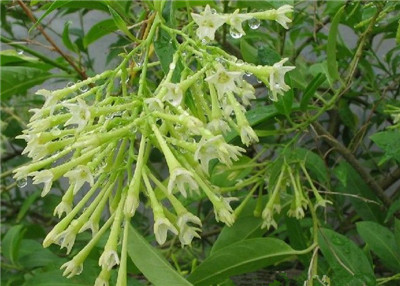
What does the night-blooming cestrum look like? A detailed introduction to its appearance and characteristics
The night-blooming cestrum (Cestrum nocturnum) has slender, weak branchlets that are hairy and contain milky sap. The leaves are opposite; the blades are broadly ovate, heart-shaped to oblong-ovate, 4-9.5 cm long and 3-8 cm wide, with a short acuminate apex and a deeply heart-shaped base, entire margins, 7-9 palmate veins arising from the base, and hairs on the margins and veins. The umbel-like cymes are axillary
-

What are the specific appearance grade indicators for pear fruit?
Pear appearance grade specification indicator items: Special grade, Grade 1, Grade 2. Basic requirements: fully developed, mature, fruit intact and good, fresh and clean, no off-flavor, no abnormal external moisture, no puncture wounds, no insect-damaged fruit and no disease. Color: has the color that this variety should have when mature. Single fruit weight (g): the single fruit weight grade requirements for major pear varieties are shown in Appendix A (normative appendix). Fruit shape: regular, relatively regular, may have defects, but no deformed fruit. Fruit surface defects: 1) Bruising and compression injury: none, none, slight bruising and compression injury allowed, area less than 0.5 cm2. 2) Abrasion injury: allowed area less than 0.5 cm
-
What environmental factors affect the appearance quality of bag-cultivated Ganoderma (reishi)?
Ganoderma, as a medicinal fungus, has its medicinal value and commercial value directly related to the quality of its fruiting bodies. Cultivating fruiting bodies with well-developed caps and good maturity is the ideal goal of medicinal Ganoderma producers. Ganoderma fruiting bodies are quite sensitive to environmental factors such as temperature, humidity, aeration and light. If conditions are unsuitable, deformed mushrooms are very likely to appear. Strictly regulating environmental factors is a necessary measure to improve the finished-product rate and appearance quality of Ganoderma. 1. Temperature factor. Ganoderma fruiting body primordia can form in large numbers at 25-30°C, form less and grow slowly below 22°C, and although they can form above 34°C, they very easily form nodular protrusions after primordium formation and stop developing; Ganoderma caps grow faster at 28-30°C, with sparser concentric rings and lighter surface color, while at 24-26°C the growth period is longer, more active ingredients accumulate, and the texture is harder, so Ganoderma grown at this temperature has better quality. To balance growth time and fruiting body quality, the room temperature during the primordium differentiation and growth stage is best controlled at (28±1)°C, and during the cap growth stage at (26±1)°C. In cultivation practice, the temperature control methods are: (1) arrange the mushroom emergence time appropriately according to local natural temperature conditions; in central and southern Hebei, early June to early September is more suitable; (2) when the temperature is 30°C, appropriate shading, sprinkling well water on the ground combined with ventilation, etc. can lower the room temperature by about 1-3°C; (3) production units with the means can use automatic temperature control equipment, for better results.
-
How to identify edible mushroom mother cultures by appearance?
Excellent purified mushroom cultures are the fundamental guarantee for successful edible mushroom cultivation. The appearance identification methods for several edible mushroom mother cultures are introduced as follows: Shiitake mushroom mycelium on potato dextrose agar (PDA) medium is pure white, thick and robust, appearing floccose or velvety; after filling the test tube it has a certain ability to climb the wall, with edges showing irregular wavy curves. At around 24°C, the mycelium generally fills the test tube slant in 12-15 days. It has a distinctive shiitake aroma. Oyster mushroom mycelium on PDA medium is snowy white, dense and thick
-
8 common appearance problems of bagged Emerald pear and their solutions
Emerald is an excellent new pear variety bred by the Zhengzhou Fruit Research Institute, developed by crossing New Century and Zaosu. Since 2000, after 6 years of bagged cultivation through top-grafting to change the canopy in our city, we have found that this variety has a regular fruit shape, a smooth and glossy fruit surface, creamy white flesh, a crisp and tender texture with abundant juice, and few stone cells, making it an early-maturing pear variety of excellent quality. However, in production we have found that bagged pears often show abnormal phenomena such as black wrinkling, fruit russeting, tiger-skin markings, floral green coloration on the fruit surface, black spots, cracking, and deformities that affect the external quality of the fruit. For this reason we conducted an investigation and analysis and proposed solutions.
-
How to identify fish species? Observing appearance and color is key
First, look at the size specifications of the fish species. Fish of the same species from the same pond should be uniform and even in size when harvested, with little difference in body length and weight. Conversely, poor-quality fingerlings with large individual differences and uneven sizes often result in very low overall survival rates due to competition for food, mixed genetic stock, poor rearing, and other reasons. Second, look at the body color of the fish species. High-quality fingerlings have vivid, glossy body colors. Generally speaking, high-quality silver carp fingerlings should have a silver-gray back and silvery-white sides and belly; high-quality grass carp fingerlings have a pale golden-yellow body color, with gray-black reticulated scales that are relatively prominent, and the more robust the fish, the more obvious the pale golden-yellow color; high-quality bighead carp fingerlings mostly have a pale golden-yellow body color, with black markings across the body not very prominent. If the fingerling's body color is relatively dark, or even blackish, it indicates that the fingerling is a weak fry or diseased fish; the gloss on the body surface of fingerlings is caused by the mucus layer covering the body surface, which is the fish's first barrier of defense against disease. Diseased fish or weak fry lack the mucus layer, and their body surface has no gloss.
-
When is the rosette stage of Chinese cabbage? Appearance and management methods
How should Chinese cabbage be managed during the rosette stage
-
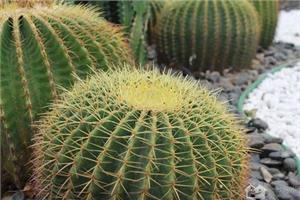
What types of cactus ball are there? A detailed classification by appearance
Types of cactus ball: Classification of cactus ball by appearance
-
What is the difference between pothos and spider plant? Big difference in appearance, similar in function
Similar in function, very different in appearance: the difference between pothos and spider plant
-
What are the characteristics of the sensitive plant? An introduction to the appearance and uses of the sensitive plant
[Characteristics of the sensitive plant] An introduction to the uses and appearance of the sensitive plant
条件筛选