What are the characteristics of the sensitive plant? An introduction to the appearance and uses of the sensitive plant
The sensitive plant has a loose, spreading growth habit, with slender and graceful feathery leaves. Its leaves close immediately when touched by an external force, and its flowers are shaped like pom-poms. After flowering, it produces pods, and the fruit is flat and round, making it highly ornamental. Below, let us learn about the characteristics of the sensitive plant, what its uses are, and enjoy some pictures together.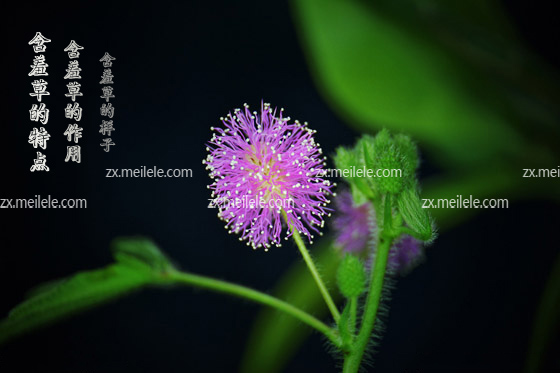
Introduction to the appearance of the sensitive plant
The sensitive plant is a spreading, subshrub-like herb, and its plant can reach up to 1 m in height. The stem is cylindrical, branched, with scattered, downward-curving hooked prickles and backward-pointing bristles. The stipules of the sensitive plant are lanceolate, 5-10 mm long, with bristles. When an external force touches the pinnae and leaflets, it closes and droops. There are usually 2 pairs of pinnae, arranged in a finger-like pattern at the top of the common petiole, 3-8 cm long. The sensitive plant has 10-20 pairs of leaflets, linear-oblong, 8-13 mm long and 1.5-2.5 mm wide, with an acute apex and bristly margins.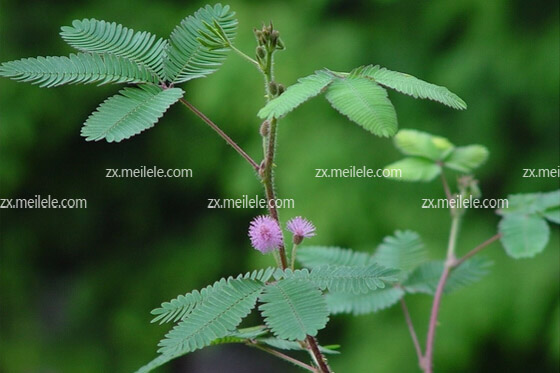
The capitulum of the sensitive plant is spherical, about one cm in diameter, with a long common peduncle, solitary or 2-3 growing in the leaf axils of the sensitive plant. The flowers of the sensitive plant are relatively small, pale red in color, and numerous. The bracts are linear, the calyx is very small, the corolla is bell-shaped with 4 lobes, covered with short soft hairs on the outside. Inside the flower there are 4 stamens, extending beyond the corolla, and the ovary has a short stalk and is hairless; 3-4 ovules, the style is thread-like, and the stigma is small. After the sensitive plant flowers, it produces pods; the pod is oblong, about 1-2 cm long, flat, and slightly curved. Its flowering period is from March to October each year, and the fruiting period is from May to November.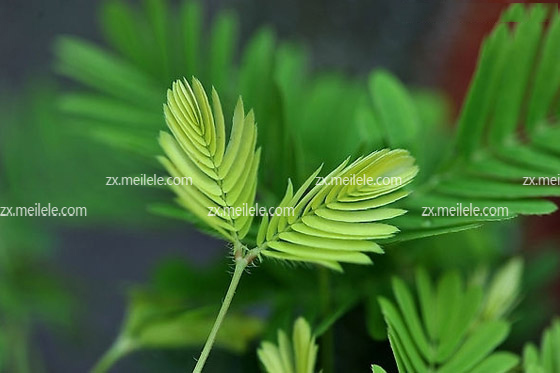
Characteristics of the sensitive plant
The sensitive plant is different from other plants because when touched by the outside world, its petiole droops and its leaflets close. It is because of this characteristic that it is called the sensitive plant. Inside the sensitive plant, it is supported by a fine, net-like protein called "actin." When closing occurs, the phosphate in the actin inside it detaches. If the sensitive plant is made to absorb a compound that prevents phosphate from detaching, then it will not change when touched. Generally, actin is found only in animals, but among plants, the sensitive plant contains this substance. When the leaves of the sensitive plant are touched, they immediately close up. The greater the force of the touch, the faster they close, and the entire leaf will droop, looking weak and listless, with the whole movement completed in just a few seconds. This is because the leaves and petioles of the sensitive plant have a special structure. This structure is very sensitive to stimulation.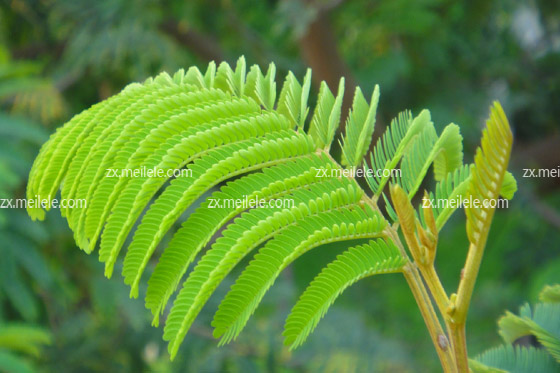
Uses of the sensitive plant
The whole plant of the sensitive plant can be used as medicine. The plant is sweet and astringent in taste, cool in nature, and has the effects of calming the heart and soothing the nerves, clearing heat and detoxifying. It can be used for symptoms such as vomiting and diarrhea, insomnia, infantile malnutrition, red and swollen eyes with pain, deep abscesses, and shingles. The root of the sensitive plant is astringent and slightly bitter in taste. The root is toxic. However, it has certain effects in relieving cough and resolving phlegm, promoting diuresis and dredging collaterals, harmonizing the stomach, and reducing food stagnation. It can be used for cough with phlegm and asthma, rheumatic joint pain, and infantile indigestion.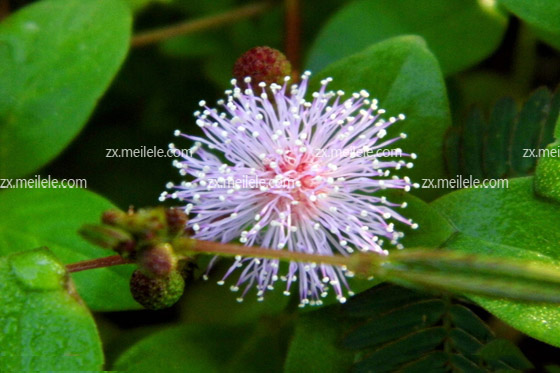
Because the leaves of the sensitive plant close and droop when touched by an external force, it has the ability to predict the weather. When you touch it with your hand, if its leaves close very quickly and open very slowly, that indicates the weather will clear up. If, when you touch the sensitive plant, the leaves contract slowly, droop slowly, or even reopen shortly after closing, that indicates the weather will turn from clear to overcast or that it is about to rain.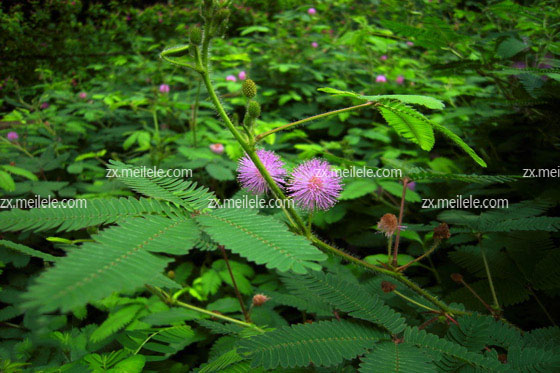
Summary: The above is the introduction to the characteristics of the sensitive plant, the uses of the sensitive plant, and the appearance of the sensitive plant. After reading this introduction, I believe everyone has a fairly good understanding. The sensitive plant is a perennial herb or subshrub in the Fabaceae family. When touched by people, its petiole droops and its leaflets close, so it is named the sensitive plant.
Summary: The above is the introduction to the characteristics of the sensitive plant, the uses of the sensitive plant, and the appearance of the sensitive plant. After reading this introduction, I believe everyone has a fairly good understanding. The sensitive plant is a perennial herb or subshrub in the Fabaceae family. When touched by people, its petiole droops and its leaflets close, so it is named the sensitive plant.