-

Why do deer fed sodium humate produce more antler
According to an experiment at the deer farm of the Agriculture and Forestry Company of Farm 597, using sodium humate as a feed additive for deer increased their food and water intake and boosted their metabolism, providing ample nutrition for antler growth. According to the experiment, each male deer was fed 0.2 g of compound sodium humate 3 times a day; 2 hours before feeding, the solid compound sodium humate was diluted with water to 0.05% at a pH of 6.5, then added to green fodder and fed continuously for 70 days, until the antlers were harvested. As a result, the test group produced 575 g of antler per deer, while the control group produced 490 g, an increase of 17%.
-
Key Points and Detailed Operation Methods of Antler Harvesting Techniques
Velvet antler is the unossified young horn growing on the forehead of male deer, possessing multiple pharmacological effects and is a precious traditional Chinese medicine. There are many species of cervids, but the Chinese Pharmacopoeia recognizes only sika deer velvet and red deer velvet. Timely harvesting of velvet antler is an important part of the production process for deer farms (households), directly affecting the economic benefits of deer production. The author of this article introduces the velvet harvesting techniques for sika deer and red deer. According to different specifications required for velvet harvesting, the harvested velvet antler includes sika deer's two-branch velvet, three-branch velvet's cut-head velvet and sawed velvet, and red deer's three
-
Key Points of Feeding and Management Techniques for Adult Male Deer During the Antler-Growing Period
The physiological activities of adult male deer are strongly seasonal. Based on their different physiological and production characteristics in each period, the production of adult male deer is divided into four periods in practice, as follows: (1) antler-growing period (mid-March to early August), (2) mating period (late August to early November), (3) recovery period (early November to mid-January of the following year), (4) pre-antler-growing period (late January to early March). The above production periods are not completely separate from one another, but are interconnected and mutually influential, while each has its own characteristics.
-

How to increase velvet antler production? Practical farming techniques shared
How to increase velvet antler production
-
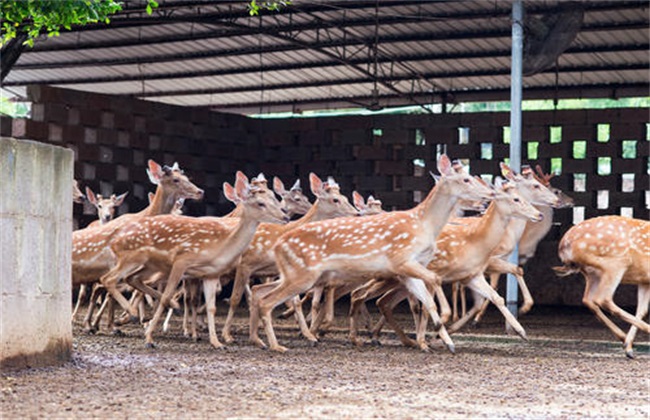
Key Points of Feeding and Management Techniques for Male Deer During the Antler-Growing Period
Feeding and Management of Male Deer During the Antler-Growing Period
条件筛选