-

What to Do If There Are Pests in the Roots of Flowers? A Detailed Guide to Prevention and Control Methods
What should you do if there are pests in the roots of flowers?
-
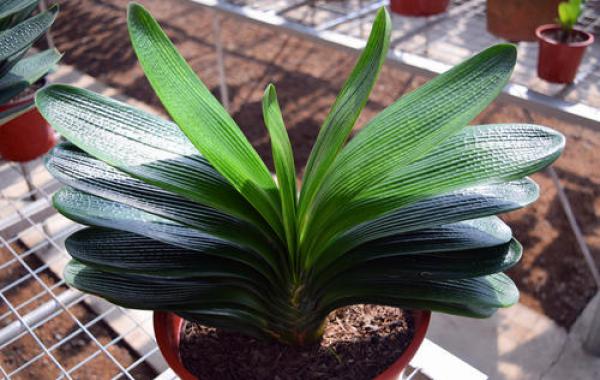
A Detailed Guide to Common Viral and Fungal Diseases of Clivia and Their Control Methods
How many common diseases affect Clivia? How exactly should they be prevented and treated?
-

What are the main methods of adding antibiotics in livestock and poultry feeding?
Adding antibiotics to feed can not only prevent livestock and poultry diseases, but also improve the metabolism of livestock and poultry, promote livestock growth, and increase the survival rate and feed conversion rate. However, due to improper amounts, ways, and methods of addition, some side effects are prone to occur, such as
-
What to Do When Parrotfish Develop White Spots? Common Disease Prevention and Treatment Methods for Tropical Fish
Parrotfish, commonly known as parrot cichlid, parrotfish, red wedge cichlid, etc., are tropical fish that live in coral reefs. They are named for their brilliant colors and mouths that closely resemble a parrot's beak. There is also a freshwater ornamental fish bred by crossbreeding the male red devil cichlid (a Central American cichlid) with the purple-red firemouth, and because of its bright red body color, it is also called the blood parrot. So what are the common diseases of parrotfish? What should you do when white spots appear on the body? According to data, the pathogen of white spot disease is Ichthyophthirius multifiliis. After Ichthyophthirius invades the fish's skin, the diseased fish's skin mucus increases, and a dense layer of white spots visible to the naked eye appears on the fish's pectoral fins, dorsal fin, caudal fin, and body surface skin. In the early stage of the disease, the diseased fish gather in the corner of the tank and rub against each other. In the later stage of the disease, the diseased fish float sluggishly at the water surface and do not eat when food is offered. Because Ichthyophthirius does not reproduce easily at water temperatures above 25 degrees C and begins to die at 28 degrees C, the water temperature can be slowly raised to 30~31 degrees C; after resting for several days, the Ichthyophthirius cysts begin to fall off, and if the water is replaced with fresh water in time, the diseased fish can recover. You can use the medication —— “White Spot Once Clean”; remember to pay attention to the dosage.</span></p> <p style="text-align: center;"><span style="line-height:1.6; text-indent:2em"></span></p> <p style="text-indent:2em;">Parrotfish also have the following common diseases: enteritis and prolapsed anus</p> <p style="text-indent:2em;">1. Bacterial enteritis in parrotfish is mainly caused by eating unclean food or overeating, with the intestines becoming distended and excretion blocked, and finally bacteria infecting the intestines and causing enteritis. The pathogen is Aeromonas punctata. [Symptoms] The diseased fish often has a swollen abdomen, shows red spots, a protruding anus, and the fish body becomes sluggish, staying motionless in the corner of the aquarium, with short bouts of twitching of the body muscles, no feeding, and white feces. When the fish's abdomen is cut open, abdominal fluid can be seen, and the intestinal wall is congested and inflamed. In mild cases, only part of the intestine appears red; in severe cases, the entire intestine is purplish red, with no food in the intestine and filled with pale yellow mucus and bloody pus.</p> <p style="text-indent:2em;">There are many methods for treating enteritis. There are also many drugs sold on the market. Oral drugs such as nakexin, yufukang, sulfaguanidine, etc., and external drugs such as yujunjie, furacilin, gentamicin, oxytetracycline, furazolidone, etc., after dilution, can be splashed or used as a bath, and all can achieve relatively good results.</p> <p style="text-indent:2em;">2. Prolapsed anus in parrotfish mainly involves protrusion of the anal opening, with white intestines exposed outside the anus, like a caterpillar. When parrotfish show this condition, it is very dangerous. If you find that a parrotfish has this kind of prolapsed anus, you must treat it promptly. Generally speaking, prolapsed anus in parrotfish is mainly due to long-term feeding of a single food or food that is too hard, such as feeding dried shrimp that has not been soaked soft for a long time; there is also a pathological type of prolapsed anus. The mild prolapsed anus generally caused by food can be addressed by fasting the parrotfish for a period of time, but it is worth noting that after the anal gland retracts, fasting is still needed for about a week to avoid recurrence and the development of habitual prolapsed anus. If the prolapsed anus has already persisted for a relatively long time, then medication should be used according to the fish's condition. You can choose 4 tablets of furazolidone (furazolidone) + Baibichu + 31 degrees C water temperature + stopping food, dissolved in a 1 m aquarium, change 1/3 of the water every 2 days and replenish the medicine. After one week of medication, it can recover.</p> <p style="text-align: center;"></p> <p style="text-indent:2em;">Appendix: Are parrotfish poisonous?</p> <p style="text-indent:2em;">Parrotfish themselves are not poisonous; it is just that some of the food they eat is toxic. Parrotfish have organs in their bodies that break down and digest toxins, so parrotfish are not harmed by these toxins. However, if people catch parrotfish at this time and the toxins in their bodies have not been completely eliminated, then the toxins from the parrotfish's food will be transferred to the humans who eat the parrotfish. Therefore, many fishermen advise greedy diners not to eat parrotfish.</p>
-
Fast-growing forage grass selection and feed formulation methods for geese, chickens, ducks and rabbits
Want geese, chickens and ducks to fatten up and gain weight? Besides adding nutrient-rich concentrates, you also need to feed plenty of high-quality forage grass, and to raise these poultry well you must first grow the grass well. So what grass do geese, chickens, ducks and rabbits mainly eat to grow fast? How do you formulate feed? 1. Chicory for raising pigs
-
Rational Fertilization of Fish Ponds and Methods for Applying Nitrogen Fertilizer in Rice-Fish Paddy Fields
Fertilizing fish ponds is one of the main techniques for regulating the aquatic environment of ponds and cultivating natural fish food organisms. If the water is too lean, the fish raised will almost always have big heads, small tails, thin backs and little flesh; using too much fertilizer will degrade water quality, not only affecting fish growth but even causing
-
Detailed Guide to Symptom Identification and Control Methods for Apple Moldy Core
Apple moldy core is also called core rot, moldy rot, red rot, fruit rot, etc. The symptoms mainly damage the fruit, especially an important fruit disease of Delicious strain varieties and Fujin, Luxiang, etc. bred using Delicious strain varieties as parents. Its symptoms appear in 2 types. (1) Moldy
-
What are the symptoms and treatment methods of crab edema disease
In recent years, crabs have become highly popular, and their nutritional value is extremely rich, with very high protein content, and their economic benefits and farming prospects are quite good. More and more farmers are starting to farm crabs, but diseases inevitably occur when farming crabs, and edema
-
Causes and Treatment Methods of Shell Rot in Turtles Explained
The turtle is also known as the golden turtle, grass turtle, mud turtle and mountain turtle, etc. In animal taxonomy, it belongs to the class Reptilia, order Testudines, family Emydidae, and is one of the common Testudines animals. It is an ancient extant reptile. It is characterized by a very hard shell on its body, and when attacked, the turtle
-
Symptoms and Treatment Methods of Viral Hepatitis, a Major Infectious Disease in Ducks
Duck viral hepatitis is a common infectious disease in duck farming. If not detected promptly, it can cause massive losses. The symptoms and treatment methods of the disease are as follows: 1. Disease symptoms Duck viral hepatitis often occurs in ducklings within 4 weeks of age, with 5-15 day
条件筛选