-

The alias of the Chinese medicine Guanzhong is Guanjie and Heigouji.
Scientific name: Cyrtomium fortunei. Aliases: Guanjie, Heigouji. Family and genus: A perennial herbaceous fern of the family Dryopteridaceae and the genus Cyrtomium. Morphological characteristics: Plant height 30-70cm. The rhizome is thick and upright. The leaves are clustered, odd-pinnate compound leaves, with 10-20 pairs of pinnae, sickle-shaped lanceolate, dark green on the surface and light green on the back. The sori are round, borne on the back or at the top of the veinlets and arranged in two rows along the midrib, with a round-reniform indusium.
-
What are the local aliases of the red banded snake, and where is it mainly distributed?
The red banded snake is also known as red snake, mulberry root snake, red flower snake, red long worm, fire red lotus, red four seasons eight joints, blood third watch, chain snake, red spotted snake, red flower seed, dry land fire chain, red hundred joints snake, soy sauce spot, etc. It is a rear-fanged venomous snake, and its venom contains a mixed toxin mainly composed of hemotoxic venom. Because its fangs are not well developed and not exposed, symptoms after a bite are relatively mild, and so far there have been no specific reports of human casualties. During the 9 years my snake farm has kept this snake, although several people were bitten, there has never been any case of injury. The red banded snake has a relatively wide distribution,
-
The aliases of oleander are willow-leaf peach and half-year red.
Aliases: willow-leaf peach, half-year red. Family and genus: belongs to the Apocynaceae family, Nerium genus. Origin: native to Iran, now widely planted in tropical and subtropical regions; cultivated in all provinces and regions of our country. Morphological characteristics: evergreen large shrub, up to 5 m tall, containing sap, hairless. Leaves in whorls of 3-4, opposite on the lower part of the branches, narrowly lanceolate, 11-15 cm long, 2-2.5 cm wide, light green beneath; lateral veins flat, densely arranged and parallel. Cymes terminal; calyx upright; corolla dark red, fragrant, double-petaled.
-
What plant is Scirpus tabernaemontani? A detailed explanation of its aliases, Guancao and Chongtiancao
Name: Scirpus tabernaemontani. Scientific name: Scirpus tabernaemontani Gmel. Family and genus: Cyperaceae, genus Scirpus. Aliases: Cuiguan grass, Chongtian grass. Morphological features: The plant is 1m~2m tall, with thick creeping rhizomes; the stem is upright, the culm solitary, cylindrical, with a smooth surface and spongy hollow tissue inside; the culm skin is tough; at the base there are 3~4 membranous tubular leaf sheaths, the uppermost sheath bearing a leaf blade; the leaf is narrowly linear; at the top of the stem there is a bract
-
What kind of herbaceous plant is the large-flowered coreopsis?
The large-flowered coreopsis, also known as sword-leaf cosmos, is a perennial herb growing 20-100 cm tall. It is native to America and widely cultivated in China. It is not strict about soil requirements and prefers fertile, moist sandy loam with good drainage.
-
What kind of herbaceous plant is the French marigold?
French marigold, also known as yellow chrysanthemum, five-petal lotus, old red, stinking chrysanthemum, peacock chrysanthemum, small marigold, French marigold, red-yellow grass, satin flower, red-yellow grass. It is a cold-sensitive annual herbaceous flower of the genus Tagetes in the family Asteraceae.
-
What Plant Is Impatiens? Get to Know This Herbaceous Flower
Impatiens, also known as henna, seed pod, and other names, is a herbaceous plant in the Balsaminaceae family. Because its flower head, wings, tail, and feet all curl upward like a phoenix, it is also called garden balsam. The leaves of impatiens are rich in color and vivid, and are deeply loved by girls.
-
Pachyphytum oviferum is a succulent plant in the Crassulaceae family
Pachyphytum oviferum is also known as Pachyphytum and white beauty, among other names. It belongs to the Crassulaceae family, genus Pachyphytum. It is native to the tropical regions of central Mexico. It has been introduced and cultivated in China and is a common potted ornamental succulent. Its flowers bloom in early summer. Pachyphytum oviferum and the so-called "white beauty" on the market refer to the same succulent plant, because their Latin
-
Is Mint a Perennial Root Plant? A Detailed Explanation of Mint's Perennial Habits
Mint is a perennial herbaceous plant with a perennial root system. Its aliases are "wild mint" and "yexixiang," and it also has a local name, "yindancao." Mint is most widely distributed in the temperate regions of the Northern Hemisphere. In China, its cultivation areas are mainly concentrated in Jiangsu and Anhui provinces, but the cultivated area has decreased compared with before.
-
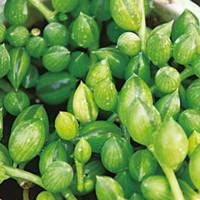
What other names does the String of Pearls Senecio have? You might know it by its alias
The String of Pearls Senecio is a succulent plant in the Asteraceae family, genus Senecio. In a sunny environment it turns reddish-brown, with olive-shaped leaves, green with purplish-red stripes, like a watermelon-like network, slightly covered with white powder, and under strong light the network takes on a slight purplish-red. It is a very cute succulent.
条件筛选