Is Mint a Perennial Root Plant? A Detailed Explanation of Mint's Perennial Habits
Aliases of Mint
Mint's aliases are "wild mint" and "yexixiang," and it also has a local name, "yindancao."
Morphological Characteristics of Mint
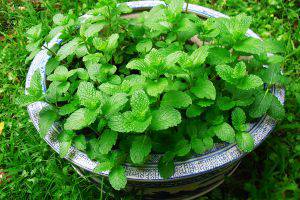
Mint has upright stems about 30-60 cm tall. The lower part of the plant has slender fibrous roots and horizontal rhizomes, and fine soft hairs grow on both the upper and lower parts, with many branches.
Mint leaves are generally round (oval) and lanceolate (ovate), and some are sparsely oblong, pointed at the front and round at the back, with relatively coarse serrations along the edges.
Mint flowers have a spherical outline, about 18 mm in diameter. The corolla is light purple, about 4 mm long, and also has fine soft hairs on the outside like the stems. The petals are oblong.
Mint's yellow-brown fruit is shaped like an ovate bead.
Growth Habits of Mint
Mint has a relatively strong ability to adapt to the environment. Wild mint mostly grows by the water in moist places, and can grow below an altitude of 2100 m, and at most can grow at an altitude of 3500 m.
Because it is a perennial root plant, it can survive the winter through its persistent rhizomes, and a low temperature of -15°C will not kill it; if the temperature is between 20-30°C and water and fertilizer are supplied normally, its growth accelerates as the temperature rises.
Mint needs sufficient sunlight, which is beneficial to its flowering.
Its adaptability to soil is also relatively strong. Sandy soil and alluvial soil are most suitable, and second, the soil's drainage performance should be good.
Value and Uses of Mint
Edible value: The main edible parts of mint are the stems and leaves, and it can also be juiced. Mint can not only be used for seasoning, but also as a spice, and can also be brewed as tea and mixed into drinks.
Medicinal value: Mint has a long history of use as traditional Chinese medicine. The whole plant can be used as medicine, and it has a good effect on treating conditions such as cold and fever, headache, muscle pain, and incomplete eruption of measles.
The Flower Language of Mint
Because of its incomparably fresh fragrance, mint symbolizes "noble virtue."
Related Articles
- How to prevent and control pests and diseases on desert rose? Ventilation and dryness are the key to prevention
- The three main causes of cotton diseases: climate, seeds and cultivation
- How to Grow Bird's Nest Fern in Water? Master Temperature, Light, and Water Change Techniques
- A Complete Guide to Identifying and Controlling Common Potted Flower Pests
- Do Carnivorous Plants Need Watering? Pot Watering and Wet/Dry Assessment Methods
- How to manage cotton during the flowering and boll-setting stage? Apply flowering and boll fertilizer heavily, use chemical regulation and pruning to prevent premature senescence
- How to Grow Chinese Hibiscus? Master These 5 Key Points for Blooms All Year Round
- How to Grow Tulips in Water? The Complete Process from Bulb Preparation to Blooming