-
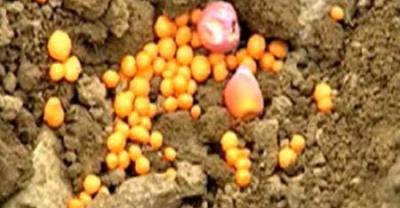
How much chemical fertilizer is 1 ton of organic fertilizer equivalent to? After reading this, stop abusing chemical fertilizers
1 ton of human feces and urine —equivalent to 25-40 kg of ammonium sulfate, 13-25 kg of calcium superphosphate, 4-6 kg of potassium sulfate. 1 ton of pig manure and urine —equivalent to ammonium sulf...
-

Severe Potassium Loss After Flooding Makes Potassium Supplementation Essential for Crops
In past years, in several provinces along the middle and lower reaches of the Yangtze River, potassium deficiency symptoms were commonly seen in crops such as cotton, rice, corn, soybeans, and peanuts. Apart from some soils being inherently low in potassium, this was largely related to the heavy rainfall during the crop growing season this year, which caused considerable potassium loss. In cotton, most fields showed potassium deficiency...
-
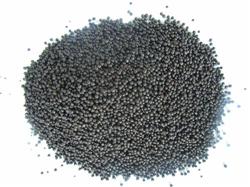
Organic fertilizer can be used year after year; long-term application is no problem
Organic fertilizer and chemical fertilizer used together complement each other, but if the combination is unreasonable, both will suffer damage and cause harm. 1. Benefits of mixing organic fertilizer and chemical fertilizer: 1. Making up for each other's shortcomings and building soil fertility. Chemical fertilizer has a single nutrient, high content, and quick effect, but a short duration; organic fertilizer has complete nutrients, a long-lasting effect, and can improve the soil...
-
What happens after applying high-concentration phosphate fertilizer?
What happens when high-concentration phosphate fertilizer is applied? Please explain that the main component of ordinary superphosphate is monocalcium phosphate, and the fertilizer contains 14%-18% phosphorus; the secondary component is calcium sulfate, accounting for about 50%. Therefore, applying ordinary superphosphate not only provides crops with phosphorus nutrition, but also allows crops to obtain sulfur nutrition. However, superphosphate...
-
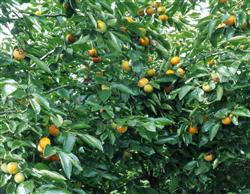
What fertilizer is best to apply before and after harvesting persimmon trees?
What fertilizer is best to apply before and after harvesting persimmon trees? Why apply fertilizer even after harvesting? Before and after fruit harvest, persimmon trees should be given nitrogen and potassium fertilizer to promptly replenish the tree's nutrients and raise its nutrient level, which helps the tree flower and fruit normally the following year. The specific method is: apply pre-harvest fertilizer 15~20 days before harvesting the persimmons, mainly with quick-acting, fast-dissolving nitrogen and potassium fertilizer. For trees bearing 50 kg or more, apply 2~3 kg of urea and 0.5~1 kg of potassium chloride or potassium sulfate per tree, or 1~1.5 kg of potassium sulfate, broadcast after rain or dissolved in 50~60 times clear water and drenched on. Apply post-harvest fertilizer within 10~15 days after harvesting, mainly with complete nitrogen, phosphorus and potassium fertilizer and high-quality organic fertilizer. Along with clearing the orchard, remove all kinds of weeds around the persimmon tree, then dig a ring-shaped trench 25~30 cm deep and 25~30 cm wide around the tree's drip line, thoroughly stir and mix 2~3 kg of nitrogen, phosphorus and potassium compound fertilizer with 40~50 kg of composted, fully rotted human, livestock and poultry manure, apply it into the ring trench, and cover with soil.
条件筛选