-

How do Gastrodia elata cultivation methods affect Gastrodia elata yield?
Choosing good planting methods for the tubers is also one of the important measures for increasing Gastrodia elata yield. Box cultivation and pit cultivation of Gastrodia elata overwintered in double-layer plastic sheds can significantly increase yield. Because the double-layer plastic shed uses sunlight as its energy source, it greatly increases Gastrodia elata yield. According to trials by the Institute of Special Animal and Plant Sciences of the Chinese Academy of Agricultural Sciences, using a double-layer plastic shed to overwinter box-cultivated Gastrodia elata inside the shed, Shaanxi seed stock increased in weight by 27.4 times, and local Jilin seed stock increased in weight by 99.8 times. If there is heating equipment indoors, using wide-mouth bottles and plastic bags to cultivate Gastrodia elata
-
How much does management level affect Gastrodia elata yield?
Strengthening management is an important measure for obtaining a high yield of Gastrodia elata. The main thing is to keep temperature and humidity under control. During the growth of Gastrodia elata, the temperature should be kept at 20-25°C and must not exceed 25°C. The optimum humidity for the growth of Gastrodia elata is 65% and must not exceed 70%. It is best to add some grain and vitamin B1 to the water used for watering, that is, to water with nutrient water. In addition, ventilation and shading are also needed. Various weeds and fungi as well as damage to Gastrodia elata from rats, mole crickets and the like must be prevented and controlled. In short, the requirement is to advocate "early" in planting Gastrodia elata, demand "good" in the fungus sticks, and keep temperature
-
How much does the base growing medium affect Gastrodia elata yield?
At present, the base growing media used for cultivating Gastrodia elata vary from place to place. In the Hanzhong area of Shaanxi, river sand is mostly used as the base growing medium, while in the Tonghua area of Jilin, humus soil is mostly used as the base growing medium. Some also use broadleaf tree sawdust mixed with sand or rice husk mixed with sand as the base growing medium. The biggest advantage of sand as a growing medium is good water permeability, but it contains very few nutrients; choosing humus soil made of semi-decomposed fallen leaves as the growing medium is better, but the black soil from the lower layer must not be mixed in. Production practice has shown that sawdust mixed with sand, rice husk mixed with sand, and semi-decomposed
-
What environmental factors affect the appearance quality of bag-cultivated Ganoderma (reishi)?
Ganoderma, as a medicinal fungus, has its medicinal value and commercial value directly related to the quality of its fruiting bodies. Cultivating fruiting bodies with well-developed caps and good maturity is the ideal goal of medicinal Ganoderma producers. Ganoderma fruiting bodies are quite sensitive to environmental factors such as temperature, humidity, aeration and light. If conditions are unsuitable, deformed mushrooms are very likely to appear. Strictly regulating environmental factors is a necessary measure to improve the finished-product rate and appearance quality of Ganoderma. 1. Temperature factor. Ganoderma fruiting body primordia can form in large numbers at 25-30°C, form less and grow slowly below 22°C, and although they can form above 34°C, they very easily form nodular protrusions after primordium formation and stop developing; Ganoderma caps grow faster at 28-30°C, with sparser concentric rings and lighter surface color, while at 24-26°C the growth period is longer, more active ingredients accumulate, and the texture is harder, so Ganoderma grown at this temperature has better quality. To balance growth time and fruiting body quality, the room temperature during the primordium differentiation and growth stage is best controlled at (28±1)°C, and during the cap growth stage at (26±1)°C. In cultivation practice, the temperature control methods are: (1) arrange the mushroom emergence time appropriately according to local natural temperature conditions; in central and southern Hebei, early June to early September is more suitable; (2) when the temperature is 30°C, appropriate shading, sprinkling well water on the ground combined with ventilation, etc. can lower the room temperature by about 1-3°C; (3) production units with the means can use automatic temperature control equipment, for better results.
-
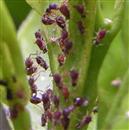
What pests and diseases affect honeysuckle when growing it?
What pests and diseases affect honeysuckle when growing it? Please explain the control methods. The main pest of honeysuckle is aphids. In hot and rainy environments, they often damage new leaves and vine tips, causing curling and affecting growth. Commonly, 40% dimethoate emulsion at 3000 times dilution is sprayed, or 25% phosmet emulsion at 1000 times dilution is sprayed. In addition, there are two simple...
-
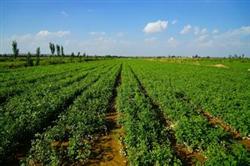
Licorice is best planted after autumn plowing; otherwise it affects seedling emergence and seedling survival.
1. Seed treatment: before sowing, treat the seeds with 60-100°C water for 30 seconds; then soak them in warm water for 1 day and night, and the germination rate can reach 50%. If concentrated sulfuric acid is used, remove the seeds immediately when the seed coat turns black and rinse them in clean water, then soak them in warm water; sow when the seeds swell, and the germination rate can reach more than 90%. 2. Planting metho...
-
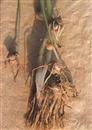
What pests and diseases affect Pinellia ternata? Key points on cultivation techniques explained
What pests and diseases affect Pinellia ternata? How do you prevent and control pests and diseases in Pinellia ternata? Please, readers, help explain. The pests and diseases of Pinellia ternata include root rot, viral disease and the red hawk moth; for detailed control methods, refer to the following list: 1. Harm and control methods of root rot in Pinellia ternata: root rot occurs easily in the hot season when water accumulates in the field...
-

Gastrodia Planting Techniques: What Pests Affect Gastrodia?
I plan to plant gastrodia next year, but what pests harm gastrodia? What methods can be used to control them? I hope experienced netizens can offer guidance. The pests that generally need to be controlled when planting gastrodia mainly include white grubs, springtails, mole crickets, scale insects, and termites. The following is a detailed explanation (if you have better methods, you can post them at...
条件筛选