-

Why Is Your Phalaenopsis Orchid Poor at Absorbing Nutrients? A Look at the Causes
Many flower lovers complain: "Why does my Phalaenopsis always look droopy, and it doesn't grow even when I fertilize?" Nine times out of ten, this is a nutrient absorption problem! Just why does a perfectly healthy Phalaenopsis end up poor at absorbing nutrients? Understanding the reasons behind it is the only way to treat the right cause. The most common reason - potting medium. Phalaenopsis is different from other flowers
-

The Fastest and Most Effective Flowers for Absorbing Formaldehyde, Recommended Indoor Air-Purifying Potted Plants
In today's pursuit of a healthy and comfortable life, indoor air quality has become a focus of attention. As a common indoor pollutant, formaldehyde is extremely harmful to human health. Many people place green plants at home to purify the air, but exactly which flowers absorb formaldehyde the fastest and most effectively? And which indoor potted plants can purify the air
-

Recommended indoor plants that are best at absorbing secondhand smoke
Today I'm sharing a few super-powered "air purifier" green plants that not only absorb secondhand smoke but also beautify your home. Monstera (Swiss cheese plant): the all-around champion of air purification, with large and unique leaves. It not only absorbs secondhand smoke but also traps harmful gases such as formaldehyde, making it a purification king certified by NASA. It tolerates shade and is easy to care for, indirect light
-
The Best Indoor Potted Plants for Absorbing Formaldehyde
In modern home environments, formaldehyde pollution has become a problem that cannot be ignored. Below are several green potted plants with excellent formaldehyde absorption: Pothos (Epipremnum aureum): With its dense leaves and outstanding air-purifying ability, pothos has become a standout among indoor purifiers. It uses its stomata and metabolic mechanisms to break down formaldehyde and other harmful substances.
-
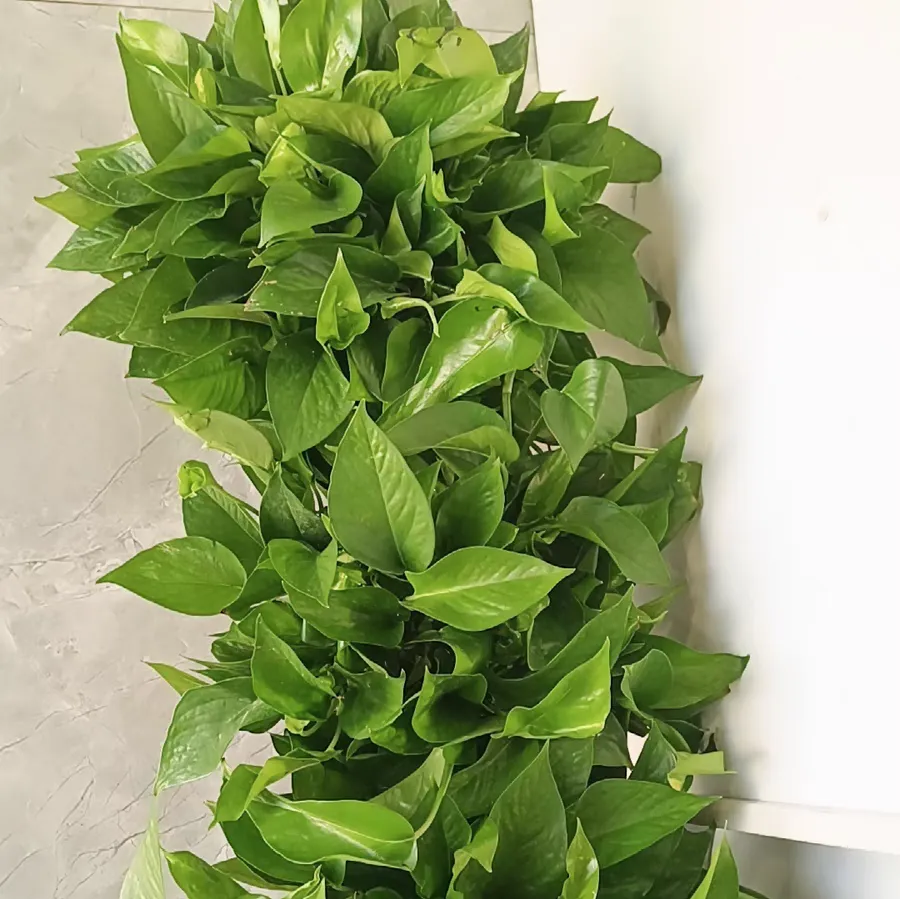
What are the best plants for absorbing formaldehyde?
In the modern home environment, formaldehyde pollution has become a problem that cannot be ignored. Here are some potted green plants with excellent
-

The Latest Top Ten Radiation-Absorbing Plants Ranking
Radiation refers to the phenomenon in which part of the electromagnetic energy emitted by a field source leaves the source and propagates into the distance, then returns to the source; the energy spreads outward in the form of electromagnetic waves or particles (such as alpha particles, beta particles, etc.). All objects in nature, as long as
-
The best formaldehyde-absorbing plant, the "Money Tree" (Zamioculcas zamiifolia): how do you grow it so it thrives? What should you do when the leaves turn yellow? Use these six methods to solve yellowing leaves!
The Money Tree is a landscaping plant we are fairly familiar with, but its scientific name is not Money Tree, it is Zamioculcas zamiifolia. If someone asks you next time what Zamioculcas zamiifolia is, you will know it is the Money Tree. The Money Tree is unanimously recognized by everyone as the best formaldehyde-absorbing plant. So how
-
How to Grow the Formaldehyde-Absorbing Swiss Cheese Plant So Its Leaves Split: Care Methods and Precautions
The name Swiss cheese plant (Monstera deliciosa) may be unfamiliar to friends who do not grow greenery; it is very popular in tropical regions and is generally cultivated in greenhouses. The Swiss cheese plant is also known as Penglai banana, iron wire orchid, and so on. As a plant of the Araceae family, it has its own unique charm.
-
What to Do When Pothos Leaves Turn Yellow? Care Methods for Pothos That Absorbs Formaldehyde
Among green plants, the one we are all most familiar with must be pothos. Pothos is grown in many households. It can absorb formaldehyde and also purify the air. Pothos can also be called devil's ivy, mulberry leaf, and golden pothos. As a plant in the Araceae family, it is very popular. But in winter
-
A Detailed Guide to Growing Pothos with Self-Watering Systems
Summary Self-watering pothos mainly refers to growing pothos in self-absorbing pots, which can be done either hydroponically or in soil. It works on a large-pot-over-small-pot design, using a cotton wick to connect to a water source, thereby creating a water-supply system. This growing method saves time and effort and waters more thoroughly,
条件筛选