-

What to Do About Mushroom Spawn Degeneration? Causes and Countermeasures Explained
Causes of and Countermeasures for Mushroom Spawn Degeneration
-
What to Do About Abnormal Mycelium Growth in Edible Mushrooms? Cause Analysis and Preventive Measures
Cause Analysis and Preventive Measures for Abnormal Mycelium Growth in Edible Mushrooms
-
Ten Methods for Preserving Edible Fungi and a Complete Guide to What You Need to Know About Introducing Them
Ten Methods for Preserving Edible Fungi
-
Things to Know About Introducing Edible Mushrooms and Key Points for Winter Pest Control
Edible Mushrooms Also Need Pest Control in Winter
-
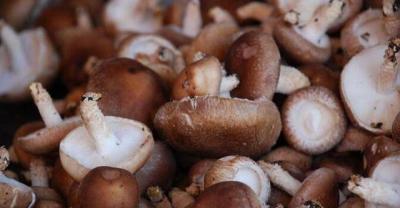
Rare edible mushroom Pleurotus citrinopileatus, how much do you know about it?
Pleurotus citrinopileatus sing., also known as golden-top mushroom, Yuhuang mushroom and golden oyster mushroom, belongs to the family Pleurotaceae and the genus Pleurotus, and is a famous... in our country
-
What to Do About Dead Straw Mushrooms? A Detailed Guide to New Prevention and Control Techniques
I. Causes of Dead Straw Mushrooms 1. Poor coordination between ventilation and moisture retention in the mushroom house. Straw mushrooms are aerobic fungi and need plenty of water; too much ventilation easily leads to water loss and death. Insufficient ventilation easily causes excessive carbon dioxide and death from oxygen deprivation. 2. Sudden temperature changes in the mushroom house. In southern China, most straw mushroom cultivation uses foam mushroom houses, which play an important role in maintaining constant temperature and humidity. However, if doors and windows are not closed in time when a typhoon strikes, or heating is not applied in time when freezing damage occurs, or ventilation and cooling are not carried out early enough during sustained high temperatures, or too much well water is sprayed on the floor,
-
What to Do About Excessive Vegetative Growth of Straw Mushroom Mycelium? Detailed Control Methods
During the mycelial growth stage of straw mushroom, a large amount of white fluffy aerial mycelium forms on the surface of the substrate, sometimes even growing into a white layer of mycelial mat, which delays fruiting and leads to low yields; the cause is excessively high temperature inside the compost heap. Control methods: after inoculating straw mushroom, regularly uncover the plastic film to ventilate and lower both temperature and humidity, and do not cover with too thick a layer of straw, so as to encourage the mycelium to grow into the substrate.
-
What to Do About Dead Mushrooms? A Detailed Guide to Prevention and Control Methods
Causes of dead mushrooms (1) Weak young mushrooms. After the casing soil is applied to the mushroom bed and before fruiting, if the mycelium grows too fast and the fruiting sites are too high, the young mushrooms that form are too densely packed, causing the ones with insufficient nutrient supply to die. (2) Excessive temperature. If the temperature stays above 21°C for several consecutive days during the fruiting period, the young mushrooms will shrivel and die from heat damage. (3) Excessive humidity. When the relative humidity in the mushroom house is above 95% at high temperatures, if the doors and windows are closed after watering, the surface of the mushroom bed becomes waterlogged, causing the young mushrooms to suffocate and die. (4) Poor ventilation. Oxygen in the mushroom house
-
What are the mushroom food products? These 5 are worth knowing about
1. Oil-preserved mushrooms. 10 kg fresh mushrooms, 3 kg to 5 kg vegetable oil, 400 g refined salt. Heat the oil in a pot until it is 80% hot, put the washed and drained fresh mushrooms into the pot and stir-fry thoroughly, add salt, and stir-fry over low heat for 10 minutes. While hot, pour the oil and mushrooms into a container. After cooling, pack them into bottles, seal, and store in a cool place. Oil-preserved mushrooms can be stored for 1 year. When eaten, the cooking method is the same as for fresh mushrooms. 2. Sweet and sour mushrooms. 100 kg fresh mushrooms, 10 kg refined salt. Spread them layer by layer, one layer of mushrooms and one layer of salt, to pickle them in
-
What to Do About Deformed Oyster Mushrooms? A Detailed Guide to Symptom-Specific Prevention and Control
During oyster mushroom production, inadequate management measures and unsuitable environmental conditions often easily lead to the formation of deformed mushrooms. In production, the causes of deformed mushroom formation should be identified and effective prevention and control measures taken. 1. Spherical or flask-shaped: The stipe of the oyster mushroom is spherical or flask-shaped, the surface is uneven or twisted into a wave-like shape, and the cap cannot form, with only a very small point or obvious icicle-like stripes. This is caused by viral infection, and should be prevented and controlled by spraying or smearing with Virus K, Virus A, or Xiaojunling. 2. Cauliflower-shaped: The fruiting bodies of the oyster mushroom
条件筛选