-
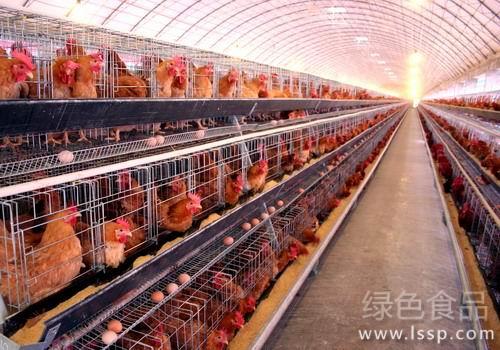
Calcium Supplementation Methods for Caged Laying Hens Producing Soft-Shelled and Thin-Shelled Eggs
Laying Hens Producing Soft and Thin Eggs Need Calcium Supplementation: Calcium Supplementation Methods for Caged Laying Hens
-

Northeast "Strange Rice" succeeds in trial planting in Heilongjiang and begins to be promoted to farmers within the province
Sitting on a pile of plump rice sacks with a beaming smile, Jin Yushi, a farmer from Xiangfang District, Harbin, is very gratified by the bumper harvest of the 8 mu of "Northeast Strange Rice" he planted this year. This year, low temperatures and scant sunshine caused reduced yields in some rice-producing areas of Heilongjiang Province. However, some rice growers who applied new technologies and new varieties still steadily achieved high yields. Among them, rice farmers Jin Yushi, Zhang Zibin and others obtained a good harvest by accepting the suggestions and guidance of scientific and technical personnel, introducing "Northeast Strange Rice" and applying biological technologies such as "three agents and two fertilizers",
-
Can Turtles and Fish Be Kept Together? A Few Things to Know Before You Start
Turtles and fish can be kept together. For mixed turtle-fish culture, the stocking ratio is as follows: per 0.07 hectares, stock 300 silver carp (specification 20-25 g each), 80 bighead carp (specification about 25 g each), 120 grass carp (specification 50-125 g each), 80 common carp (specification about 25 g each), and 80 blunt snout bream (specification 12.5-25 g each). Then stock about 1,200 turtles aged 3-6 years. Fish fingerlings are best stocked before the Spring Festival, while turtles are best stocked after the beginning of spring, when the water temperature has stabilized above 15
-
How to fatten thin cattle in spring? Master these key points
1. Choose good cattle for fattening The key to choosing good cattle for fattening lies in discovering the fattening potential of thin cattle. Thin cattle caused by poor feeding management, low-quality feed, or excessive labor can be chosen as the first choice. Never buy sick cattle that are too old, suffer from digestive tract diseases or infectious diseases, and are extremely weak. 2. Build good pens Create a quiet, comfortable, and clean living environment for thin cattle to minimize stress responses. 3. Group reasonably: Group newly purchased thin cattle by age, sex, and nutritional status. This not only
-
Miniature bonsai are petite and exquisite, revealing the beauty of nature within a tiny space.
For the selection of small stumps, choose plants with strong vitality that are easy to tame into trunks and twisted, varied forms. Also pay attention to selecting varieties with small leaves, strong sprouting ability and shade tolerance. 1. Seek out old trunks and small branches of varied forms on a certain tree stump for air layering (that is, sleeve propagation), mostly carried out in early to mid-March during the plum rain season. 2. Seek out tree stumps with well-developed bare roots, and near their root area select crooked, ancient-looking, robust ones with small branches and bare roots, and separate them from the tree stump (best done in late autumn), but do not transplant them immediately; wait until the following spring when the separated plants sprout and grow branches.
-
Why do pet dogs shed hair? These reasons are something dog owners should understand
First, seasonal shedding. Most dogs shed and change their coat in spring and autumn, such as Shetland Sheepdogs, Chow Chows, Pekingese, and so on. In summer they need less fur, so when the weather turns warm they shed part of their old coat to regulate body temperature. As winter approaches, they shed the coarse hair and replace it with downy fur to get through the cold winter. These are all normal phenomena. Second, if a dog suffers from diseases such as folliculitis or eczema, or is infested with dog lice and fleas, it can also cause heavy shedding. Because of the itching, the dog uses its paws
-
Reasonable flower and fruit thinning of bayberry (Chinese bayberry, Myrica rubra) promotes stable and high yields
Bayberry (Chinese bayberry, Myrica rubra) bears fruit mainly on short and medium fruit branches. Because on these two types of bearing branches only the terminal bud is a leaf bud, while the rest mostly differentiate into flower buds, if they are allowed to set fruit naturally, they often bear excessively, the fruits are small and of poor quality, and it easily causes alternate bearing. To achieve stable and high yields, fruit thinning should be carried out. (1) The thinning period is generally in mid-to-late April, after fruit set is determined and before the fruits rapidly swell. (2) Thinning method: out of every 6 bearing branches, keep 3 to bear fruit and thin out 3, and each fruit-bearing branch keeps 2 fruits. (3) Thinning principle: keep fewer on the upper part of the canopy and more on the lower
-
Ten Practical Recipes for Fattening Thin Rabbits in Autumn and Winter
After enduring the hot summer, most domestic rabbits are weak and thin, so as soon as autumn begins you must quickly increase feed to fatten them up, in order to improve the rabbits' physical strength and production performance. The following methods can be used to fatten thin rabbits in autumn and winter. 1. For rabbits with rough, messy fur and poor spirits, take an appropriate amount of tea leaves, plus 15 grams each of Boschniakia rossica and honeysuckle (Lonicera japonica), decoct the juice for oral administration, 2 times a day, 10-15 milliliters per rabbit each time, for 3-5 consecutive days, with marked effect. 2. Dissolve 5-7 grams of white sugar per rabbit per day in warm water and let the rabbit drink it freely. Generally, after 15-2
-
Detailed explanation of the specific operation techniques for flower and fruit thinning in pear trees
1. Master the timing of flower and fruit thinning. Flowering, fruit set, and the number of cells in young fruit are mostly determined by stored nutrients. Remove as many excess flowers and fruits as possible to reduce wasteful consumption and concentrate all nutrients on the flowers and fruits that should be retained, so they can grow into large fruits. Therefore, from this reasoning, earlier thinning is better: thinning flower buds is better than thinning flowers, and thinning flowers is better than thinning fruits. However, decide whether to thin buds, thin flowers, thin fruits, or combine all three according to the year's flower quantity, weather during the flowering period, tree vigor, fruit-setting ability, and other conditions. For pear orchards with a large flower quantity (an "on" year), good weather, and a heavy workload, you can
-
Technical Points and Management Methods for Pasture Fattening of Thin Cattle
Pasture fattening of cattle is a fattening method that mainly uses natural pasture. The pasture fattening method has the advantages of low feeding cost, good fattening results, and easy promotion in vast agricultural and pastoral areas. During the pasture fattening period of about 150 days, thin cattle of local breeds gain 0.5-0.7 kg per day, beef crossbred cattle gain 0.8-1.2 kg per day, each head of cattle gains a total of 100-180 kg, increasing economic benefit by 300-400 yuan. The pasture fattening technique for cattle is introduced as follows. 1. Selection of fattening cattle
条件筛选