-

Analysis of the problems existing in the development of the eel industry and the countermeasures and suggestions
I. Seedlings and fingerlings The main species farmed for eel in China are the Japanese eel (Anguilla japonica) and the European eel (Anguilla anguilla). The resources of both the European eel... have already approached exhaustion, with annual production falling from 3,000 tons 30 years ago to 100-200 tons. From June 3 to 15, 2007, at the Conference of the Parties to the "Washington Convention" (CITES) held in the Netherlands, the European eel was listed in Appendix II of the Convention on Endangered Species of Wild Fauna and Flora, and this will be formally implemented starting in January 2009: China imports about 60 tons, or about 150 million individuals, of European eel seedlings and fingerlings annually, and farmed European eel accounts for more than 1/3 of eel production, while European eel accounts for about 40% of exported roasted eel. Japanese eel resources have also severely declined. In recent years, the seedling and fingerling resources of Japanese eel in Asia have remained at about 100 tons, and the annual catch in recent years has remained at 80-100 tons. In 2008, the output of European eel seedlings and fingerlings was about 90 tons, half of a normal year. The output of Japanese eel seedlings and fingerlings was about 35 tons, one third of a normal year. The severe shortage of seedling and fingerling resources has led to soaring prices. Moreover, artificial breeding of eel seedlings and fingerlings will not be able to form production capacity in the near future.
-
What are the common problems in dryland rice cultivation?
1. How to grow enough rice seedlings under drought and water shortage conditions. The whole year's success lies in spring. This vividly and profoundly illustrates the importance of seedling raising in the whole year's production. Under this year's special conditions, growing enough seedlings is the key measure to win the battle against drought and secure a bumper harvest. To grow enough rice seedlings under drought and water shortage conditions, the first thing is to determine the seedling raising method according to local conditions, and the second is to implement the seedling raising technical measures. When determining the seedling raising method, there are three approaches to choose from for reference: first, in places where water can be obtained locally, promote
-
How can the problem of dead mushrooms be prevented in mushroom cultivation?
1. Prepare the compost scientifically and reasonably so that the carbon-to-nitrogen ratio reaches 28-30:1, and do a careful job of composting; 2. Select high-quality spawn, promptly discard aged and contaminated spawn, create conditions suitable for mycelial growth and development, and strictly prevent high-temperature cultivation; 3. During the fruiting period, pay close attention to weather changes, adjust the shed temperature according to the air temperature, strengthen ventilation and air exchange, and strictly prevent high-temperature conditions inside the shed; 4. Make sure the mushroom shed is ventilated and aired regularly (generally 2-3 times a day); when the temperature is high, ventilate in the early morning and evening or at night to keep the air fresh. 5. Water based on the mushrooms
-
Analysis of Common Problems in Potato Cultivation and Solutions
Yutian County has a perennial potato planting area of 70,000 mu, with yields generally around 2,500-3,500 kg per mu. Most potato growers have some experience and good methods in cultivation management, but overall, there are still many problems in potato cultivation management, which are summarized as follows. 1. Variety degeneration phenomenon: After continuous planting for several years, potatoes often show stunted plants, clustering, weak growth, wrinkled, smaller, and brittle leaves, or ring spots and streak spots, leaf veins turning dark brown, leaves easily falling off, and in severe cases the entire plant dies. Variety degeneration
-
Guide to Analyzing Common Tulip Cultivation Problems
Except in places with alpine climate conditions, tulips grown in open ground for ornamental display can only be planted in autumn and winter and enjoyed in spring; their blooming period is also short, with a single plant flowering for only about 10 days, and withering in 4-5 days when temperatures are high. By appropriately staggering the planting dates and combining varieties with different growth periods, blooming can be extended to about 1 month. The bulbs are extremely cold-hardy and can withstand low temperatures of -35°C in the soil, so ornamental cultivation in open ground is possible almost anywhere in China. Because tulip bulbs are expensive, widespread use for ornamental cultivation in open ground is still not possible at present. Tulips in open ground
-
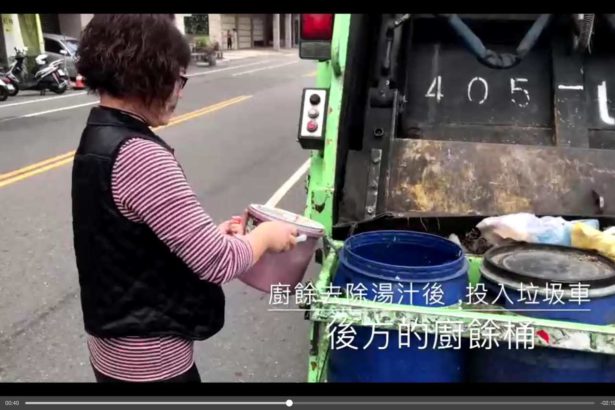
How many tons of food waste are produced every day? An analysis of disposal problems and organic fertilizer output
The battle between epidemic prevention and food waste, part 06: A full inventory of food waste generation and disposal capacity across Taiwan (the six special municipalities)
-

What are the common problems in fruit tree training and pruning?
Common problems in fruit tree training and pruning
-

-
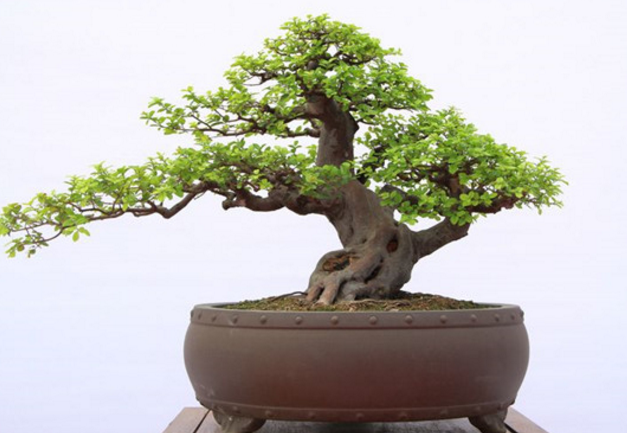
Chinese Sweet Plum Bonsai: How to Make It and How to Solve Common Pest Problems
Chinese sweet plum (Sageretia thea) bonsai has a unique form; it is one of China's "Seven Sages" of bonsai and one of the five famous trees of Lingnan bonsai in China. Other names for Chinese sweet plum include "broken rice seed," "thorny wintergreen," and "opposite thorn." What are the methods for making Chinese sweet plum bonsai? The time for making Chinese sweet plum bonsai is in March each year and during the plum rain season.
-
What are the deep-seated problems restricting the development of family farms?
Deep-seated problems constraining the development of family farms
条件筛选