-

What is the difference between grape hyacinth and hyacinth?
Comparison of grape hyacinth and hyacinth. Hyacinth and grape hyacinth are both perennial bulbous flowers of the Hyacinthaceae family, and are different varieties of the same type of plant. Botanically, the two are not of the same genus, and each has its own series of varieties. As ornamental flowers, they both have low-growing plants, brightly colored and rich inflorescences
-
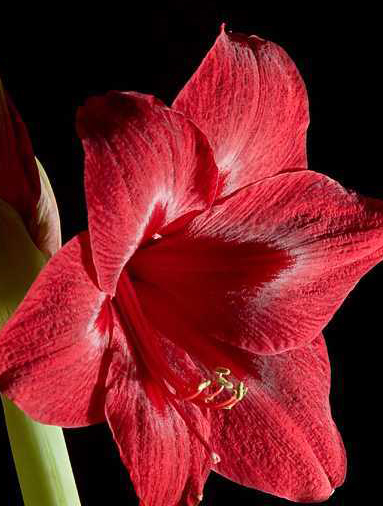
What is the difference between amaryllis and belladonna lily? A quick guide to tell them apart
Amaryllis (scientific name: hippeastrum rutilum) is a perennial herbaceous plant of the genus Hippeastrum in the Amaryllidaceae family. Its bulb is plump and nearly spherical, 5-10 cm in diameter, with a pale green or yellowish-brown outer skin. The leaves grow opposite on both sides, are strap-shaped with tapering tips, and number 2-8.
-

What is the difference between mini monstera and monstera
Mini monstera is also known as window-leaf monstera and oblique-leaf monstera. It belongs to the same genus as monstera. The mini monstera plant is short and small, and its perforations do not run through between the pinnate lobes like those of monstera; instead, they run through the long oval leaves along the midrib, and the leaves are not divided
-

What is the difference between Yulan magnolia and purple-flowered Yulan magnolia
Yulan magnolia, also known as white Yulan magnolia, is a deciduous tree of the Magnolia genus, with an oval or flattened-spherical crown and grayish-brown bark. Its single leaves are alternate, obovate-rounded, with a abruptly pointed tip. The flowers are terminal, with flower buds formed in the previous autumn, blooming before the leaves. The flowers are white, fragrant, 10-16 cm in diameter, upright bell-shaped, with 9 tepals, obovate, white, arranged in whorls of three, and numerous stamens and pistils. Its main variety is the purple-flowered Yulan magnolia (var. FurFurascens), whose tepals are purplish-red outside and clear white inside. Both magnolias are highly favored by people. Yu
-
How large are the DNA differences between different breeds of dogs?
In an issue of the journal Science, researchers wrote that the genetic differences between different breeds of dogs are unusually pronounced, so much so that they can determine a dog's breed based solely on its DNA. This phenomenon is related to humans controlling inbreeding in dogs over the past 300 years to obtain different dog characteristics. This shows that humans can indeed play an important role in the field of species evolution. When researchers analyzed the DNA genetic code of dogs in an attempt to further understand the genetic factors of human diseases, they were surprised to find that, in just the past few hundred years, not
-
What are the similarities and differences between Chinese and American cotton grading standards?
The United States is a major cotton-producing and cotton-consuming country, with half of its annual cotton production used for domestic consumption and half for export. As a result, American cotton standards have an important influence worldwide and are used by 24 countries and regions; they are also known as the universal cotton standards. Below is a brief introduction to the similarities and differences between Chinese and American cotton grading standards: Cotton grade is a reflection of the overall quality performance of cotton, and the cotton standards of most cotton-producing countries in the world include a cotton grade inspection item. In the U.S. cotton standard
-
What is the difference between French plane tree, paulownia, and Chinese parasol tree?
The Chinese parasol tree is a deciduous tree of the family Sterculiaceae. It is not related to the tung tree (Euphorbiaceae), the paulownia of the family Scrophulariaceae, or the French plane tree (Platanaceae), despite sharing the name "tong." The Chinese parasol tree is tall and imposing, with a trunk free of knots that rises straight upward, holding aloft a great emerald-green umbrella of foliage with a spirited bearing. Its bark is smooth and jade-green, its leaves dense, and from trunk to branch it is lush throughout, appearing exceedingly elegant and clean - no wonder people also call it "qingtong" (green paulownia). "A single green jade stands upright, a thousand leaves like green clouds piled up" - these two lines of poetry capture to the fullest the charm of the Chinese parasol tree's green leaves and jade trunk, and the graceful shade it casts.
-
What is the difference between Cibotium barometz and Cibotium barometz rhizome?
Scientific name: Cibotium barometz Aliases: Cibotium barometz rhizome, yellow dog head, monkey hair head Family and genus: Belongs to the family Dicksoniaceae, genus Cibotium Plant type: Large perennial herbaceous terrestrial fern Morphological characteristics: The plant can reach up to 3 m in height. The rhizome is thick and fleshy, growing upright or lying horizontally on the soil surface, and it and the base of the leaf stalks are densely covered with long golden-yellow hairs, shaped like a dog's head, hence the name. At the top, leaves grow in clusters; the leaf stalks are thick and long; the leaf blade is broadly ovate-triangular, with length and width almost equal, tripinnatifid, and the ultimate segments are falcate-lanceolate,
-
Key points to note during the fruiting period of shiitake mushrooms: regulation of temperature and humidity differences
Increase the day-night temperature difference. In late autumn and early winter, daytime temperatures are high and nighttime temperatures are low. Cover with a layer of film during the day so that the temperature inside the mushroom bed is 2°C-3°C higher than outside the film, then open the film after 10 p.m. so the temperature drops rapidly. After several consecutive days, a large number of primordia will emerge on the surface of the mushroom logs and develop into mushroom buds. Control the humidity of the mushroom yard. After color change, initially maintain the relative humidity of the mushroom bed at about 85%. As large numbers of mushroom buds differentiate into caps and stipes, lower the air humidity to about 80%. Create a suitable dry-wet difference. In the early stage of autumn mushrooms, the internal water content of the mushroom logs is relatively sufficient and can safely
-
What is the difference between Torreya grandis and Taxus? This article teaches you to tell them apart quickly
Torreya grandis, also known as Chinese torreya, Yu torreya, and torreya seed, is an evergreen tree of the genus Torreya in the family Taxaceae, and is an economic tree species unique to China. It mainly grows in Zhejiang, Anhui, Fujian, Jiangsu, Guizhou, Hunan, Jiangxi and other provinces south of the Yangtze River in China, among which Zhejiang's Fengqiao Chinese torreya, Anhui's Taiping Chinese torreya, and Jiangxi's Yushan Chinese torreya (nut) are the most famous. Its fruit is a treasure among dried fruits, containing rich protein and a variety of trace elements. In addition, Chinese torreya is also a precious Chinese medicinal material, with the effects of killing parasites, relieving food stagnation, and moistening dryness.
条件筛选