-

Can Hydroponic Plants Absorb Formaldehyde? Which Plants Are Good at Removing Formaldehyde?
Many people who have just finished renovating their homes like to place a few hydroponic plants, feeling they are clean and can remove formaldehyde. But is this really reliable? Today let's talk about those plants that are often mentioned. Actually, whether soil-cultured or hydroponic, the principle by which plants absorb formaldehyde is much the same, mainly relying on the stomata on the leaves and the root system. However, hydroponics has a
-

Which potted plants do not need sunlight? Four small potted plants with low watering frequency
Insufficient indoor light and low watering frequency? These four potted plants do not need frequent sunlight, nor do you have to constantly remember to water them. They are suitable for busy people or beginners, and are simply a blessing for renters and overtime workers. Even if you occasionally forget to take care of them, they can still live quite vigorously. Small-leaf red nanmu: Small-leaf red nanmu (Syzygium buxifolium) looks especially delicate, with small oval leaves that are glossy green, and from a distance it looks like a mini forest. The best part is that it is not picky about light, so it can be placed in a corner of the living room or beside a desk, as long as it is not completely pitch-black. Watering is even more worry-free; water only after the soil has dried out completely, about once every ten days or so is enough, in summer when evaporation is fast at most once a week, and in winter once every half month is no problem. I once kept one, went on a business trip for half a month without tending it, and when I came back it still looked vigorous, just a little wilted leaves, and after a bit of water it perked up the next day, very easy to keep.
-

Which houseplants can't tolerate waterlogging? These five hate being overwatered the most
You water them every day and fuss over them, yet the plant wilts instead. You dig into the soil and find the roots have rotted to mush. The truth is, not all plants love to drink. Some are naturally afraid of waterlogging, and the more diligently you water them, the faster they die. Today let's talk about five houseplants that fear water the most. Beginners, take note. Snake
-

Which shade-tolerant flowers are suitable for a room without sunlight?
Poor light at home? A shaded balcony or a north-facing window, and you worry you can't keep flowers alive? Today I'll recommend a few shade-tolerant champions that thrive even in a dark little room (though of course not with zero light at all), easy for beginners to handle too. Variegated Tradescantia: Variegated Tradescantia, the name alone sounds classy, and its looks are beyond reproach.
-

Which large houseplants are suitable for the living room? Recommended varieties that are both attractive and easy to care for
When it comes to the houseplants that make the biggest statement at home, it has to be large houseplants! Place one in the living room and the atmosphere is instantly elevated - and the key is that if you pick the right varieties, even beginners can handle them with ease. Today I'm going to recommend several large houseplants that are both attractive and easy to care for. See if any of them are your cup of tea~ Rubber plant: The rubber plant, its leaves
-
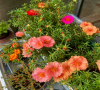
Which plants bloom in summer? Money-saving tips for buying flowers at the flower market
Summer is marked by long days and short nights, with intense sunlight from 12 noon to 4 pm. This is not very friendly to novice flower growers, because this is the season when plants are most likely to die from root rot, sunburn and high temperatures. Below, the editor recommends several tough, easy-to-grow flowers suitable for care in the high summer heat,
-

Are Phalaenopsis seedlings the same as side shoots, and which is easier to grow?
When it comes to Phalaenopsis seedlings and side shoots, plenty of flower lovers probably think they are both just little things growing off the mother plant, right? Actually, these two are not the same thing at all, and the care they need is quite different too. Phalaenopsis seedlings are generally grown from seeds or through tissue culture, growing roots and leaves from scratch, and with the original mother
-

What are the common colors of Phalaenopsis orchids, and which color is easier to keep alive?
Growers of Phalaenopsis orchids have surely noticed that the colors of this flower are as varied as a spilled paint palette. In fact, the common colors of Phalaenopsis orchids are neither too many nor too few, and you can always find one you like. The most classic is the white Phalaenopsis, clean and pure, with petals like jade carvings, carrying a touch of translucence.
-

Which indoor flowers can be cut and kept in water as fresh cut flowers?
Can cut flowers keep growing once you put them in water? Well, it depends on the situation. Strictly speaking, a cut flower is already in a "detached" state - the roots are gone, so it can't absorb nutrients the way it does in soil, which means it can't truly grow - it won't produce new leaves or new flower buds. But with proper care, you can keep it fresh and extend its blooming time.
-
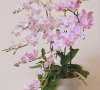
Which Phalaenopsis varieties bloom in summer? With a list of recommended varieties
High summer temperatures are a challenge for most flowers, but summer-blooming Phalaenopsis, with their strong heat tolerance and long bloom period, become a top choice for summer viewing. Below are several quality varieties and care tips to help everyone grow them with ease. Canxue: small-flowered type, abundant blooms and a long flowering period, with flowers continuously on the stems. Outstanding heat and sun tolerance
条件筛选