-
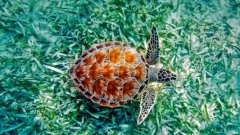
Why is the green sea turtle called a living fossil of the animal kingdom, and what are its main characteristics?
The green sea turtle belongs to the family Cheloniidae, genus Chelonia. It is distributed around the poles, with traces found in sea areas from 35 degrees north latitude to 35 degrees south latitude, but it is mainly distributed in tropical to subtropical sea areas. What is its body shape like? What kind of characteristics does it have? Let's take a look together.
-

What are the causes of soft-shelled turtle deaths in winter?
Causes of soft-shelled turtle deaths in winter
-
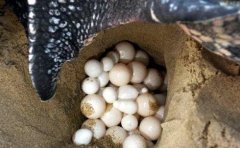
How long does it take for turtle eggs to hatch? An introduction to turtle egg incubation methods
It is well known that turtles have strong vitality, rarely suffer from disease, and are easy to raise and manage, but this applies to adult turtles. Throughout the entire process from hatchling to juvenile, carelessness in certain steps and details is unacceptable. Turtle egg incubation is a highly technical step, and if it is not done well
-

Morphological Characteristics and Damage of the Jujube Turtle Wax Scale
The jujube turtle wax scale belongs to the order Homoptera, family Coccidae, and is also known as the Japanese turtle wax scale or jujube louse. The adult is pale red, with a body length of 0.9 mm, black compound eyes and whip-like antennae. The wings are white and transparent, with two main veins. The female is oval, resembling a turtle shell; the egg is oval, pale yellow at first and purplish red later; the nymph is oval and pale red, and in its early stage spreads by wind before soon settling on leaves to cause damage; the pupa, only the male pupates beneath the scale cover. The pupa is oval. The insect, as nymphs and female adults, fixes itself on branches, leaves and fruit to suck sap, and its excretions induce
-
What are the main technical measures for polyculture of fish and soft-shelled turtles?
1. Pond renovation: Build a 30 cm high escape-prevention wall around the pond, with the four corners rounded into arcs, smooth the inner wall with cement, and it is best to have an inverted-L-shaped coping on top of the wall to prevent the old soft-shelled turtles from escaping. Set up bamboo rafts in the fish pond as sunning platforms for the old soft-shelled turtles to bask their backs, and there is no need to add other necessary equipment such as feeding platforms. 2. Reasonable stocking: filter-feeding fish that feed on plankton, omnivorous fish, and herbivorous fish can all be polycultured in the same pond with old soft-shelled turtles, but black carp should not be stocked in fish-turtle polyculture ponds. 3. Reasonable stocking density of old soft-shelled turtles. If the main approach is to use
-
Detailed Explanation of the Medicinal Value and Processing Methods of Turtle Plastron
1. Medicinal value of turtle plastron. Turtle plastron is slightly cold in nature, slightly salty in taste, and has a faint fishy odor. It contains gelatin, calcium salts, fat, keratin, and other substances. It has effects such as tonifying the heart and kidneys, nourishing yin and reducing fire, and subduing yang to relieve deficient heat. It is often made into turtle plastron glue, used for nourishing yin and subduing yang, tonifying the kidneys and strengthening the bones, enriching the blood and stopping bleeding, and for many conditions such as steaming bone tidal fever, flaccidity and weakness of the sinews and bones, dizziness and tinnitus, insomnia and forgetfulness, excessive menstruation, seminal emission, and night sweats. It is effective for lung disease, gastric bleeding, hypertension, cirrhosis, unnamed swellings and toxic lesions, and yin deficiency in women. 2. Turtle plastron glue
-
Detailed guide to making the medicinal dish Dwarf Lilyturf-steamed Soft-shelled Turtle
The traditional Chinese medicine dish of Dwarf Lilyturf-steamed Soft-shelled Turtle has the effects of nourishing yin and invigorating blood, softening hardness and dispersing nodules. Although it can serve as a family soup dish in autumn, it can also assist in treating splenomegaly after diseases such as amenorrhea in women and malaria. Dwarf Lilyturf (Herba Lycopi) is slightly warm in nature, enters the liver and spleen meridians, and has the effects of invigorating blood and nourishing blood. The Lei Gong Pao Zhi Lun says it "can break blood and unblock long-standing accumulations"; soft-shelled turtle, also known as Chinese softshell turtle or biē, is neutral in nature and sweet in taste, with the effects of nourishing yin and blood, softening hardness and dispersing nodules. The Compendium of Materia Medica holds that it can "eliminate chronic malaria and malarial masses," and the Essentials of Materia Medica also records that it "cools blood and supplements yin, and also treats malaria." Ingredients: Dwarf Lilyturf
-
How to Keep and Care for Red-Eared Slider Turtles
English name: slider. Common names: red-eared slider, painted turtle, green turtle. Origin and season: Distribution: United States, Mexico, Brazil and other countries. Introduction: Its taxonomic status is the family Emydidae, genus Trachemys. Morphological features: Medium body size, relatively small head, blunt snout, longitudinal stripes of interlocking yellow and green on the head and neck, and a pair of red patches behind the eyes. The carapace is flat, with ring-shaped green markings on each scute, and the rear edge is not serrated. The plastron is pale yellow with black ring-shaped markings, resembling
-
How to Raise Adult Turtles? Detailed Explanation of Feeding Methods and Technical Key Points
The area of an adult turtle pond should preferably be 100 sq m, and about 10 juvenile turtles can be stocked per sq m. The pond water for adult turtles should be kept light green (transparency of about 30 cm). If the transparency is too high, the turtles will feel insecure; if the transparency is too low, the water will be brownish green, the water quality will be too fertile, and it will easily cause eutrophication, which is also bad for raising turtles. The feeding method for adult turtles varies by season. In spring and autumn, when the water temperature is low, adult turtles do not come out much in the early morning or evening, so they should be fed at 10 a.m.; in midsummer
-
Turtle Drowning
Cause: Semi-aquatic turtles kept for a long time in a pool with water that is too deep cannot get onto land and can only float at the surface, stretching out their necks to breathe; after a long time, the turtle becomes exhausted and inhales water. Sometimes when the water is changed, the water level suddenly rises, and large fluctuations on the water surface can also cause drowning in turtles. Symptoms: The turtle's neck becomes swollen and fat, and its limbs are weak. After dissection, the lungs are filled with water, and there is a relatively large amount of water in the abdominal cavity. Prevention and treatment: After discovering a sick turtle, hold the turtle head downward so that water flows out through the nostrils, and use a finger to press the turtle's limb sockets, squeezing rhythmically. For a turtle with mild drowning, place it in a ventilated place and let it slowly recover.
条件筛选