-
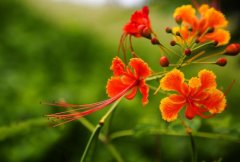
The Flame Tree only blooms twice a year; does it bloom in autumn?
The flame tree (Delonix regia) was introduced in 1897 when seeds were purchased by the Japanese consulate in Bombay, and it was first planted in Tainan; it is an endangered species in the wild, and has now been introduced and cultivated artificially, widely grown as an ornamental tree. In Hong Kong, China it is a common introduced variety of deciduous tree. Later it was also
-
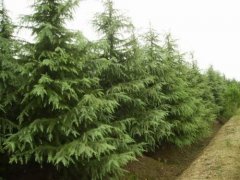
How much is a one-meter cedar sapling? Wenjiang nursery wholesale price
Cedar is a variety of pine tree and a relatively popular type of pine. Would you like to plant a cedar? Do you know what the price of this kind of pine tree is like? Let's take a look at how much a cedar sapling costs. Price of a one-meter cedar sapling
-
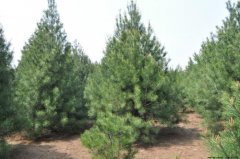
How much does a 2 m Chinese pine cost per tree, and does it grow fast?
Chinese pine (Pinus tabuliformis) is generally used for afforestation, because it is a strongly sun-loving plant, cold-resistant, drought-resistant, barren-tolerant, and deep-rooted. It is a plant that is very easy to keep alive, and it is excellent for afforestation. The Chinese pine is widely distributed and is one of the main afforestation tree species across the vast areas of northern China.
-
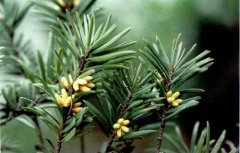
How much does a Keteleeria tree cost per sapling, and is the Keteleeria tree highly valuable?
Keteleeria is an evergreen tree, mainly distributed in the central and southern regions of China, such as Guangdong, Guangxi and other areas. It is a near-threatened species, and contiguous forests are very rare. It mostly grows scattered in broad-leaved forests. So we must protect this tree species well. The main characteristics of Keteleeria are that its
-
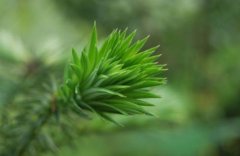
How much does grey fir wall cladding cost per square meter? With pictures of grey-leaf Chinese fir trees
Grey-leaf Chinese fir, called grey fir, also has other aliases such as kangsan, mangshan, and paoshan. It is a type of Chinese fir plant. Its distinguishing feature is its leaves, which are grey-green, sometimes blue-green, and have a noticeable white powder. This is a very obvious characteristic that distinguishes it from other Chinese firs.
-
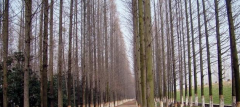
Characteristics and Features of the Line Fir, Pictures and Flower Language Introduction
Do you know the line fir? The line fir is a fir plant, an evergreen tree. Its wood is very strong, and in ancient times it was used as material for ships. Today its range of uses is also very wide. The line fir mainly grows at an altitude of 2500 m to 4000 m
-
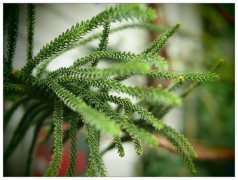
Do Cryptomeria Trees Lose Their Leaves? What Are Cryptomeria Trees Used For and How Much Does a Cryptomeria Sapling Cost Per Plant
Cryptomeria is a common type of cedar. Does Cryptomeria lose its leaves? Cedar trees are deciduous plants, so Cryptomeria does lose its leaves. But do you know what Cryptomeria is used for? How much does a Cryptomeria sapling cost per plant? Let's take a look together. Cryptomeria is characterized by its crown being narrowly conical or
-
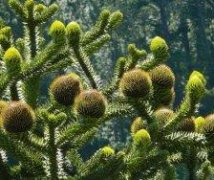
What are the characteristics of monkey-paw fir seeds? Introduction to the price of precious fir saplings
The monkey-paw fir is a variety of fir tree. The shape of its leaves and branches closely resembles a monkey's paw, which is why it is called the monkey-paw fir. Have you ever seen this kind of fir tree? This fir tree is mainly cultivated in the open field in regions of our country such as Guangzhou, Xiamen, Xishuangbanna in Yunnan, and Hainan.
-
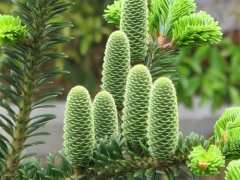
How many Baishanzu fir trees still exist, and where are they distributed? With pictures
The Baishanzu fir is a fir tree species and an endangered species. It is very precious. In its natural distribution area, only five trees remain, but one of them has weakened and one is growing poorly. It is endemic to the area above 1700 m above sea level on the south slope of Baishanzu in southern Zhejiang. Bai
-
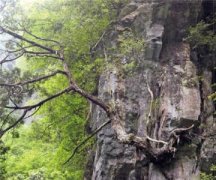
What Tree Species Is the Chinese Arborvitae? A Complete Collection of Wild Chinese Arborvitae Pictures and a Price Overview
What tree species is the Chinese arborvitae? The Chinese arborvitae is a shrub or tree of the Cupressaceae family, genus Thuja; it generally grows in the crevices of cliffs at an altitude of 700-2100 m, in areas with shallow soil and rock; but now this tree has become an endangered species. It is mainly produced in Sichuan, China
条件筛选