-
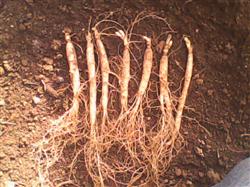
How to harvest ginseng? A detailed guide to harvest time and methods
How is ginseng harvested? Please give an introduction. Ginseng is a perennial herbaceous plant of the Araliaceae family, genus Panax, commonly known as bangchui. The dried root is used as medicine, and the medicinal material is called ginseng. In cultivation it is customarily called garden ginseng, while the wild form is called mountain ginseng. Ginseng is a traditional precious Chinese medicinal herb, with effects such as greatly tonifying vital energy, restoring the pulse and stabilizing collapse, tonifying the spleen and benefiting...
-
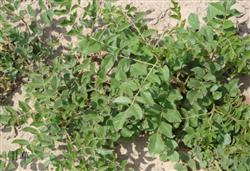
Detailed Guide to Harvest Time and Processing Methods of Licorice
Key technical measures for high-yield cultivation: choose fertile, loose-textured, well-drained sandy loam soil for planting. Treat seeds before sowing to improve germination rate, water during the seedling stage to keep seedlings alive, and apply sufficient phosphorus and potassium fertilizer every early spring. Harvest and processing 1. Harvest: Licorice propagated by seed generally grows for 4...
-

-

When to Plant Bupleurum? Detailed Guide to Planting Time and Methods
Planting Time and Methods for Bupleurum
-
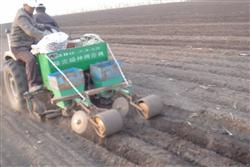
Summer sowing of Isatis indigotica (woad) is good; choosing the right sowing time is key
Isatis indigotica root is a bulk medicinal herb with relatively good market demand. It can be sown in spring, autumn, or summer. However, based on our trial demonstrations over the past two years, summer-sown Isatis indigotica is favored by herb growers because of its short growth period, good quality, high yield, no impact on subsequent crops after flowering, and relatively high returns. Average per mu...
-

-

Winter pruning of goji berry is timely now; growers should not miss the farming season
After a year of growth, the goji berry tree has numerous branches and a messy canopy, and while new fruiting branches form, some fruiting branches have already begun to age. Therefore, goji berry must be pruned in winter, otherwise the yield and quality of the following year will be affected. Through pruning, out with the old and in with the new, selecting and retaining the old-eye branches and seven-inch branches with strong fruiting capacity, and cutting off non-productive branches, can lay a good foundation for the old-eye branches to bear fruit and grow new fruiting branches the following year. Top cutting: for ease of management, the tree height needs to be controlled by top cutting. Generally, tree height should
-
Detailed Explanation of Angelica Harvest Time and Methods
For autumn direct-seeded angelica, harvest occurs in the second year; for transplanted angelica, harvest occurs in the same year, after the plants turn yellow and withered in mid-October. Natural conditions vary from place to place, so harvest times differ to some extent. For example, in Minxian, Gansu, harvest is 3 to 5 days after Frost's Descent; in production areas of Sichuan, harvest is around Frost's Descent; in Yan'an, Shaanxi, it is in late October or early November. Harvesting should not be too early or too late. If too early, the angelica is not yet fully mature, which reduces yield and quality; if too late, the soil freezes, the roots become brittle and break easily, causing excessive loss. Generally, it is best to harvest before the soil freezes and when the plants are yellow and wilted. About 10 to 15 days before harvest, first cut off the angelica stems and leaves, leaving stubble about 3 cm tall so the plants can be identified during harvest. This allows the ground to be exposed to the sun and speeds up maturation. At the same time, livestock trampling should be prevented to avoid rotting of the heads. When harvesting, dig with a hoe: first hollow out the soil beneath the plants, then dig them over from above and take them out. This allows the entire root to be dug out and prevents breaking or injuring the roots. After digging, in conjunction with turning the soil, pick up once more any roots that were missed or broken during digging. After harvesting, transport them back to the processing site and tie them into bundles for processing. Generally, the yield is 100 to 150 kg of dried angelica per mu, and high-yielding fields can reach 250 to 300 kg per mu.
-
A Detailed Guide to the Harvest Time and Processing Methods of Angelica sinensis
This product is the dried root of Angelica sinensis, a plant in the Apiaceae family. (1) Origin: mainly produced in Minxian, Wudu, Zhangxian, Chengxian, Wenxian and other places in Gansu, and also produced in Yunnan, Sichuan, Shaanxi, Hubei and other provinces. It is mainly cultivated. (2) Processing at origin: dug up in late autumn, the fibrous roots and sand and soil are removed, and after the moisture has evaporated slightly, it is tied into small bundles, placed on racks, and slowly smoked dry with smoke and fire. (3) Characteristics: slightly cylindrical, with 3-5 or more branch roots at the lower part, 15-25 cm long. The surface is yellowish-brown to brownish-brown, with longitudinal wrinkles and transversely elongated lenticels. The root head (gui head) is 1.5-4 cm in diameter, with
-
Licorice should not be stored for too long; the storage time of medicinal materials must be reasonably controlled
Licorice is generally stored as compressed bales wrapped in burlap, each weighing 50 kg, kept in a dry, ventilated place, with a safe moisture content of 12%-14% for the commodity. There are more than ten kinds of warehouse pests of licorice, including the coffee bean weevil, the brown mulberry borer, and the four-spotted chestnut borer. Fumigation with nitrogen or carbon dioxide for 514 hours can kill all adults and larvae, with no obvious change in the inner quality of licorice. Licorice is prone to mildew. If the air humidity is too high, mold spots or white and green mycelium easily appear on the surface of licorice. The following measures can be taken for prevention and control
条件筛选