-

How the whole process of dog mating takes place
Male dogs have a special baculum (penis bone), so erection is not needed during mating. After the penis is inserted into the female dog's vagina, the corpus spongiosum urethrae and the corpora cavernosa penis rapidly become engorged and swollen, and are locked in place by the female dog's anterior edge of the pubis, so that the corpora cavernosa penis cannot be withdrawn. After 10--45 minutes, ejaculation ends, the corpora cavernosa penis shrink, and only then can the penis be withdrawn. A male dog must not mate more than 1 time per day. In hot weather it should be done in the early morning or in the evening. Do not mate within 2 hours after eating, to avoid reflexive vomiting in the male dog. After mating, do not forget to record the mating date, the male dog's name or number, and the
-
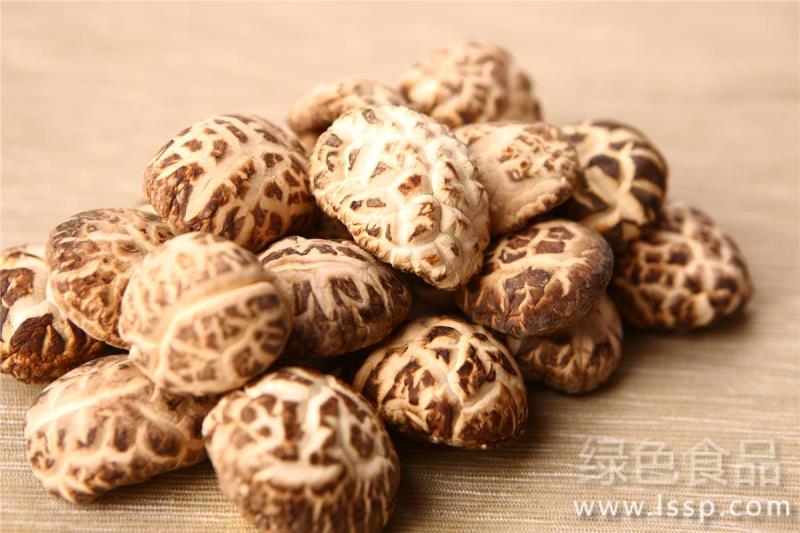
How to artificially create and rationally utilize the cultivation conditions for flower shiitake
Artificial creation and rational utilization - the cultivation conditions for flower shiitake
-

Six common mistakes to avoid when changing greenhouse film, vegetable growers should steer clear of them
Six common mistakes vegetable growers make when changing greenhouse film
-
Prevent deformed mushrooms early, cultivation of edible fungi must be taken seriously
Deformed mushrooms: when ventilation is poor and the carbon dioxide content in the mushroom room exceeds 0.3%, deformed mushrooms easily appear. If the fruiting position is too deep, mushrooms growing in the cracks of coarse soil also often become deformed. Key attention should be paid to ventilation and air exchange in the mushroom room. Water-rust spotted mushrooms: if the mushroom room and the surface of the growing substrate are not ventilated and aired in time after watering, the mushroom room humidity is too high, small water droplets appear on the surface of the mushrooms, and over time rust-colored spots will form. Therefore, after each watering, doors and windows should be opened for 30 to 60 minutes for ventilation and air exchange. Hollow-stem white-core mushrooms: too little watering, the casing soil layer is relatively dry, and the fruiting bodies get
-
How to prevent spring sheep blindness? These preventive measures must be taken well
Sheep that eat the roots of the toxic daylily (Hemerocallis minor) will suffer poisoning. The clinical signs are characterized by blindness in both eyes, dilated pupils, bladder paralysis with urine retention, and general paralysis, which people call "blindness disease". In early spring, when pasture grass is scarce between seasons and the daylily is sprouting, grazing sheep often become poisoned after eating it, and generally die after 2 to 4 days. Mildly poisoned animals can recover, but those with blindness in both eyes and dilated pupils cannot recover. For this disease, there is currently no effective antidote, and the main approach is to carry out prevention well.
-
Do not make these mistakes when growing button mushrooms (Agaricus bisporus) in paddy fields for high yields
In actual production, farmers often make certain mistakes that affect the profitability of cultivation. First, insufficient pre-wetting. Rice straw must be fully soaked before it can decompose well. Straw that has not been soaked sufficiently needs a large amount of water added during turning, and if the water cannot be replenished before the second turning, it will be very difficult to make up later, which seriously affects the growth of mushroom mycelium. Second, uneven turning. It should be done according to the principle of "raw material in the middle, cooked material on both sides; the middle goes to the two ends, the two ends go to the middle." Some growers, when turn
-
Canine distemper should not be taken lightly; dog owners must pay attention to prevention
"Canine distemper" is also called distemper, a highly contagious, acute infectious disease caused by a virus, and puppies under 1 year old are most susceptible. Currently there is no specific drug that can cure the disease, the mortality rate is between 50% and 90%, and it can occur in all four seasons. The key points for identifying dogs with canine distemper are as follows: First, body temperature shows a "U"-shaped change. That is, at the beginning of the illness the body temperature often rises to around 40, then returns to normal after 2 to 3 days, with a fever-free interval appearing; after several days, the body temperature rises again, mostly staying at 39.
-
Guangxi Takes the Lead in Breeding an Aromatic Red Rice CMS Line
Recently, the Science and Technology Department of Guangxi Autonomous Region organized relevant experts to conduct a field technical appraisal of the wild-abortive type CMS line Betel Nut Red A, bred by the Xiangzhou Huang Family Rice Research Institute. After rigorous field investigation and indoor microscopic examination, and after hearing the breeder's technical report and questions and answers, the expert group determined that Betel Nut Red A meets the standards for a rice CMS line. It is the first aromatic red rice CMS line bred in China, with strong innovation. Betel Nut Red A has stable agronomic traits, stable male sterility, good flowering habits, relatively good grain quality, and a resistance level of highly susceptible.
-
Pig eczema is highly prevalent in summer, and farmers must take strict precautions
Pig eczema, also known as pig damp-toxin disease, is mainly caused by pigs living in a damp environment for a long time. It is generally most severe during the high-temperature seasons of summer and autumn. Symptoms: affected pigs mostly develop the disease suddenly; at the beginning, the skin under the jaw, on the abdomen and on both sides of the perineum turns red, with broad bean-sized nodules appearing, and the pigs are restless due to itching. As the condition worsens, blisters and papules appear, and after they rupture they are often accompanied by yellow exudate, scabs and scales. If acute cases are not treated in time, they often become chronic, with the pig's skin becoming thick and rough and itching, and the pigs often rub against walls or trees to relieve the itching, leading to loss of hair over the whole body.
-
Common pest and disease control methods and key technical points for shiitake mushrooms
During the production of shiitake mushrooms, they are often harmed by pests and diseases. If control is poor, shiitake cultivation can fall into a vicious cycle, causing reduced yields in mild cases or complete cultivation failure in severe cases, so great attention must be paid to this. 1. Trichoderma Trichoderma, also known as green mold, is widely distributed in various plant residues, soil and air. Trichoderma spreads through spores, often using air currents, water droplets, insects, raw materials, tools, and the hands and clothing of operators as media to invade the culture medium, and once conditions are suitable, it germinates and reproduces to cause harm. When the production environment is unclean, the culture material
条件筛选