-
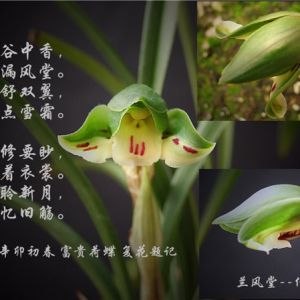
A Brief Introduction to the Variety Characteristics of the Spring Orchid Fugui Hedie
In order to reduce the moisture content of the potting mix that had originally been used for two years, from late spring to early summer of this year I repotted all the orchids in the whole orchid room and added some more media. This autumn quite a few orchids have already been sold, but because the transactions were rushed, or because orchid friends took them away pot and all, I had never been able to carefully check the condition of the potting mix in the pots and how the roots were growing. Today...
-
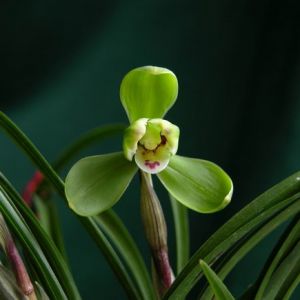
Characteristics and Appreciation of the Renhai Mei Spring Orchid Variety
The leaves are semi-arching in a bow shape, with "V"-shaped leaf blades; the leaf color is light green, glossy, thick and glutinous in texture, with fine marginal serrations and sharply pure leaf tips. The flower has five petals in separate segments; the three outer petals are broad and large, with a large round head, tightly rolled edges forming a hood, and a finely tapered base, blooming in an embracing posture with level shoulders; the semi-hard silkworm-moth hooded petals embrace together, with purplish-red blush distributed at the tips of both petals, the ruyi tongue slightly swaying, with red patches on the tongue...
-
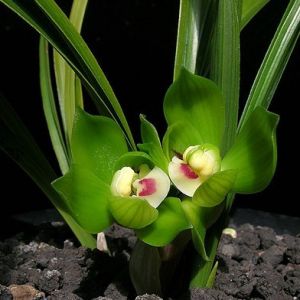
Why is Green Cloud called the Queen of Spring Orchids?
Breeding history: In the Yichou year of the Tongzhi reign (1869), it originated from Daqingli in Wuyun Mountain, Hangzhou, and was obtained by the Chen family of Liuxia Town, later cultivated by Shao Zhiyan, and named after his wife. Flower type: exotic flower lotus petal; the flower scape is 6-8cm tall, the bract shell is light water-silver-red with a green sand halo. The outer petals are short and broad, with angled corners and a contracted base, mussel-shell hold, and Liu Hai tongue. The petals, holds and tongue vary greatly, sometimes producing multiple petals, multiple holds and multiple lips, placing it among the exotic petal forms. Flower scape height. Plant type: new shoots are emerald green with a slight pinkish-red halo, leaves are short, broad, thick and strong, 15-20cm long, 1cm wide, leaves upright, often with rotational twisting. Leaf tips are bluntly rounded, glossy, shade-loving and fertilizer-tolerant. The foot sheaths clasp tightly and do not splay. It is the highest-grade flower among spring orchids.
-

How to care for orchids in early spring? Master these care techniques
Early spring is the full bloom period for Cymbidium sinense (Chinese orchid) and Cymbidium goeringii (Spring Orchid), and also the budding period for Cymbidium ensifolium (Four-season Orchid) and Cymbidium kanran (Cold Orchid). Early spring has many cloudy and rainy days, with large temperature fluctuations, and cold waves that tend to recur, which is extremely unfavorable for orchid growth. If poorly managed at this time, it can lead to root rot and bud rot in orchids, and can even cause flower rot in Cymbidium sinense and Cymbidium goeringii that are in full bloom. Because...
-

This flower is beautiful and easy to grow; spring is the perfect time to pot one up
Dendrobium officinale (ironbark dendrobium) is a precious Chinese herbal medicine with many benefits, and it is even one of the "nine great immortal herbs of China"! But did you know you can grow this immortal herb right at home? Gardening friends might think that since Dendrobium officinale is so magical, it must be very hard to grow. In fact, as long as you read this guide carefully, you can grow it easily!
-

Succulent watering in spring has its rules: these 15 are easy to kill if watered wrong
Once spring arrives, it is time for every plant lover to get itchy hands and buy more succulents! To help you grow the succulents at home well, today Huahua has summarized the watering methods for 15 kinds of succulents, so your succulents can become more and more beautiful!
-

Remember these 5 points when caring for flowers in early spring, or pot after pot will wither and die
It has been getting warmer lately, but recently I've seen many comments saying that their flowers have run into problems and are looking worse than they did in winter! In fact, the transition from winter to spring is exactly when flowers enter their growing season, so be sure to pay attention to the following points!
-

How to care for pothos in spring? Remember these care tips
We know that pothos grows fast in spring, so we don't need to worry too much. But this doesn't mean we can neglect it, otherwise problems will still arise. So how do we generally care for it in spring? First, give it some indirect light, letting it receive light in the morning and evening; second, give it plenty of water; third, fertilize it once every fifteen days; and finally, place it in a ventilated spot. This way, it will grow very well in spring!
-
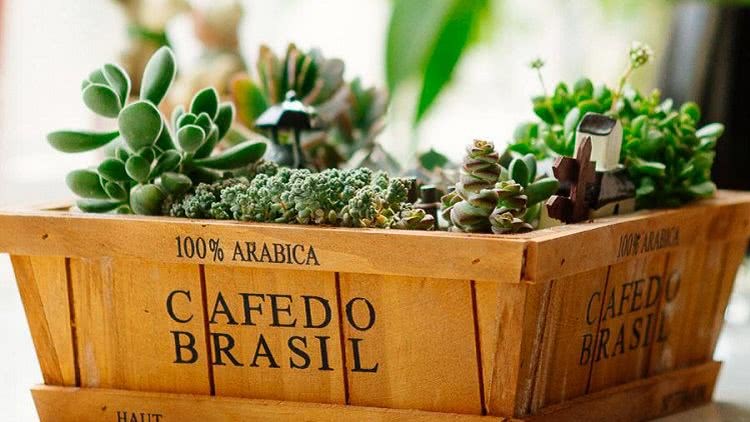
When spring arrives, succulents bloom freely without an owner, and both deep red and pale red are lovely.
In spring, for most succulents, we can try using a sharp blade to cut stems from the plant for cuttings to propagate, but before using the tool to cut, it must be disinfected with alcohol beforehand, and the best time is in mid-April each year...
-
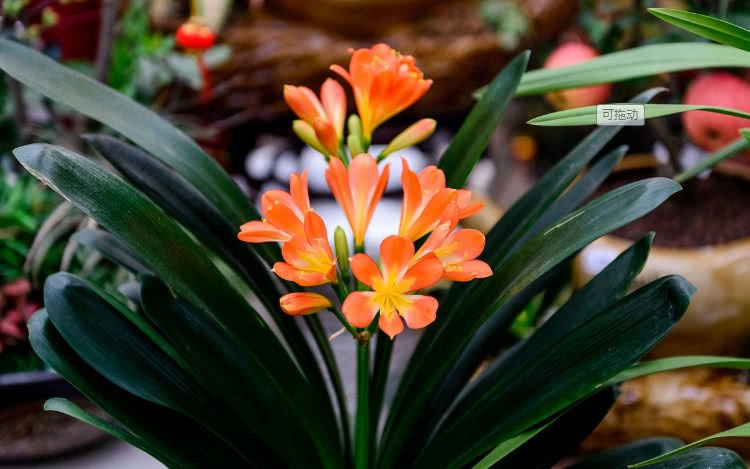
How to care for clivia in spring? Care methods and precautions
Spring has arrived, and the temperature is gradually rising, so clivia has reached the stage where it can be cared for outdoors again. To help clivia adapt to environmental changes, before moving it outside, ventilate it for two days first so it can adjust to the outdoor temperature, then gradually move it out of the room. Clivia...
条件筛选