This flower is beautiful and easy to grow; spring is the perfect time to pot one up
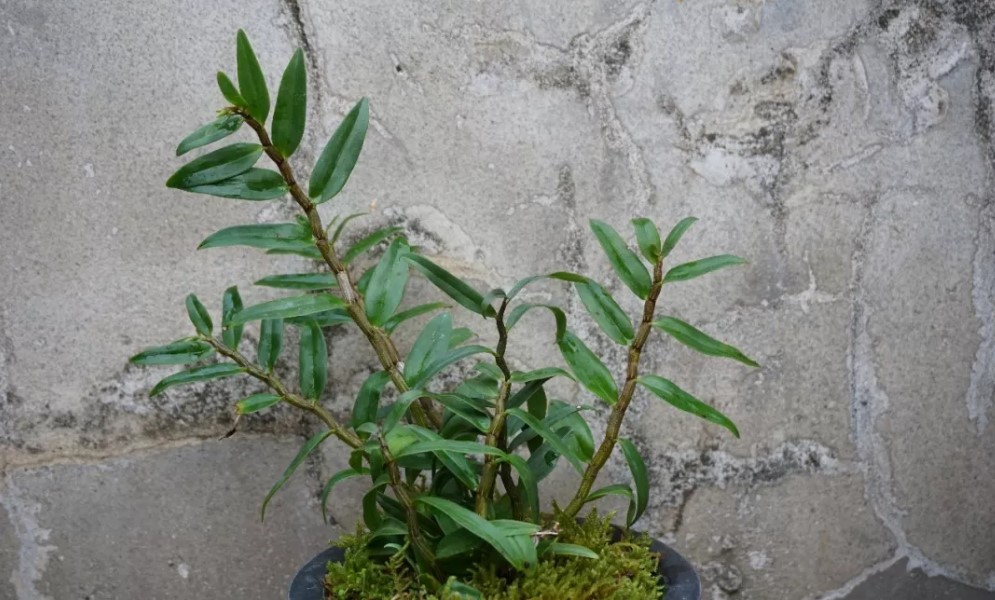
How do you grow Dendrobium officinale?
Dendrobium officinale is an epiphytic plant. In its native environment it generally grows on cool, moist tree trunks, so if we want to grow it well, we have to mimic its native environment.
Care key points:
1. Light
The first thing is light. Dendrobium officinale is especially afraid of being sunburned. The first time I grew it, I left it out in the sun like a bedding flower, and it promptly died.
Now I grow Dendrobium officinale in a spot away from the sun, where it does not get direct sun, and it grows really well! The leaves are lush green and the stems are very thick.
On a balcony, you can plant it near a wall corner in a spot with no sun, or grow it in coarse coconut coir, so it gets an environment similar to its native one. In sunny spots, those with a terrace can plant it under tall plants.
2. Potting mix
What is an epiphytic plant? It means a plant that attaches to woody plants rather than growing in soil. So to grow Dendrobium officinale, you can use chopped wood, and absolutely do not use mud.
The stems of Dendrobium officinale are fleshy, so will it be very afraid of water? We use chopped wood, which drains well; just do not let it sit in standing water.
Besides using chopped wood, what other ways are there to avoid standing water? Choose a pot with good drainage. I use an orchid pot, which has a great many drainage holes all around. If you use an ordinary pot, you can poke a few holes with scissors.
3. Watering
When watering, you must pay attention to two things: one is to water thoroughly, and the other is not to use tap water!
Watering thoroughly is easy to understand: it helps the roots grow, and when you water, fresh air is drawn in, which prevents root rot.
The reason not to use tap water is that it contains residual chlorine, which is very bad for its growth. If you can, water with well water or rainwater; if you really cannot, leave tap water out for two days so the chlorine evaporates.
In summer, because the weather is hot, it easily runs short of water, so I grow some moss on the surface, which helps retain moisture and also looks attractive!
4. Fertilizing
For growing Dendrobium officinale, I do not recommend chemical fertilizer. Although chemical fertilizer makes it grow fast, it lowers its active compounds!
I usually fertilize with organic fertilizer, which is green, environmentally friendly and pollution-free. In spring and autumn, I bury 10-20g of sheep manure in the surface of the pot. Sheep manure slowly releases nutrients for its growth, ensuring its normal nutritional needs. At other times, you can water it with cake fertilizer diluted in water.
How do you harvest Dendrobium officinale?
Everyone knows Dendrobium officinale can be used as medicine, so how should it be harvested?
The yearly growth pattern of Dendrobium officinale is: new shoots grow from February to May, new shoots grow new roots in May, and it blooms successively from April to October. From October to February of the following year, it grows slowly and accumulates nutrients.
So if you want to harvest, you have to harvest the stems after February of the following year. But the flowers of Dendrobium officinale can also be used as medicine, so I choose to harvest in March to April, so that I can use the stems as medicine and also harvest the flowers!
The harvesting method is also very simple: just use scissors to cut one node up from the surface.
Before harvesting:
After harvesting:
That is all for today's introduction.
If you gardening friends want to see an introduction to which other flower,
feel free to leave a message for Huahua!