-

How to prevent disease when stocking fish in spring? A detailed guide to practical measures
In spring, as water temperatures rise, pathogens multiply easily. When stocking fish, besides choosing high-quality fingerlings of uniform size and without injuries, attention must also be paid to preventing disease. The main measures are as follows: Pond preparation and tool disinfection. Before stocking fish, weeds should be removed, excess silt cleared away, leaks plugged, and the pond bottom leveled. Then quicklime, bleaching powder, and other substances should be applied by broadcasting over the entire pond. Fishing nets, fish buckets, and other @#@233@#@ tools should be exposed to sunlight for about 2 days before use, or soaked and disinfected in high-concentration quicklime water, bleaching powder solution, and the like.
-
How to store pears in spring? Four methods to help you extend their shelf life
1. Chemical fumigation method. The fumigation method mainly prevents and controls diseases that invade the fruit. First, seal the pears with plastic film, then place a fumigant (such as acetaldehyde) inside the sealed plastic film so that the fumigant concentration inside the plastic film reaches 0.5% and is maintained for 180 minutes, or so that the fumigant concentration inside the plastic film reaches 1% and is maintained for 120 minutes. 2. Medicinal solution soaking method. This method mainly prevents pears from being infected by pathogens after harvest. Soak the pears in a 400-fold dilution of 4% Nongkang 120 fruit tree-specific solution for 50 minutes, then remove and air-dry, then package and store
-
Detailed Explanation of Key Technical Points for Spring Broodstock Cultivation
After the beginning of spring, the water temperature gradually rises back up, especially during the pre-spawning stage from March to April, when fish activity intensifies, development accelerates, and food intake increases accordingly. This stage is an important period for gonadal development of broodstock. Practice has proven that the quality of spring broodstock cultivation is the key to the success or failure of artificial breeding of Chinese carp, therefore, the following points must be well implemented. 1. Feeding: Grass carp broodstock are mainly fed grass and concentrated feed. According to the availability of grass, generally grass is fed in the morning and concentrated feed in the afternoon, both of which should be fed at fixed feeding platforms. When green feed is scarce in early spring,
-
How to restore a weak ox's condition in spring? Sharing practical experience
1. Dissolve 200 g of white sugar or brown sugar per ox per day in an appropriate amount of warm water and give it to drink, continuously for 1 week. 2. Per ox per day, use 250 g of okara (tofu dregs), 50 g each of rice bran and wheat bran, and 10 g each of fishmeal and salt, mix evenly, and feed before grazing in the morning, continuously for 2-3 weeks, with remarkable results. 3. Use 100 g each of soybeans and corn, add water and grind them into a paste, then add 250 g of rice bran and an appropriate amount of salt, mix well, and feed once daily after the working ox finishes grazing, continuously for 1 week. 4. Cook
-
What are the key points for raising spring piglets?
Sows are mated and conceive in October to November, and the piglets born in February to March of the following year are called spring piglets, also known in some places as twelfth-month piglets. Choosing to raise spring piglets can bring relatively good economic returns. This is because sows have a high conception rate when mated in October to November, the outside temperature is relatively low in late pregnancy, the sows have a strong appetite, and the embryos can obtain rich nutrition, so the piglets born are heavy and have a high survival rate. In addition, because the sows have a strong appetite, they produce plenty of milk of good quality, the piglets develop robustly, have a heavy weaning weight, and accordingly gain weight quickly.
-
How can dried tea leaves be used to distinguish spring tea, summer tea, autumn tea, and winter tea?
Spring tea: The strips are tightly twisted, the buds, leaves, and stems are plump, strong, and heavy, the aroma is rich and fragrant, and occasionally young fruits the size of mung beans are mixed in - these are the characteristics of spring tea. Summer tea: The strips are loose, the tea leaves are light and bulky, the tender stems are thin and long, the tea fruits are the size of prayer beads, the bud tips often have fine hairs, and the aroma is slightly coarse and mature. Autumn tea: The tea leaves vary in size, the leaf blades are thin, light, and small, the aroma is mild, and occasionally tea flower buds and flowers are mixed in. Winter tea: The appearance of the tea leaves is slightly pale emerald green, the crude tea contains somewhat more yellow flakes, and the overall color is relatively uneven.
-
What are the common diseases of peppers in early spring? This article summarizes them for you
Recently, continuous cloudy, snowy and cooling weather has seriously affected the normal growth of chili peppers and sweet peppers. According to what the author learned on March 5 in pepper growing areas such as Jitai Town, Sunjiaji Subdistrict Office and Gucheng Yangjia Village in Shouguang City, chili peppers and sweet peppers currently in the fruiting stage are commonly infected due to the unfavorable weather, mainly with gray mold and sclerotinia disease --- brown water-soaked lesions appear at the top or stem end of young fruits, then become sunken and rot, and a gray mold layer appears on the surface of the lesions; sclerotinia disease spreads from the fruit stalk to the whole fruit, showing water-soaked rot, light grayish brown,
-
Key Management Measures After Planting Spring Eggplants in Polytunnels
1. Temperature control. For spring eggplants grown in large polytunnels, after the seedlings are planted and before they recover from transplanting, the tunnel should be kept closed to retain heat, keeping the temperature inside the tunnel at 28-30°C during the day and 15-20°C at night as much as possible. After the seedlings recover, attention should be paid to ventilation, keeping the tunnel temperature at 23-25°C during the day, generally not exceeding 33°C. 2. Fertilizer and water management. When soil moisture is good, water as little as possible before the first eggplant (the "door eggplant") reaches the size of a walnut, to raise soil temperature and prevent flower and fruit drop. When the door eggplant reaches the size of an egg, apply 10 kg of urea per mu along with watering. After that, appropriately increase the frequency of watering according to soil moisture conditions.
-
Detailed Explanation of Key Techniques for Spring Tea Picking and Management
Before the spring tea picking begins, carry out one shallow plowing and weed cutting to remove overwintering weeds. When picking fresh leaves, strictly follow the picking standards for the quality of famous and superior tea, and pick in batches and in a timely manner. Generally, pick the bud tips or one bud with one leaf (because famous and superior tea is in short supply on the market and has high economic returns, while bulk tea is in oversupply on the market and has low economic returns). When picking tea leaves, keep the fresh leaf buds and leaves intact, uniform in length, fresh, clean and hygienic, free of foreign matter. For loading and transport, use clean bamboo baskets with good ventilation; do not use soft packaging materials such as cloth bags or plastic.
-
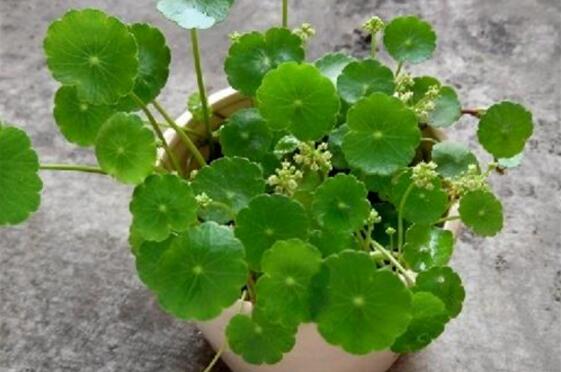
What to Do When Lysimachia Leaves Turn Yellow? Six Methods to Give It a Second Spring
Keeping Lysimachia (moneywort) at home is definitely a good idea, because it not only produces oxygen and relieves our fatigue, but most importantly, Lysimachia has amazing medicinal effects - steeping it in water cures a hundred diseases! However, in the process of growing Lysimachia, problems always arise, such as yellowing leaves
条件筛选