-
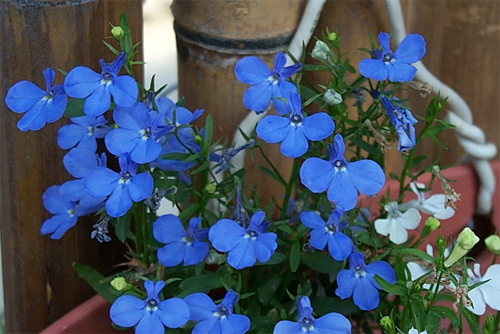
Can Lobelia be sown in spring? Detailed planting methods
The flowers of lobelia are small blue blooms, and they look extremely beautiful. Keeping one at home can lift your mood. What are the planting methods for lobelia? Can it be sown in spring? Lobelia planting methods: seedling-stage care. When dividing seedlings, the potting soil should not be too dry. If the soil is somewhat compacted, the roots are easily damaged during seedling division.
-
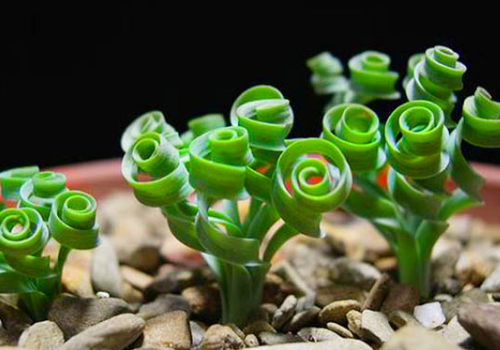
When does the spring grass bloom, and does it die after blooming?
Spring grass (Albuca) is a very interesting plant that achieves its highly unique shape through twisting leaves. When does spring grass bloom? Does it die after blooming: When does spring grass bloom: The flowering period of spring grass is from February to April every year.
-

Land preparation and sowing methods for spring sesame and summer sesame
Spring sesame should adopt the "plowed furrow slice" method. The so-called "plowed furrow slice" means that after the previous crop is harvested, fertilizer is applied, the soil is plowed and harrowed, and then sesame is sown. The advantages of "plowed furrow slice" are: it can turn the soil and loosen it, increasing soil temperature; bury the base fertilizer, improving fertilizer efficiency; reduce weeds, making intertillage convenient; and the soil has good aeration, which can improve the soil's water storage and fertilizer retention capacity. Therefore, planting "plowed furrow slice" sesame is a key measure for increasing yield. For summer sesame, "iron stubble" sowing should be advocated, with rough sowing and careful management. "Iron stubble" sowing means that after the previous wheat crop is harvested, there is no further plowing, plowing or harrowing; as long as it is raked
-
Key Technical Points for Spring Sesame Cultivation with Plastic Film Mulching
Plastic film mulching cultivation can bring sesame yields to over 150 kg per mu, and some can exceed 200 kg, so film mulching is an effective cultivation measure for achieving super-high sesame yields. The specific techniques are introduced as follows: 1. Seed selection and timely early sowing: After plastic film mulching, the effective growth period of sesame is extended. Therefore, mid-to-late maturing excellent sesame varieties with waterlogging tolerance, disease resistance, and high yield potential should be selected, such as Yuzhi No. 5, No. 7, No. 8, and sesame hybrids. Early sowing is suitable, with a sowing period from the end of April to early May, to fully utilize the growing season and increase sesame yield. 2. Land preparation
-
How to grow spring-planted soybeans in Northeast China? A detailed explanation of the technical guidance
In the autumn and winter of last year, precipitation in Northeast China was lower than normal, soil moisture was insufficient, and drought was relatively severe. This spring there has been more rain and snow, temperatures began to rise rapidly in early April, and temperature and precipitation are close to normal. The Soybean Expert Steering Group of the Ministry of Agriculture, together with the National Agricultural Technology Extension Service Center, based on full investigation, proposed the following technical guidance for spring soybean planting: 1. Strictly select excellent varieties. Because of the dry climate last autumn, soybeans may not have matured normally physiologically at harvest, and mechanical threshing increased the possibility of damage to the seed embryo
-
Key Technical Points for Spring Soybean Sowing in a Year of Severe Drought in Northeast China
Current drought situation in Northeast China and technical guidance for spring soybean sowing: I. Precipitation and temperature conditions last winter and this spring. In the autumn and winter of last year, the drought in Northeast China was severe, precipitation was lower than normal, and soil moisture was insufficient. From January to October 2007, the average precipitation in Heilongjiang Province was 402 mm, 20% less than the same period in previous years. In addition, this year's widespread "dry sealing of the soil" at the onset of winter was not conducive to soil moisture conservation. Since the beginning of winter, precipitation in southern Qiqihar, most of Daqing, the Hegang area, and some counties and cities in Jiamusi has been more than 90% less than the same period in previous years; other areas have had 10% to 90% less. In January 2008, the average precipitation across Heilongjiang Province was only 0.1 mm, 97% less than the same period in previous years, with most of the Songnen Plain and the western Sanjiang Plain receiving no precipitation at all for the entire month. After entering February, precipitation in various places continued to remain low. Snow depth across Heilongjiang Province also dropped significantly. Compared with the same period in previous years, snow depth in most areas of the province was about 25 cm less. In 2008, the area of cultivated land affected by drought before sowing in Heilongjiang Province may reach 50 million mu. In addition, the continuous warm winter was extremely favorable for soybean pathogens and pest eggs to survive the winter safely, and soybean diseases and insect pests may occur more heavily this year. The spring drought situation in Inner Mongolia is similar to that in western Heilongjiang Province.
-
Detailed Explanation of Key Technical Points for Increasing Spring Tea Yield and Improving Quality
Delaying light pruning: Conventional light pruning of the tea canopy is carried out from December in winter to February of the following year. Practice has shown that doing so has three drawbacks: first, the branches are prone to frost damage after pruning; second, the overwintering buds are cut off, delaying the sprouting time of spring buds; third, the nutrients already accumulated in the branches on the tea canopy surface are cut away, affecting the sprouting vigor of spring buds and the growth of thick strong branches, ultimately affecting spring tea yield and quality. Therefore, the pruning time should be after the frost period, preferably so that the first spring tea can be picked 30 to 40 days after pruning. Advancing topdressing: Conventional topdressing is mostly carried out in early to mid-March, when spring buds
-
How to prevent and control cotton seedling diseases? Detailed spring prevention and control methods
In recent years, due to low temperatures in spring, seedling diseases in direct-seeded cotton fields have occurred severely, causing large numbers of dead seedlings in cotton fields. In order to improve the economic benefits of cotton farmers and reduce the losses caused by diseases, the symptoms and prevention and control methods of several cotton seedling diseases are introduced as follows: 1. Symptoms of damaged cotton seedlings 1. Anthracnose: Both leaves and stems can be affected. After the seedlings are damaged, reddish-brown spindle-shaped streaks appear at the base of the stem, with longitudinal cracking. In severe cases, the lesions expand, turn brown, blacken, and rot, leading to seedling death. When the weather is humid, the lesions produce orange-red sticky substances.
-
Technical Guidelines for Protecting Cotton Seedlings in Spring Planting
"Half the yield comes from good seedlings." Since late March, cotton sowing has been rolled out across the country. Because cotton prices opened high and kept rising last year, cotton production has shown a recovery trend this year, seed markets in various places started early, and seed sales have rebounded noticeably. In view of last year's abnormal climate, with rainy and low-temperature autumn weather, many rotten bolls and generally poor seed quality, plus the low temperature and drought of last winter and this spring, preparations must be made in advance and active responses taken to unfavorable weather of low temperature, drought or high humidity. According to forecasts from the Central Meteorological Observatory, there is a high probability of high temperature and drought this spring, so it is even more necessary to lay a
-
Detailed Explanation of Key Technical Points for Spring Sowing of Cotton
Determine the density according to variety, soil fertility and planting method, and plant at a reasonable density to achieve full emergence from a single sowing. Generally, for single-cropping spring cotton varieties, the density should be kept at about 3,500 plants per mu, with a row spacing of 1 m and a plant spacing of 19 cm; for semi-spring varieties, the density should generally be kept at about 4,500 plants per mu, with row spacing and plant spacing of 15 cm; for summer cotton varieties, on plots with good fertilizer and water conditions, the density should be kept at about 6,500 plants per mu; on plots with average soil fertility, it should be kept at about 7,500 plants per mu; and on dry, barren, low-yield plots, it should be kept at about 8,000-10,000 plants per mu.
条件筛选