-

How to Do a Good Job of Disinfection in Rabbit Farms in Late Spring and Summer
Late spring and early summer is the time when bacteria and viruses begin to multiply in large numbers. Therefore, disinfection work on rabbit farms should be placed in an important position. To this end, the disinfection techniques for rabbit farms in early summer are introduced as follows: 1. Rabbit house disinfection: disinfect once a week. Before disinfection, thoroughly remove leftover feed, bedding straw and other filth, scrub clean with clean water, and disinfect after drying. The disinfectant can be a 2% caustic soda solution, etc.; a blowtorch or the flame of burning firewood and grass can also be used for disinfection, which is very effective at killing insect eggs and parasites. 2. Feeding utensil disinfection: every
-
Key Technical Points for Spring Broodstock Conditioning of the Four Major Chinese Carps
Spring is an important period for the maturation of broodstock gonads. From the beginning of spring to spawning, a large amount of nutrients in the broodstock's body is diverted to gonad development, so broodstock conditioning should be intensified in spring to meet the needs of gonad development, promote timely maturation of broodstock and ensure smooth spawning. The conditioning techniques are: 1. Divide ponds early. Adjusting stocking density and species combination is the primary condition for good broodstock conditioning. The pond area for broodstock division should preferably be 2000-2600 sq m. Before dividing the ponds, first drain the pond water, remove wild trash fish, snails, mussels and harmful organisms, and at the same time remove part of the sludge
-
Several key points to note when grazing sheep in early spring
1. Choice of grazing land. It should be chosen in sunny slope areas close to the winter grazing land, where grass sprouts earlier, so that when the weather changes suddenly the sheep can be driven back to the pen in time to take shelter. When the amount of green grass is not yet enough for the sheep to eat half their fill, each day the sheep should first be driven to shady slopes with more dry grass, and after the sheep have eaten some dry grass, they should then be driven to the green grass on the sunny slopes. 2. Prevent "running after green". When green grass has just begun to sprout, it looks present from afar but absent up close, and the sheep tend to run around everywhere, commonly known as "running after green". Not only do they fail to eat their fill, but they also use up their strength. They should be grazed on shady slopes with plenty of dry grass, and
-

What are the precautions for raising rabbits in spring? Explained clearly in one article
Precautions for raising rabbits in spring
-

What are the key points to note when raising pigs in spring? Pig farmers should keep these points firmly in mind
Key points to note when raising pigs in spring
-

Detailed Explanation of Key Technical Points for Spring Sheep Feeding and Management
Spring Sheep Feeding and Management Techniques
-

-

What are the key points for raising free-range chickens in spring?
What should be noted when raising free-range chickens in spring?
-
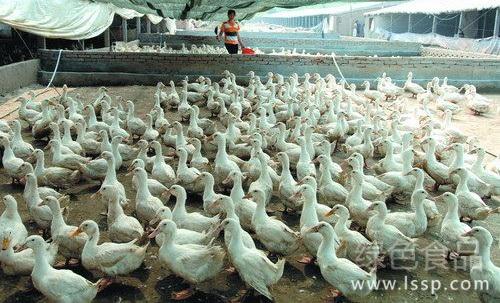
Six Management Points for Raising and Keeping "Meat Ducks" in Spring
Six Management Points for Raising and Keeping "Meat Ducks" in Spring
-

Taking Control of Fishery Production: Precautions for Raising Fish in Early Spring
Taking Control of Fishery Production: Precautions for Raising Fish in Early Spring
条件筛选