-

The Spanish mackerel's scientific name is Japanese Spanish mackerel (Scomberomorus niphonius). Is it a deep-sea fish?
Spanish mackerel (pronounced b, fourth tone) is also called Japanese Spanish mackerel (scientific name). It has sharp teeth, swims swiftly, and has a fierce temperament. The "Mackerel King" specimen at the Dalian Natural History Museum weighs more than 260 jin, measures 2.64 m, and is over 20 years old. So, is the Spanish mackerel a deep-sea fish? According to relevant ichthyology data,
-
Can Spanish mackerel be farmed artificially? What is the market price per jin?
Spanish mackerel is one of the common commercial fish of the genus Scomberomorus in the family Scombridae, with many species, commonly including the Chinese mackerel, spotted mackerel, and Korean mackerel, and it is distributed in China's Bohai Sea, Yellow Sea and East China Sea, so can Spanish mackerel be farmed artificially? What is the market price per jin? One
-
What Kind of Fish Is the Japanese Spanish Mackerel? Four Major Differences from the Pacific Saury Explained at Once
The Japanese Spanish mackerel, also known as the blue-spotted mackerel, is a relatively large marine fish with extremely high nutritional value. Eating it regularly can boost qi, treat anemia, and prevent aging, making it very suitable for elderly people to eat. It is fairly common in supermarkets nowadays, and its price is a bit on the expensive side. So what kind of fish is the Japanese Spanish mackerel? And what
-
What is the best bait for fishing Spanish mackerel? Learn to choose the right bait
Spanish mackerel has high nutritional value, and eating it in winter can also increase calorie intake. It mainly lives in the middle layer of the water, has a fierce temperament, and is a common fish in the ocean. So, what bait should be used for fishing Spanish mackerel? 1. What bait should be used for fishing Spanish mackerel? Both artificial lures and real bait can be used for fishing Spanish mackerel
-
What is the difference between chub mackerel and Spanish mackerel? Teach you to tell them apart at a glance
The question of the difference between chub mackerel and Spanish mackerel is one that many friends ask about, because in cooking these two kinds of fish often cause disagreement. So where exactly does the difference between them lie? Let's take a look together! The difference between chub mackerel and Spanish mackerel 1. Different shape
-
Is the Spanish mackerel a saltwater fish or a freshwater fish? Let us take you through its living environment
The Spanish mackerel is also called the blue-spotted mackerel. It is distributed in the western North Pacific, and is found in China's Bohai Sea, Yellow Sea and East China Sea. It is a warm-water upper-layer fish that feeds on small fish in the middle and upper layers, so is the Spanish mackerel a saltwater fish or a freshwater fish? 1. Is the Spanish mackerel a saltwater fish or a freshwater fish? The Spanish mackerel is a saltwater fish
-
The correct way to store fresh Spanish mackerel in the refrigerator
The scientific name of the Spanish mackerel is Japanese Spanish mackerel (Scomberomorus niphonius). It is found in the Bohai Sea, Yellow Sea and East China Sea of China, feeds on small pelagic fish, migrates in schools in summer and autumn, and some enter the Bohai Sea to spawn. It is one of the commercial fish of the north. So how do you store fresh Spanish mackerel in the refrigerator? How do you put fresh Spanish mackerel in the
-
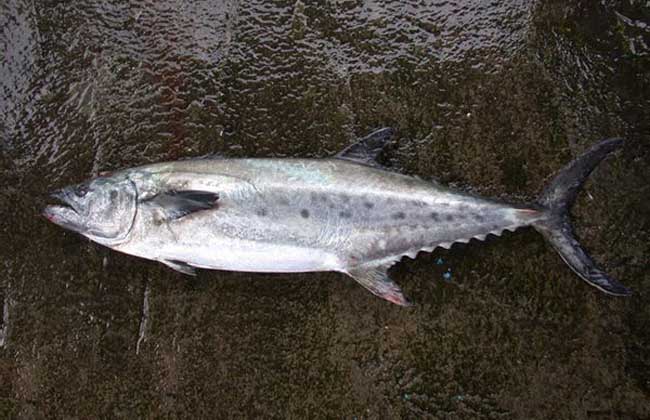
How much is Spanish mackerel per jin? A look at the market price trends
How much is Spanish mackerel per jin?
-
-
Processing operation key points and quality control methods for mackerel and Spanish mackerel
Mackerel and Spanish mackerel are rich in nutritional value, with DHA and EPA content second only to tuna, and can enhance the body's immunity. They are also very low in price and are well received by consumers at home and abroad. However, mackerel and Spanish mackerel contain a relatively high amount of histidine. When the fish is not fresh or has spoiled, after the action of decarboxylase produced by bacteria, histidine is decarboxylated to produce histamine. When histamine accumulates to a certain amount, there is a risk of poisoning after human consumption. Therefore, process conditions must be strictly controlled during processing to ensure product quality. 1. Processing operation key points
条件筛选