-

Detailed introduction to the prevention and treatment methods for abscess disease in snakes
Abscess disease in snakes is caused by infection of wounds on the snake's body. After a snake develops abscess disease, the wound site swells and even ulcerates. When the abscess and ulceration expand to a certain degree, or when the abscess or ulceration prevents the snake from shedding its skin, it can also cause the death of the snake. Abscess disease in snakes is often caused by wounds on the snake's body, such as wounds resulting from snakes biting and fighting each other; injuries and abrasions caused by snake cages and the like during the transportation of snakes; wounds that may be caused when removing snake mites from the snake's body, and so on. If these wounds are not treated in time,
-
Symptoms and Pathological Features of Snake Venom Poisoning in Animals
Snake venom poisoning is an acute toxic disease caused by venomous snake bites in animals, in which the venom enters the body through the wound and causes hemolysis, paralysis of sensory nerve endings and shock as its characteristic features. It can occur in all kinds of animals, and is commonly seen in grazing animals and dogs. 1. Clinical symptoms The sites where animals are bitten by venomous snakes are mostly the lips, nose tip, face and lower parts of the limbs. In horses, cattle and sheep, the bite sites are mostly near the hock joint or fetlock joint, while in pigs and dogs they are mostly on the limbs and nose tip. The closer the bite site is to the central nervous system and to areas rich in blood vessels, the
-
Rearing of Adult Snakehead Fish
The snakehead fish is a valuable freshwater fish of high economic value, known as the "treasure among fish." It is highly nutritious, containing large amounts of protein, more than that found in chicken and beef. From a nutritional standpoint, the snakehead fish is a comprehensive-nutrition, delicious-tasting premium health food. Rearing of adult snakehead fish refers to the production process of raising fingerlings to food-fish size in small water bodies such as ponds, pools and cages. Artificial cultivation of snakehead fish includes two methods: extensive polyculture and intensive monoculture. Extensive polyculture means culturing them together with the four major Chinese carps in fish ponds. Intensive monoculture
-
Detailed Explanation of Key Techniques for Polyculture of Snakehead and Chinese Carps
Polyculture of Chinese Carps in Ponds Mainly Culturing Snakehead Since bait is continuously applied in ponds mainly culturing snakehead, residual matter in the pond keeps increasing, and fish excrement also continuously increases, so the pond water becomes fertile quickly and is prone to aging. After polyculturing some Chinese carps, their mutually beneficial effects can be fully utilized, which can regulate water quality and increase fish yield. 1. Pond Conditions Ponds for monoculture of snakehead can be either earthen ponds or cement ponds. The area can be large or small, ranging from a few sq m to 600-2000 sq m, but it is best not to
-
Detailed explanation of the method for building a banded krait (Bungarus fasciatus) snake house
For artificial rearing of banded kraits, a snake garden or snake house can be used; for small-scale rearing, a snake box can be used. The snake garden and snake house for banded kraits should be built in a place that is sheltered from the wind and facing the sun, on high and dry ground, with dense soil, relatively close to a water source yet far from residential areas, and quiet. The snake garden should simulate the wild environmental conditions of the banded krait. The surrounding wall of the snake garden should be 2.5 m high, the inner surface of the wall should be smoothed with cement, the corners of the wall should be built into an arc shape, the wall foundation should extend 1.5 m underground, and at a depth of 1.5 m in the soil layer, lime-sand-clay mixture should be tamped solid to prevent rodents from burrowing and the snakes from escaping.
-
What are the key points of self-breeding and self-raising management techniques for snakes?
The following points should be noted in the self-breeding and self-raising techniques for snakes: 1. Seed selection: Every spring, healthy and plump female snakes should be selected as breeding snakes. Regardless of whether they are venomous or non-venomous, they generally lay eggs from late June to July. Before and after laying eggs, female snakes should be fed nutrient-rich food containing plenty of calcium, and they should be allowed to eat and drink their fill as much as possible. Whether the female snake has mated need not be considered; once a female snake mates, she can produce fertilized eggs for five years. 2. Incubation: To prevent the snake eggs from drying out and becoming sunken, the eggs laid should be promptly placed in an incubation jar for artificial incubation. Temperature must be maintained, and they should be checked and turned regularly.
-
How to Better Manage Snakes in Autumn? Detailed Explanation of Management Key Points
Snakes: Preparing for Overwintering As the saying goes: "When the autumn wind blows, the three snakes grow fat." This saying accurately reflects the growth situation of snakes. In autumn and winter, snake farms should pay attention to the following aspects: 1. September to October is the peak feeding season for snakes. Snakes use this to store large amounts of fat, safely pass through the severe cold winter, and maintain their nutritional needs until they emerge from their burrows the following year, so large amounts of food should be fed. 2. For snakes in relatively poor health, they can be sold on the market early, and should not be kept until overwintering. 3. In autumn, snakes are busy foraging and have more opportunities to emerge
-
A Detailed Guide to Snake Breeding Habits and Artificial Incubation Methods
1. Snake breeding habits. Snakes are dioecious animals with internal fertilization, reproducing by laying eggs or by ovoviviparity. Their sexual organs mature 2 to 3 years after hatching. Male and female snakes are not obviously different in appearance; the easier way to distinguish them is that among snakes of the same species and similar size, the female generally has a smaller head and a shorter, plumper tail, while the male has a larger head and a thinner, longer tail. When the rear end of the cloacal opening is firmly pinched with two fingers, the female's cloacal opening appears flat and concave, while two "hemipenes," that is, a pair of copulatory organs, protrude from the male's cloacal opening. This is a simple and easy method for accurately identifying male and female snakes.
-
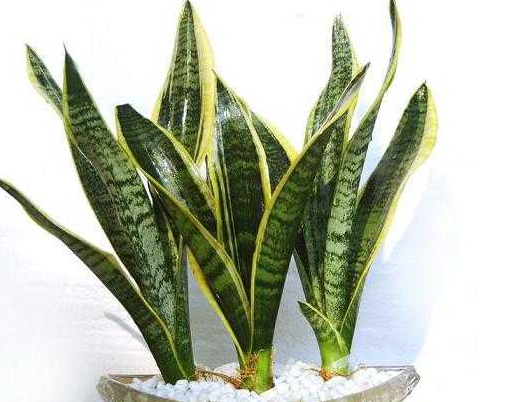
How to Grow a Snake Plant? A Detailed Guide to Snake Plant Care
Snake Plant, also known as Thousand-Year Plant or Snake Plant, is a perennial herbaceous flowering plant of the Agavaceae family. Its leaves are upright, thick and fleshy, linear-lanceolate, with white and dark green tiger-tail-like horizontal banded markings on the leaf surface, strange and interesting. Cultivated variants also include the Golden-Edged Snake Plant and the Short-Leaf Snake Plant.
-
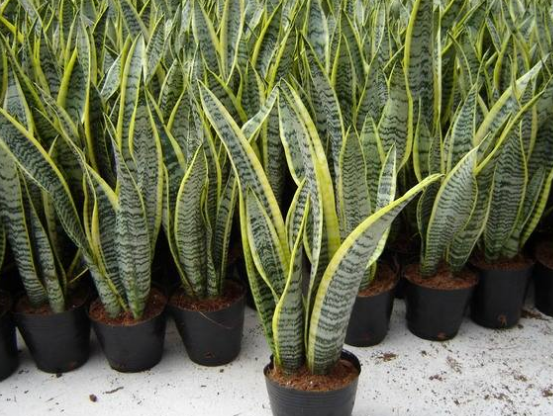
What to do when snake plant leaves turn yellow? It is mostly caused by strong light and overwatering
The snake plant (Sansevieria) is a fairly common plant in people's lives, and it is also famous for being a plant with tenacious vitality. Of course, if you do not pay attention to its care, various problems will still arise. What should you do when the leaves of a snake plant turn yellow? This is a problem people see fairly often. Regarding this problem, we can start from sunlight
条件筛选