-

Detailed Explanation of Key Points on Pear Seedling Selection and Planting Techniques
Selection of pear seedlings: The best ones have a plant height above one meter, stem thickness above 0.8 cm, plump buds, a well-developed root system, no pests or diseases, and no shrunken bark. Seedlings with wrinkled stem bark are mainly caused by being lifted too early and poor moisture retention, and such seedlings are unfavorable for root development after planting. Regarding pear seedling planting techniques, to improve the survival rate of pear seedlings, the following points should be followed when planting pear seedlings: 1. Match pollinator trees well. When planting pear seedlings, pollinator trees need to be planted, and the planting ratio of pollinator trees to main cultivar trees is 1:4-6, preferably planted between rows.
-
What are the methods for selecting a nursery site for almond seedling cultivation?
The selection of the nursery site is key to the success or failure of seedling cultivation. Choosing an unsuitable site will not only affect the yield and quality of the seedlings but may even waste all the previous effort. For almond nursery sites, it is advisable to choose flat terrain, fertile soil, deep soil layers, a groundwater level below 1.5 m, good irrigation and drainage conditions, and loose-textured neutral loam and sandy loam. Soil that is too clayey tends to become compacted, affecting seedling emergence and the growth and development of the seedlings. Nursery sites must absolutely avoid continuous cropping, as continuous cropping leads to the occurrence of diseases and affects the survival rate and growth and development of the seedlings. Any land where stone fruit tree seedlings have been grown
-
Cotton seed: never harvest prematurely opened bolls; pay attention when saving and selecting seed
According to data from seed management department testing, in recent years the germination rate of some cotton seed has been only around 60%, still far from the national standard of 80% germination rate. From extensive surveys, the reasons for low cotton seed germination rates are: first, harvesting immature prematurely opened bolls; second, purchasing "favor bolls" with high moisture content; third, mixing in diseased seed from rotten cotton bolls; fourth, storing cotton seed in the warehouse before it is fully sun-dried; fifth, containing some cotton seed broken during processing; sixth, relatively high residual acid content in coated cotton seed; seventh, not strictly
-
Selection and Training Methods for Peach Orchard Tree Structure
In northern China, peach cultivation is mainly based on the three-main-branch cup-shaped open-center form, with each main branch usually bearing 1 or 3 large secondary branches, at a height varying from 30-70 cm, scaffold branch angles of 30-80°, and tree height varying from 2-4 m; planting methods are also not uniform. Overall, there is a lack of relatively appropriate standards. In recent years, the author investigated peach orchards in Pinggu and in Mancheng, Laoting, and other places in Hebei, and offers the following views on peach orchard tree structure for reference. 1 Selection of peach orchard tree structure 1.1 Planting method
-
Almond Variety Selection and Management Characteristics Explained (Part 2)
As a nut-producing fruit tree, the almond differs somewhat from other peach varieties in cultivation. 1. Site selection. Almonds have strong adaptability and a long lifespan, and can be planted on hillsides, slopes, around the home, and in courtyards, but the following points should be noted: (1) Almonds bloom early, so mid-mountain areas and open ground where late frosts are unlikely to occur should be chosen; (2) Almonds are light-loving, so sunny slopes or shady slopes with a small gradient should be chosen; (3) Almonds are not tolerant of waterlogging, so well-drained plots should be chosen. 2. Planting. In autumn, plant after leaf fall and before the ground freezes
-

How to Select Jackfruit Saplings? A Detailed Guide to Practical Methods and Tips
How to Select Jackfruit Saplings
-
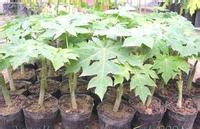
How to choose papaya seedlings? Master these methods to select high-quality, good seedlings
To grow papayas, you must first choose good seedlings. Look, these fruits are growing pretty well, aren't they? When choosing seedlings back then, there were actually many little tricks. Reporter: Hello, viewers and friends. Beside me are two papaya plants. One bears long-shaped fruit, and the other bears round fruit. Both plants are growing well. But if you ask which one is better...
-

How to pick a Black Beauty watermelon? A few practical selection tips
How to pick a Black Beauty watermelon?
-

How should you choose a durian? A few practical selection tips for you
How should you choose a durian?
-

How to choose walnut saplings? Master these few selection tips
How to choose walnut saplings? What should you pay attention to when buying walnut saplings? We also ask experienced netizens to help explain. Walnuts can reduce the intestinal absorption of cholesterol and are beneficial to people with arteriosclerosis, high blood pressure and coronary heart disease. Walnuts also effectively improve memory, delay aging and moisturize the skin. And with the popularity of Wenwan walnuts in recent years...
条件筛选